Und dann auf "Zum Home-Bildschirm [+]".

Stöbern
genialokal zum Startbildschirm hinzufügen
Installieren Sie die genialokal App auf Ihrem Startbildschirm für einen schnellen Zugriff und eine komfortable Nutzung.
Installieren Sie die genialokal App auf Ihrem Startbildschirm für einen schnellen Zugriff und eine komfortable Nutzung.
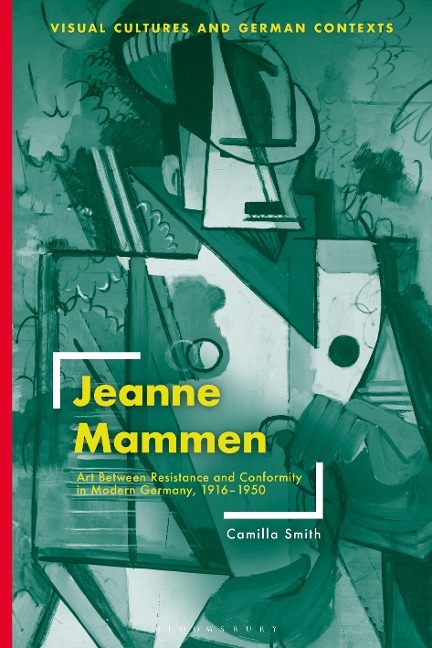
Jeanne Mammen's watercolour images of the gender-bending 'new woman' and her candid portrayals of Berlin's thriving nightlife appeared in some of the most influential magazines of the Weimar Republic and are still considered characteristic of much of the 'glitter' of that era. This book charts how, once the Nazis came into power, Mammen instead created 'degenerate' paintings and collages, translated prohibited French literature and sculpted in clay and plaster-all while hidden away in her tiny studio apartment in the heart of Berlin's fashionable west end.
What was it like as a woman artist to produce modern art in Nazi Germany? Can artworks that were never exhibited in public still make valid claims to protest? Camilla Smith examines a wide range of Mammen's dissenting artworks, ranging from those created in solitude during inner emigration to her collaboration with artist cabarets after the Second World War. Smith's engaging analysis compares Mammen's popular Weimar work to her artistic activities under the radar after 1933, in order to fundamentally rethink the moral complexities of inner emigration and its visual culture.
The examination of Mammen's life and work demonstrates the crucial role women artists played as both markers and agents of German modernity, but the double marginalisation they have nonetheless encountered as inner émigrés in recent history. It will be of interest to students of German studies, art history, literature, history, gender studies and cultural studies.
Camilla Smith is Associate Professor in Art History in the Department of Art History, Curating and Visual Studies at the University of Birmingham, UK, where she specialises in modern art, architecture and design in Germany and Austria. Her research into aspects of German modernism is published in leading journals such as New German Critique, Oxford Art Journal and Art History, and she has contributed to international exhibitions held in London, Berlin and Vienna. In 2019, to celebrate the centenary of the Weimar Republic, she co-edited a special issue of Art History with Dorothy Price, and explored Jeanne Mammen's watercolours for BBC Radio 3's 'The Essay'. She is currently working on a book-length project on German erotica in the early twentieth century.
List of Illustrations
List of Abbreviations
Acknowledgments
Introduction
Chapter 1: Forging a Career
Chapter 2: Berlin 1947 - Going Solo
Chapter 3: National Socialism and Private Dissent
Chapter 4: Propaganda, War and the Home Front
Chapter 5: Beginning Again: Post-War Berlin
Chapter 6: Bathtubs and Jellyfish: Mammen and Post-War Cabaret
Conclusion
Epilogue
Notes
Bibliography
Appendices
Dieses eBook wird im PDF-Format geliefert und ist mit einem Adobe Kopierschutz (DRM) versehen. Sie können dieses eBook mit allen Geräten lesen, die das PDF-Format und den Adobe Kopierschutz (DRM) unterstützen.
Zum Beispiel mit den folgenden Geräten:
• tolino Reader
Laden Sie das eBook direkt über den Reader-Shop auf dem tolino herunter oder übertragen Sie das eBook auf Ihren tolino mit einer kostenlosen Software wie beispielsweise Adobe Digital Editions.
• Sony Reader & andere eBook Reader
Laden Sie das eBook direkt über den Reader-Shop herunter oder übertragen Sie das eBook mit der kostenlosen Software Sony READER FOR PC/Mac oder Adobe Digital Editions auf ein Standard-Lesegeräte mit epub- und Adobe DRM-Unterstützung.
• Tablets & Smartphones
Möchten Sie dieses eBook auf Ihrem Smartphone oder Tablet lesen, finden Sie hier unsere kostenlose Lese-App für iPhone/iPad und Android Smartphone/Tablets.
• PC & Mac
Lesen Sie das eBook direkt nach dem Herunterladen mit einer kostenlosen Lesesoftware, beispielsweise Adobe Digital Editions, Sony READER FOR PC/Mac oder direkt über Ihre eBook-Bibliothek in Ihrem Konto unter „Meine eBooks“ - „online lesen“.
Schalten Sie das eBook mit Ihrer persönlichen Adobe ID auf bis zu sechs Geräten gleichzeitig frei.
Bitte beachten Sie, dass die Kindle-Geräte das Format nicht unterstützen und dieses eBook somit nicht auf Kindle-Geräten lesbar ist.