
Stöbern
genialokal zum Startbildschirm hinzufügen
Installieren Sie die genialokal App auf Ihrem Startbildschirm für einen schnellen Zugriff und eine komfortable Nutzung.
Installieren Sie die genialokal App auf Ihrem Startbildschirm für einen schnellen Zugriff und eine komfortable Nutzung.
Tippen Sie einfach auf Teilen:
 Und dann auf "Zum Home-Bildschirm [+]".
Bei genialokal.de kaufen Sie online bei Ihrer lokalen, inhabergeführten Buchhandlung!
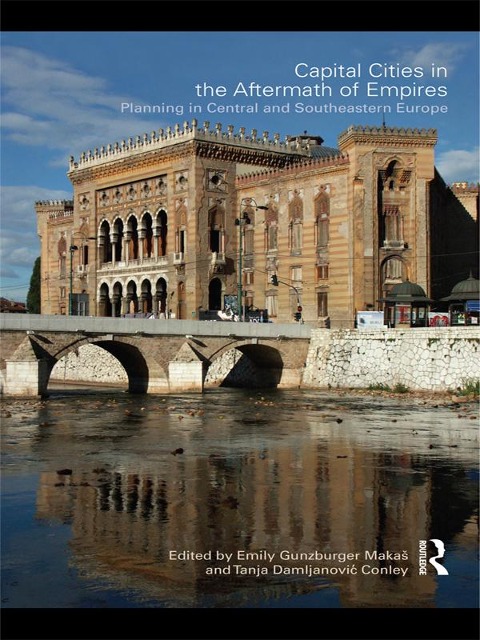
This book explores the planning and architectural histories of the cities across Central and Southeastern Europe transformed into the cultural and political capitals of the new nationstates created in the late nineteenth and early twentieth centuries. In their introduction, editors MakaS and Conley discuss the interrelated processes of nationalization, modernization, and Europeanization in the region at that time, with special attention paid to the way architectural and urban models from Western and Central Europe were adapted to fit the varying local physical and political contexts. Individual studies provide summaries of proposed and realized projects in fourteen cities.Each addresses the political and ideological aspects of the city's urban history, including the idea of becoming a cultural and/or political capital as well as the relationship between national and urban development. The concluding chapter builds on the introductory argument about how the search for national identity combined with the pursuit of modernization and desire to be more European drove the development of these cities in the aftermath of empires.
Emily Gunzburger MakaS is Associate Pr ofessor in the School of Architecture, University of North Carolina at Charlotte. Tanja Damljanovic Conley teaches architectural history at Massachusetts College of Art and Design in Boston.
1. Introduction: Shaping Central and Southeastern European Capital Cities in the Age of Nationalism Part 1: South-Eastern European Capitals after the Ottoman Empire 2. Athens 3. Belgrade 4. Bucharest 5. Cetinje 6. Sofia 7. Tirana 8. Ankara Part 2: Central European Capitals within and after the Hapsburg Empire 9. Budapest 10. Prague 11. Bratislava 12. Cracow and Warsaw 13. Zagreb 14. Ljubljana 15. Sarajevo 16. Conclusion: Not Just the National: Modernity and the Myth of Europe in the Capital Cities of Central and Southeastern Europe
Dieses eBook wird im PDF-Format geliefert und ist mit einem Adobe Kopierschutz (DRM) versehen. Sie können dieses eBook mit allen Geräten lesen, die das PDF-Format und den Adobe Kopierschutz (DRM) unterstützen.
Zum Beispiel mit den folgenden Geräten:
• tolino Reader
Laden Sie das eBook direkt über den Reader-Shop auf dem tolino herunter oder übertragen Sie das eBook auf Ihren tolino mit einer kostenlosen Software wie beispielsweise Adobe Digital Editions.
• Sony Reader & andere eBook Reader
Laden Sie das eBook direkt über den Reader-Shop herunter oder übertragen Sie das eBook mit der kostenlosen Software Sony READER FOR PC/Mac oder Adobe Digital Editions auf ein Standard-Lesegeräte mit epub- und Adobe DRM-Unterstützung.
• Tablets & Smartphones
Möchten Sie dieses eBook auf Ihrem Smartphone oder Tablet lesen, finden Sie hier unsere kostenlose Lese-App für iPhone/iPad und Android Smartphone/Tablets.
• PC & Mac
Lesen Sie das eBook direkt nach dem Herunterladen mit einer kostenlosen Lesesoftware, beispielsweise Adobe Digital Editions, Sony READER FOR PC/Mac oder direkt über Ihre eBook-Bibliothek in Ihrem Konto unter „Meine eBooks“ - „online lesen“.
Schalten Sie das eBook mit Ihrer persönlichen Adobe ID auf bis zu sechs Geräten gleichzeitig frei.
Bitte beachten Sie, dass die Kindle-Geräte das Format nicht unterstützen und dieses eBook somit nicht auf Kindle-Geräten lesbar ist.