Und dann auf "Zum Home-Bildschirm [+]".

Stöbern
genialokal zum Startbildschirm hinzufügen
Installieren Sie die genialokal App auf Ihrem Startbildschirm für einen schnellen Zugriff und eine komfortable Nutzung.
Installieren Sie die genialokal App auf Ihrem Startbildschirm für einen schnellen Zugriff und eine komfortable Nutzung.
Ihr gewünschter Artikel ist in 0 Buchhandlungen vorrätig - wählen Sie hier eine Buchhandlung in Ihrer Nähe aus:

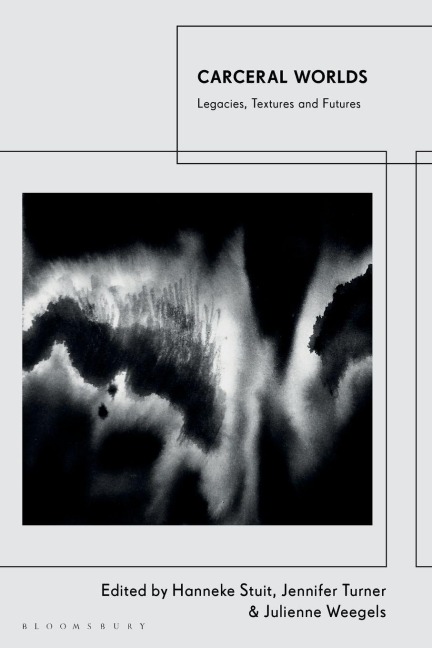
We live a world in which the number of prisons is growing and experiences of incarceration are increasingly widespread. Carceral Worlds offers a necessary and timely contribution to understanding these carceral realities of the globalized present.The book asks how the carceral has become so central in life, how it manifests in different geographical locations and, finally, what the likely consequences are of living in such a carceral world.
Carceral Worlds focuses on carceral practices, experiences and imaginaries that reach far beyond traditional spaces of confinement. It shows the lasting effects of colonial carceral heritage, the influence of prison systems on city management, and the entrapping nature of digital infrastructures. It also discusses new urbanized forms of migrant detention, the relation between prisons and homelessness, the use of carceral metaphors in the everyday, and the carceral implications of the uneven distribution of climate risk across the globe.
The volume brings together work from scholars across the world and from a variety of disciplines in the social sciences and humanities, offering a fresh approach to the carceral as a central vector in modern life.
Hanneke Stuit is Assistant Professor of Literary and Cultural Analysis and Postdoctoral Researcher at the University of Amsterdam, the Netherlands. She is author of Ubuntu Strategies: Constructing Spaces of Belonging in Contemporary South African Culture (2016) and co-editor of Peripheral Visions in the Globalizing Present: Spaces, Mobilities, Aesthetics (2016). Jennifer Turner is the leader of the Crime and Carcerality Research Group at the Carl von Ossietzky Universität Oldenburg, Germany. She is author of The Prison Boundary: Between Society and Carceral Space (2016) and co-editor of Carceral Mobilities: Interrogating Movement in Incarceration (2017) and The Prison Cell: Embodied and Everyday Spaces of Incarceration (2020). Julienne Weegels is Assistant Professor of Latin American Studies at the University of Amsterdam, the Netherlands. She is co-organizer of the Global Prisons Research Network and convenor of the Anthropology of Confinement network.
List of Tables Acknowledgements List of Contributors Chapter 1 Introduction: Carceral worlds now Hanneke Stuit, Jennifer Turner and Julienne Weegels PART 1: LEGACIES Chapter 2 The biopolitics of colonial carcerality: Colonialism and its afterlife in prison historiography of Guyana Dylan Kerrigan, Kristy Warren, Kellie Moss, Mellissa Ifill, Tammy Ayres and Clare Anderson Chapter 3 'This side of the bridge': The connection between modernist knowledge production and carceral city management technologies in São Paulo, Brazil Karina Biondi Chapter 4 The labyrinth beneath the surface: Carceral and necropolitical conditions in By Night in Chile and 'The Colonel's Son' by Roberto Bolaño Josh Weeks Carceral reverberations Julienne Weegels PART 2: TEXTURES Chapter 5 Lockdowns and curfews: Metaphoric prisons during COVID-19 in Germany, France and the UK Monika Fludernik Chapter 6 Star rovers: Rap escapes and nostalgic narrations in a Milanese social housing neighbourhood Paolo Grassi Chapter 7 Rethinking disciplinary and control society through a temporal lens: Imprisonment-seeking among rough sleepers in Germany Luisa T. Schneider Failing systems Jennifer Turner PART 3: FUTURES Chapter 8 Digital carceral bodies and abolitionist dreams: Ethnographic poetry and the electronic record systems in the New York City jails Ariel Ludwig Chapter 9 Carceral adaptability and the global detention hotel Andrew Burridge and Jonathan Darling Chapter 10 Colonizing the future: Assembling a Gulf Carceral Urban World Bruce E. Stanley Pastoral power Hanneke Stuit PART 4: PROVOCATIONS Chapter 11 Abolishing carceral geography? Chris Philo and Anna Schliehe Chapter 12 Carcerality, fire and the politics of entrapment Sarah Nuttall Index