Und dann auf "Zum Home-Bildschirm [+]".

Stöbern
genialokal zum Startbildschirm hinzufügen
Installieren Sie die genialokal App auf Ihrem Startbildschirm für einen schnellen Zugriff und eine komfortable Nutzung.
Installieren Sie die genialokal App auf Ihrem Startbildschirm für einen schnellen Zugriff und eine komfortable Nutzung.
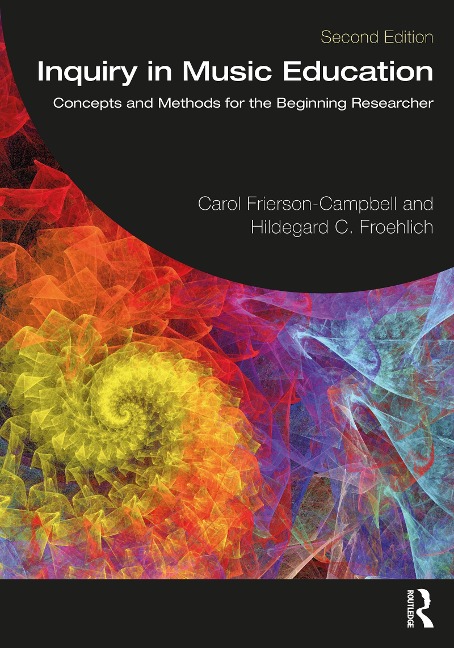
Inquiry in Music Education: Concepts and Methods for the Beginning Researcher, Second Edition, introduces research and scholarship in music education as an ongoing spiral of inquiry. Exploring research conventions that are applicable beyond music to the other arts and humanities as well, it offers a sequential approach to topic formulation, information literacy, reading and evaluating research studies, and planning and conducting original studies within accepted guidelines. Following the legacy begun by Edward Rainbow and Hildegard C. Froehlich, this book expands what is meant by music education and research, teaching tangible skills for music educators with diverse instructional goals and career aspirations. The second edition addresses the changes in methods due to technological advances, a proliferation of new scholarship, and an awareness of the impact of place and culture on researchers and research participants. This edition features: - the most current information on research tools, strategies to remain up-to-date, and expanded supplemental online materials (see inquiryinmusiceducation.com) - case studies that reflect recent research and discuss issues of gender, race, and culture previously absent from mainstream scholarship - an acknowledgment of the assessment demands of contemporary K-12 schooling - a chapter devoted to mixed methods, arts-based, and practitioner inquiry - assignments and other resources designed to be friendly for online course delivery - chapters from contributing authors Debbie Rohwer and Marie McCarthy, bringing additional depth and perspective. Inquiry in Music Education provides students with the language, skills, and protocols necessary to succeed in today's competitive markets of grant writing, arts advocacy, and public outreach as contributing members of the community of music educators.
Carol Frierson-Campbell is Professor at William Paterson University. Hildegard C. Froehlich is Professor Emeritus at the University of North Texas.
Introduction. Learning about the Book and Getting Involved / Part I. Entering the World of Questioning / Chapter 1. The Spiral and Modes of Inquiry: Options, Choices, and Initial Decisions / Chapter 2. Finding and Mapping Sources of Information / Chapter 3. Toward a Rationale and Research Plan: Writing a Contract with Yourself / Part II. Methods in Modes of Inquiry / Chapter 4. Ways of Thinking and their Consequences / Chapter 5. Approaches in the Philosophical Mode of Inquiry / Chapter 6. Historical Inquiry: Getting Inside the Process (Marie McCarthy) / Chapter 7. Purposes and Questions in Qualitative Research / Chapter 8. Selected Procedures for Gathering, Analyzing, and Reflecting on Qualitative Data / Chapter 9. Quantitative Research in Music Education: Letting Numbers Speak / Chapter 10. Understanding Descriptive Statistics (Debbie Rohwer) / Chapter 11. Interpreting Correlations (Debbie Rohwer) / Chapter 12. Designing Ex Post Facto and Experimental Studies (Debbie Rohwer) / Chapter 13. Exploring Mixed Methods, Practitioner, and Arts-Based Inquiry / Chapter 14. Tools for Data Gathering: Basics of Content and Construction / Chapter 15. "So What?" Interpreting and Sharing your Findings / Recapitulation. Placing Your Research Experience in the Bigger Picture / Appendix A: Working out a Course or Project Timeline / Appendix B: Selected "'isms" as found by Rainbow & Froehlich, 1987 / Appendix C: John Curwen Observes Sarah Glover Teaching Music / Appendix D: Sample Template for Organizing Coded Qualitative Data and Files / Appendix E: Choices in Statistical Tests for Parametric and Non-parametric Data
Dieses eBook wird im PDF-Format geliefert und ist mit einem Adobe Kopierschutz (DRM) versehen. Sie können dieses eBook mit allen Geräten lesen, die das PDF-Format und den Adobe Kopierschutz (DRM) unterstützen.
Zum Beispiel mit den folgenden Geräten:
• tolino Reader
Laden Sie das eBook direkt über den Reader-Shop auf dem tolino herunter oder übertragen Sie das eBook auf Ihren tolino mit einer kostenlosen Software wie beispielsweise Adobe Digital Editions.
• Sony Reader & andere eBook Reader
Laden Sie das eBook direkt über den Reader-Shop herunter oder übertragen Sie das eBook mit der kostenlosen Software Sony READER FOR PC/Mac oder Adobe Digital Editions auf ein Standard-Lesegeräte mit epub- und Adobe DRM-Unterstützung.
• Tablets & Smartphones
Möchten Sie dieses eBook auf Ihrem Smartphone oder Tablet lesen, finden Sie hier unsere kostenlose Lese-App für iPhone/iPad und Android Smartphone/Tablets.
• PC & Mac
Lesen Sie das eBook direkt nach dem Herunterladen mit einer kostenlosen Lesesoftware, beispielsweise Adobe Digital Editions, Sony READER FOR PC/Mac oder direkt über Ihre eBook-Bibliothek in Ihrem Konto unter „Meine eBooks“ - „online lesen“.
Schalten Sie das eBook mit Ihrer persönlichen Adobe ID auf bis zu sechs Geräten gleichzeitig frei.
Bitte beachten Sie, dass die Kindle-Geräte das Format nicht unterstützen und dieses eBook somit nicht auf Kindle-Geräten lesbar ist.