Und dann auf "Zum Home-Bildschirm [+]".

Stöbern
genialokal zum Startbildschirm hinzufügen
Installieren Sie die genialokal App auf Ihrem Startbildschirm für einen schnellen Zugriff und eine komfortable Nutzung.
Installieren Sie die genialokal App auf Ihrem Startbildschirm für einen schnellen Zugriff und eine komfortable Nutzung.
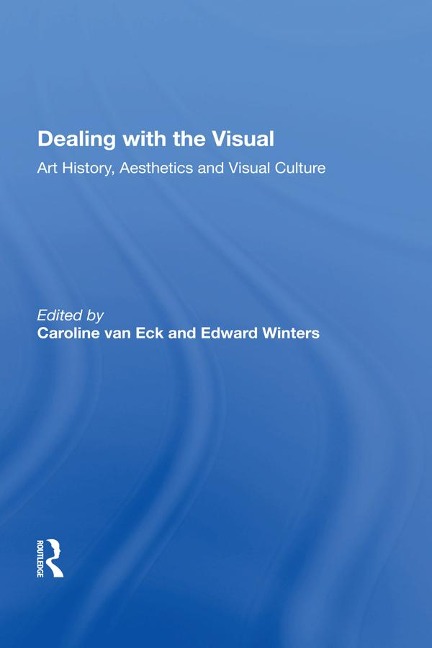
One of the issues underlying current debates between practitioners of art history, visual culture and aesthetics is whether the visual is a unique, irreducible category, or whether it can be assimilated with the textual or verbal without any significant loss. Can paintings, buildings or installations be 'read' in the way texts are read or deciphered, or do works of visual art ask for their own kind of appreciation? This is not only a question of choosing the right method in dealing with visual works of art, but also an issue that touches on the roots of the disciplines involved: can a case be made for the visual as an irreducible category of art, and if so, how is it best studied and appreciated? In this anthology, this question is approached from the angles of three disciplines: aesthetics, visual culture and art history. Unlike many existing overviews of visual culture studies, it includes both painting and architecture, and investigates historical ways of defining and appreciating the visual in their own, contemporary terms. Dealing with the Visual will be of great use to advanced students because it offers an overview of current debates, and to graduate students and professionals in the field because the essays offer in-depth investigations of the methodological issues involved and various historical ways of defining visuality. The topics included range from early modern ways of viewing pictures and sixteenth-century views of Palladio's villas in their landscape settings to contemporary debate about whether there is life yet in painting.
Dr. Caroline van Eck, University of Ghent, Belgium and Edward Winters, West Dean College, UK.
Contents: Introduction, Caroline van Eck and Edward Winters; Part I The experience of the visual in Art History, Aesthetics and Visual Culture: Visual culture and the history of art, David Peters Corbett; Space without hiding places: Merleau-Ponty's remarks on linear perspective, Ren van de Vall; Aesthetics and visual culture: looking at Andrew Pankhurst's Night Painting, Edward Winters; Ought painting be allowed to die?, Derek Matravers; Part II Elucidating the Visual: Marcus Gheeraerdts Captain Thomas Lee, Lucy Gent; Painting and visuality in Van Dyck's Self-portrait with a Sunflower, John Peacock; Sacred contagion: secular jewellery and votive transvaluation at the Santa Casa, Loreto, 1720-1820, Marcia Pointon; Villas and vision: looking at Palladio's villas from the road, Lex Hermans; Staged experiences: the church designs of Nicholas Hawksmoor, Sophie Ploeg; The unreliable eye: the decline of vision as a reliable source of knowledge in Dutch architectural theory of the nineteenth century, Petra Brouwer; Mies van der Rohe - drawing in space, Victoria Watson; Shadow, shading and outline in architectural engraving from Fr t to Letarouilly, Nicholas Savage; Bibliography; Index.
Dieses eBook wird im PDF-Format geliefert und ist mit einem Adobe Kopierschutz (DRM) versehen. Sie können dieses eBook mit allen Geräten lesen, die das PDF-Format und den Adobe Kopierschutz (DRM) unterstützen.
Zum Beispiel mit den folgenden Geräten:
• tolino Reader
Laden Sie das eBook direkt über den Reader-Shop auf dem tolino herunter oder übertragen Sie das eBook auf Ihren tolino mit einer kostenlosen Software wie beispielsweise Adobe Digital Editions.
• Sony Reader & andere eBook Reader
Laden Sie das eBook direkt über den Reader-Shop herunter oder übertragen Sie das eBook mit der kostenlosen Software Sony READER FOR PC/Mac oder Adobe Digital Editions auf ein Standard-Lesegeräte mit epub- und Adobe DRM-Unterstützung.
• Tablets & Smartphones
Möchten Sie dieses eBook auf Ihrem Smartphone oder Tablet lesen, finden Sie hier unsere kostenlose Lese-App für iPhone/iPad und Android Smartphone/Tablets.
• PC & Mac
Lesen Sie das eBook direkt nach dem Herunterladen mit einer kostenlosen Lesesoftware, beispielsweise Adobe Digital Editions, Sony READER FOR PC/Mac oder direkt über Ihre eBook-Bibliothek in Ihrem Konto unter „Meine eBooks“ - „online lesen“.
Schalten Sie das eBook mit Ihrer persönlichen Adobe ID auf bis zu sechs Geräten gleichzeitig frei.
Bitte beachten Sie, dass die Kindle-Geräte das Format nicht unterstützen und dieses eBook somit nicht auf Kindle-Geräten lesbar ist.