Und dann auf "Zum Home-Bildschirm [+]".

Stöbern
genialokal zum Startbildschirm hinzufügen
Installieren Sie die genialokal App auf Ihrem Startbildschirm für einen schnellen Zugriff und eine komfortable Nutzung.
Installieren Sie die genialokal App auf Ihrem Startbildschirm für einen schnellen Zugriff und eine komfortable Nutzung.
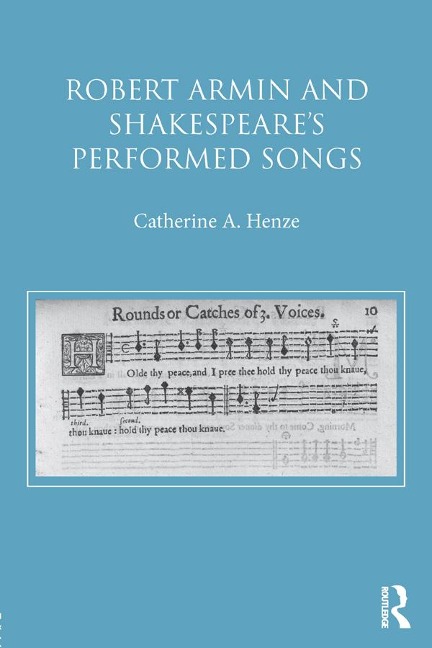
After Robert Armin joined the Chamberlain's Men, singing in Shakespeare's dramas catapulted from 1.25 songs and 9.95 lines of singing per play to 3.44 songs and 29.75 lines of singing, a virtually unnoticed phenomenon. In addition, many of the songs became seemingly improvisatory-similar to Armin's personal style as an author and solo comedian. In order to study Armin's collaborative impact, this interdisciplinary book investigates the songs that have Renaissance music that could have been heard on Shakespeare's stage. They occur in some of Shakespeare's most famous plays, including Much Ado About Nothing, Twelfth Night, Hamlet, and The Tempest. In fact, Shakespeare's plays, as we have them, are not complete. They are missing the music that could have accompanied the plays' songs. Significantly, Renaissance vocal music, far beyond just providing entertainment, was believed to alter the bodies and souls of both performers and auditors to agree with its characteristics, directly inciting passions from love to melancholy. By collaborating with early modern music editor and performing artist Lawrence Lipnik, Catherine Henze is able to provide new performance editions of seventeen songs, including spoken interruptions and cuts and rearrangement of the music to accommodate the dramatist's words. Next, Henze analyzes the complete songs, words and music, according to Renaissance literary and music primary sources, and applies the new information to interpretations of characters and scenes, frequently challenging commonly held literary assessments. The book is organized according to Armin's involvement with the plays, before, during, and after the comic actor joined Shakespeare's company. It offers readers the tools to interpret not only these songs, but also vocal music in dramas by other Renaissance playwrights. Moreover, Robert Armin and Shakespeare's Performed Songs, written with non-specialized terminology, provides a gateway to new areas of research and interpretation in an increasingly significant interdisciplinary field for all interested in Shakespeare and early modern drama.
Catherine A. Henze is a Professor Emerita of Humanistic Studies-English, and Women's and Gender Studies at the University of Wisconsin-Green Bay, USA.
Contents List of Musical Examples Preface and Acknowledgments Introduction 1 Robert Armin: Apprentice, Extemporizing Comedian, Author, Singing Actor, and Possibly Shakespeare's Collaborator 2 Early Modern Music Contexts 3 Armin's Singing Fools: Feste, Lear's Fool, and Autolycus 4 Much Ado About Nothing and As You Like It: Armin's Beginning with Shakespeare's Company 5 Armin's Possible Apprentices: Ophelia and Desdemona 6 Robert Johnson's Songs in Cymbeline and The Tempest: Armin's Final Performances with the King's Men? Conclusion Appendix 1 "Songs in the Plays" Appendix 2 Alternate Settings for "Hold Thy Peace" and "Willow, Willow"
Dieses eBook wird im PDF-Format geliefert und ist mit einem Adobe Kopierschutz (DRM) versehen. Sie können dieses eBook mit allen Geräten lesen, die das PDF-Format und den Adobe Kopierschutz (DRM) unterstützen.
Zum Beispiel mit den folgenden Geräten:
• tolino Reader
Laden Sie das eBook direkt über den Reader-Shop auf dem tolino herunter oder übertragen Sie das eBook auf Ihren tolino mit einer kostenlosen Software wie beispielsweise Adobe Digital Editions.
• Sony Reader & andere eBook Reader
Laden Sie das eBook direkt über den Reader-Shop herunter oder übertragen Sie das eBook mit der kostenlosen Software Sony READER FOR PC/Mac oder Adobe Digital Editions auf ein Standard-Lesegeräte mit epub- und Adobe DRM-Unterstützung.
• Tablets & Smartphones
Möchten Sie dieses eBook auf Ihrem Smartphone oder Tablet lesen, finden Sie hier unsere kostenlose Lese-App für iPhone/iPad und Android Smartphone/Tablets.
• PC & Mac
Lesen Sie das eBook direkt nach dem Herunterladen mit einer kostenlosen Lesesoftware, beispielsweise Adobe Digital Editions, Sony READER FOR PC/Mac oder direkt über Ihre eBook-Bibliothek in Ihrem Konto unter „Meine eBooks“ - „online lesen“.
Schalten Sie das eBook mit Ihrer persönlichen Adobe ID auf bis zu sechs Geräten gleichzeitig frei.
Bitte beachten Sie, dass die Kindle-Geräte das Format nicht unterstützen und dieses eBook somit nicht auf Kindle-Geräten lesbar ist.