Und dann auf "Zum Home-Bildschirm [+]".

Stöbern
genialokal zum Startbildschirm hinzufügen
Installieren Sie die genialokal App auf Ihrem Startbildschirm für einen schnellen Zugriff und eine komfortable Nutzung.
Installieren Sie die genialokal App auf Ihrem Startbildschirm für einen schnellen Zugriff und eine komfortable Nutzung.
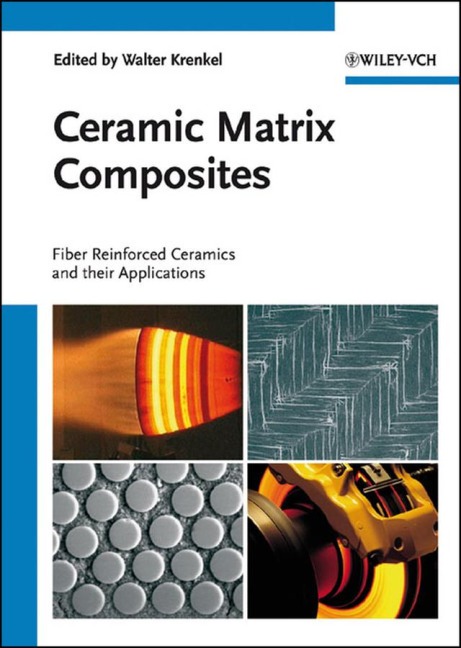
Covering an important material class for modern applications in the aerospace, automotive, energy production and creation sectors, this handbook and reference contains comprehensive data tables and field reports on successfully developed prototypes. The editor and authors are internationally renowned experts from NASA, EADS, DLR, Porsche, MT Aerospace, as well as universities and institutions in the USA, Europe and Japan, and they provide here a comprehensive overview of current R & D with an application-oriented emphasis.
Walter Krenkel holds the Chair of Ceramic Materials at the University of Bayreuth, Germany, where he also heads the Ceramic Composites Group at the Fraunhofer-Gesellschaft. He gained his PhD in aeronautics and aerospace from the University of Stuttgart, and was formerly Head of Ceramic Composite Structures and of the Center of Excellence Lightweight CMC Structures at the German Aerospace Center. He is a Fellow of the American Ceramic Society, and serves on the scientific and advisory boards of many international conferences, workshops and technology exchange forums worldwide. Professor Krenkel`s research focuses on the development and qualification of CMCs and other novel ceramics.
Foreword v Preface xvii List of Contributors xix 1 Fibers for Ceramic Matrix Composites 1 Bernd Clauß 1.1 Introduction 1 1.2 Fibers as Reinforcement in Ceramics 1 1.3 Structure and Properties of Fibers 2 1.3.1 Fiber Structure 2 1.3.2 Structure Formation 3 1.3.3 Structure Parameters and Fiber Properties 4 1.4 Inorganic Fibers 7 1.4.1 Production Processes 7 1.4.1.1 Indirect Fiber Production 7 1.4.1.2 Direct Fiber Production 7 1.4.2 Properties of Commercial Products 9 1.4.2.1 Comparison of Oxide and Non-oxide Ceramic Fibers 9 1.4.2.2 Oxide Ceramic Filament Fibers 10 1.4.2.3 Non-oxide Ceramic Filament Fibers 11 1.5 Carbon Fibers 12 1.5.1 Production Processes 15 1.5.1.1 Carbon Fibers from PAN Precursors 15 1.5.1.2 Carbon Fibers from Pitch Precursors 17 1.5.1.3 Carbon Fibers from Regenerated Cellulose 17 1.5.2 Commercial Products 18 Acknowledgments 19 2 Textile Reinforcement Structures 21 Thomas Gries, Jan Stüve, and Tim Grundmann 2.1 Introduction 21 2.1.1 Definition for the Differentiation of Two-Dimensional and Three-Dimensional Textile Structures 23 2.1.2 Yarn Structures 23 2.2 Two-Dimensional Textiles 24 2.2.1 Nonwovens 24 2.2.2 Woven Fabrics 25 2.2.3 Braids 27 2.2.4 Knitted Fabrics 28 2.2.5 Non-crimp Fabrics 29 2.3 Three-Dimensional Textiles 30 2.3.1 Three-Dimensional Woven Structures 30 2.3.2 Braids 32 2.3.2.1 Overbraided Structures 32 2.3.2.2 Three-Dimensional Braided Structures 34 2.3.3 Three-Dimensional Knits 37 2.3.3.1 Multilayer Weft-Knits 37 2.3.3.2 Spacer Warp-Knits 37 2.4 Preforming 38 2.4.1 One-Step/Multi-Step Preforming 38 2.4.2 Cutting 39 2.4.3 Handling and Draping 39 2.4.4 Joining Technologies 40 2.5 Textile Testing 41 2.5.1 Tensile Strength 41 2.5.2 Bending Stiffness 41 2.5.3 Filament Damage 42 2.5.4 Drapability 42 2.5.5 Quality Management 42 2.6 Conclusions 43 2.6.1 Processability of Brittle Fibers 43 2.6.2 Infiltration of the Textile Structure 43 2.6.3 Mechanical Properties of the Final CMC Structure 44 2.6.4 Productivity and Production Process Complexity 44 2.7 Summary and Outlook 44 Acknowledgments 45 3 Interfaces and Interphases 49 Jacques Lamon 3.1 Introduction 49 3.2 Role of Interfacial Domain in CMCs 50 3.3 Mechanism of Deviation of Transverse Cracks 52 3.4 Phenomena Associated to Deviation of Matrix Cracks 53 3.5 Tailoring Fiber/Matrix Interfaces. Influence on Mechanical Properties and Behavior 55 3.6 Various Concepts of Weak Interfaces/Interphases 59 3.7 Interfacial Properties 61 3.8 Interface Control 64 3.9 Conclusions 66 4 Carbon/Carbons and Their Industrial Applications 69 Roland Weiß 4.1 Introduction 69 4.2 Manufacturing of C/Cs 69 4.2.1 Carbon Fiber Reinforcements 71 4.2.2 Matrix Systems 73 4.2.2.1 Thermosetting Resins as Matrix Precursors 73 4.2.2.2 Thermoplastics as Matrix Precursors 74 4.2.2.3 Gas Phase Derived Carbon Matrices 75 4.2.3 Redensification/Recarbonization Cycles 79 4.2.4 Final Heat Treatment (HTT) 80 4.3 Industrial Applications of C/Cs 82 4.3.1 Oxidation Protection of C/Cs 83 4.3.1.1 Bulk Protection Systems for C/Cs 83 4.3.1.2 Outer Multilayer Coatings 88 4.3.1.3 Outer Glass Sealing Layers 90 4.3.2 Industrial Applications of C/Cs 92 4.3.2.1 C/Cs for High Temperature Furnaces 97 4.3.2.2 Application for Thermal Treatments of Metals 102 4.3.2.3 Application of C/C in the Solar Energy Market 105 5 Melt Infiltration Process 113 Bernhard Heidenreich 5.1 Introduction 113 5.2 Processing 114 5.2.1 Build-up of Fiber Protection and Fiber/Matrix Interface 115 5.2.2 Manufacture of Fiber Reinforced Green Bodies 117 5.2.3 Build-up of a Porous, Fiber Reinforced Preform 118 5.2.4 Si Infiltration and Build-up of SiC Matrix 119 5.3 Properties 121 5.3.1 Material Composition 127 5.3.2 Mechanical Properties 128 5.3.3 CTE and Thermal Conductivity 130 5.3.4 Frictional Properties 131 5.4 Applications 131 5.4.1 Space Applications 131 5.4.2 Short-term Aeronautics 133 5.4.3 Long-term Aeronautics and Power Generation 133 5.4.4 Friction Systems 134 5.4.5 Low-Expansion Structures 135 5.4.6 Further Applications 136 5.5 Summary 137 6 Chemical Vapor Infiltration Processes for Ceramic Matrix Composites: Manufacturing, Properties, Applications 141 Martin Leuchs 6.1 Introduction 141 6.2 CVI Manufacturing Process for CMCs 143 6.2.1 Isothermal-Isobaric Infiltration 144 6.2.2 Gradient Infiltration 145 6.2.3 Discussion of the Two CVI-processes 146 6.3 Properties of CVI Derived CMCs 146 6.3.1 General Remarks 146 6.3.2 Mechanical Properties 148 6.3.2.1 Fracture Mechanism and Toughness 148 6.3.2.2 Stress-Strain Behavior 149 6.3.2.3 Dynamic Loads 151 6.3.2.4 High Temperature Properties and Corrosion 151 6.3.2.5 Thermal and Electrical Properties 153 6.4 Applications and Main Developments 153 6.4.1 Hot Structures in Space 153 6.4.2 Gas Turbines 155 6.4.3 Material for Fusion Reactors 156 6.4.4 Components for Journal Bearings 156 6.5 Outlook 161 7 The PIP-process: Precursor Properties and Applications 165 Günter Motz, Stephan Schmidt, and Steffen Beyer 7.1 Si-based Precursors 165 7.1.1 Introduction 165 7.1.2 Precursor Systems and Properties 166 7.1.3 Cross-Linking Behavior of Precursors 167 7.1.4 Pyrolysis Behavior of Precursors 169 7.1.5 Commercial Available Non-oxide Precursors 171 7.2 The Polymer Impregnation and Pyrolysis Process (PIP) 171 7.2.1 Introduction 171 7.2.2 Manufacturing Technology 173 7.2.2.1 Preform Manufacturing 173 7.2.2.2 Manufacturing of CMC 175 7.3 Applications of the PIP-process 180 7.3.1 Launcher Propulsion 180 7.3.2 Satellite Propulsion 182 7.4 Summary 184 8 Oxide/Oxide Composites with Fiber Coatings 187 George Jefferson, Kristin A. Keller, Randall S. Hay, and Ronald J. Kerans 8.1 Introduction 187 8.2 Applications 189 8.3 CMC Fiber-Matrix Interfaces 189 8.3.1 Interface Control 190 8.3.2 Fiber Coating Methods 191 8.3.3 CMC Processing 194 8.3.4 Fiber-Matrix Interfaces 195 8.3.4.1 Weak Oxides 195 8.3.4.2 Porous Coatings and Fugitive Coatings 197 8.3.4.3 Other Coatings 198 8.4 Summary and Future Work 198 9 All-Oxide Ceramic Matrix Composites with Porous Matrices 205 Martin Schmücker and Peter Mechnich 9.1 Introduction 205 9.1.1 Oxide Ceramic Fibers 206 9.1.2 "Classical" CMC Concepts 207 9.2 Porous Oxide/Oxide CMCs without Fiber/Matrix Interphase 208 9.2.1 Materials and CMC Manufacturing 210 9.2.2 Mechanical Properties 214 9.2.3 Thermal Stability 218 9.2.4 Other Properties 220 9.3 Oxide/Oxide CMCs with Protective Coatings 223 9.4 Applications of Porous Oxide/Oxide CMCs 226 10 Microstructural Modeling and Thermomechanical Properties 231 Dietmar Koch 10.1 Introduction 231 10.2 General Concepts of CMC Design, Resulting Properties, and Modeling 232 10.2.1 Weak Interface Composites WIC 232 10.2.2 Weak Matrix Composites WMC 237 10.2.3 Assessment of Properties of WIC and WMC 238 10.2.4 Modeling of the Mechanical Behavior of WMC 238 10.2.5 Concluding Remarks 243 10.3 Mechanical Properties of CMC 244 10.3.1 General Mechanical Behavior 244 10.3.2 High Temperature Properties 246 10.3.3 Fatigue 251 10.3.4 Concluding Remarks 255 Acknowledgment 256 11 Non-destructive Testing Techniques for CMC Materials 261 Jan Marcel Hausherr and Walter Krenkel 11.1 Introduction 261 11.2 Optical and Haptic Inspection Analysis 263 11.3 Ultrasonic Analysis 262 11.3.1 Physical Principle and Technical Implementation 263 11.3.2 Transmission Analysis 264 11.3.3 Echo-Pulse Analysis 265 11.3.4 Methods and Technical Implementation 266 11.3.5 Ultrasonic Analysis of CMC 267 11.4 Thermography 268 11.4.1 Thermal Imaging (Infrared Photography) 269 11.4.2 Lockin Thermography 271 11.4.3 Ultrasonic Induced Thermography 272 11.4.4 Damage Detection Using Thermography 272 11.5 Radiography (X-Ray Analysis) 273 11.5.1 Detection of X-Rays 273 11.5.1.1 X-Ray Film (Photographic Plates) 274 11.5.1.2 X-Ray Image Intensifier 274 11.5.1.3 Solid State Arrays 275 11.5.1.4 Gas Ionization Detectors (Geiger Counter) 275 11.5.2 Application of Radiography for C/SiC Composites 275 11.5.3 Limitations and Disadvantages of Radiography 277 11.6 X-Ray Computed Tomography 277 11.6.1 Functional Principle of CT 277 11.6.2 Computed Tomography for Defect Detection 279 11.6.3 Micro-structural CT-Analysis 280 11.6.4 Process Accompanying CT-Analysis 282 11.7 Conclusions 283 12 Machining Aspects for the Drilling of C/C-SiC Materials 287 Klaus Weinert and Tim Jansen 12.1 Introduction 287 12.2 Analysis of Machining Task 288 12.3 Determination of Optimization Potentials 290 12.3.1 Tool 290 12.3.2 Parameters 294 12.3.3 Basic Conditions 294 12.4 Process Strategies 295 12.5 Conclusions 300 13 Advanced Joining and Integration Technologies for Ceramic Matrix Composite Systems 30Mrityunjay Singh and Rajiv Asthana 13.1 Introduction 303 13.2 Need for Joining and Integration Technologies 304 13.3 Joint Design, Analysis, and Testing Issue 304 13.3.1 Wettability 305 13.3.2 Surface Roughness 306 13.3.3 Joint Design and Stress State 306 13.3.4 Residual Stress, Joint Strength, and Joint Stability 307 13.4 Joining and Integration of CMC-Metal Systems 309 13.5 Joining and Integration of CMC-CMC Systems 314 13.6 Application in Subcomponents 318 13.7 Repair of Composite Systems 321 13.8 Concluding Remarks and Future Directions 322 Acknowledgments 323 14 CMC Materials for Space and Aeronautical Applications 327 François Christin 14.1 Introduction 327 14.2 Carbon/Carbon Composites 328 14.2.1 Manufacturing of Carbon/Carbon Composites 328 14.2.1.1 n-Dimensional Reinforcement 328 14.2.1.2 Three-Dimensional Reinforcement Preforms 329 14.2.1.3 Densification 333 14.2.2 Carbon/Carbon Composites Applications 335 14.2.2.1 Solid Rocket Motors (SRM) Nozzles 335 14.2.2.2 Liquid Rocket Engines (LRE) 337 14.2.2.3 Friction Applications 338 14.3 Ceramic Composites 338 14.3.1 SiC-SiC and Carbon-SiC Composites Manufacture 339 14.3.1.1 Elaboration 340 14.3.2 SiC-SiC and Carbon-SiC Composites Applications 340 14.3.2.1 Aeronautical and Space Applications 340 14.3.2.2 Liquid Rocket Engines Applications 341 14.3.3 A Breakthrough with a New Concept: The Self-Healing Matrix 343 14.3.3.1 Manufacturing of Ceramic Composites 343 14.3.3.2 The Self-Healing Matrix 344 14.3.3.3 Characterization 344 14.3.4 Representative Applications of These New Materials 347 14.3.4.1 Military Aeronautical Applications 347 14.3.4.2 Commercial Aeronautical Applications 349 15 CMC for Nuclear Applications 35 Akira Kohyama 15.1 Introduction 353 15.2 Gas Reactor Technology and Ceramic Materials 354 15.3 Ceramic Fiber Reinforced Ceramic Matrix Composites (CFRC, CMC) 356 15.4 Innovative SiC/SiC by NITE Process 358 15.5 Characteristic Features of SiC/SiC Composites by NITE Process 359 15.6 Effects of Radiation Damage 362 15.6.1 Ion-Irradiation Technology for SiC Materials 363 15.6.2 Micro-Structural Evolution and Swelling 364 15.6.3 Thermal Conductivity 366 15.6.4 Mechanical Property Changes 369 15.7 Mechanical Property Evaluation Methods 371 15.7.1 Impulse Excitation Method for Young's Modulus Determination 372 15.7.2 Bulk Strength Testing Methods for Ceramics 373 15.7.3 Test Methods for Composites 374 15.7.4 Development of Materials Database 378 15.8 New GFR Concepts Utilizing SiC/SiC Composite Materials 379 15.9 Concluding Remarks 381 16 CMCs for Friction Applications 385 Walter Krenkel and Ralph Renz 16.1 Introduction 385 16.2 C/SiC Pads for Advanced Friction Systems 385 16.2.1 Brake Pads for Emergency Brake Systems 388 16.2.2 C/SiC Brake Pads for High-Performance Elevators 388 16.3 Ceramic Brake Disks 391 16.3.1 Material Properties 392 16.3.2 Manufacturing 394 16.3.3 Braking Mechanism 396 16.3.4 Design Aspects 398 16.3.5 Testing 401 16.4 Ceramic Clutches 403 Index 409
Dieses eBook wird im PDF-Format geliefert und ist mit einem Adobe Kopierschutz (DRM) versehen. Sie können dieses eBook mit allen Geräten lesen, die das PDF-Format und den Adobe Kopierschutz (DRM) unterstützen.
Zum Beispiel mit den folgenden Geräten:
• tolino Reader
Laden Sie das eBook direkt über den Reader-Shop auf dem tolino herunter oder übertragen Sie das eBook auf Ihren tolino mit einer kostenlosen Software wie beispielsweise Adobe Digital Editions.
• Sony Reader & andere eBook Reader
Laden Sie das eBook direkt über den Reader-Shop herunter oder übertragen Sie das eBook mit der kostenlosen Software Sony READER FOR PC/Mac oder Adobe Digital Editions auf ein Standard-Lesegeräte mit epub- und Adobe DRM-Unterstützung.
• Tablets & Smartphones
Möchten Sie dieses eBook auf Ihrem Smartphone oder Tablet lesen, finden Sie hier unsere kostenlose Lese-App für iPhone/iPad und Android Smartphone/Tablets.
• PC & Mac
Lesen Sie das eBook direkt nach dem Herunterladen mit einer kostenlosen Lesesoftware, beispielsweise Adobe Digital Editions, Sony READER FOR PC/Mac oder direkt über Ihre eBook-Bibliothek in Ihrem Konto unter „Meine eBooks“ - „online lesen“.
Schalten Sie das eBook mit Ihrer persönlichen Adobe ID auf bis zu sechs Geräten gleichzeitig frei.
Bitte beachten Sie, dass die Kindle-Geräte das Format nicht unterstützen und dieses eBook somit nicht auf Kindle-Geräten lesbar ist.