Und dann auf "Zum Home-Bildschirm [+]".

Stöbern
genialokal zum Startbildschirm hinzufügen
Installieren Sie die genialokal App auf Ihrem Startbildschirm für einen schnellen Zugriff und eine komfortable Nutzung.
Installieren Sie die genialokal App auf Ihrem Startbildschirm für einen schnellen Zugriff und eine komfortable Nutzung.
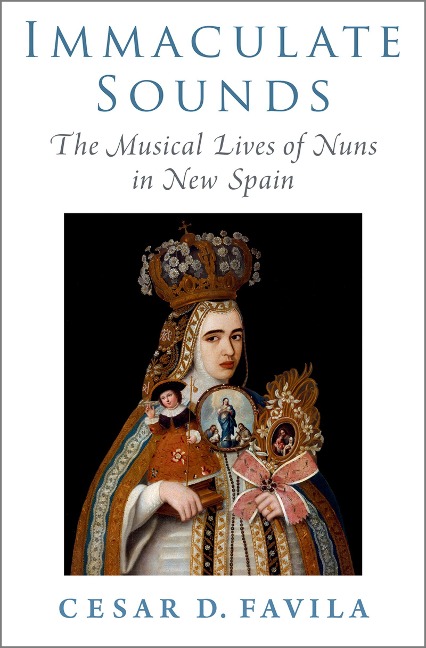
In Catholic doctrine, the Immaculate Conception of the Virgin Mary is the belief that Mary, the mother of Christ, was exempt from original sin from the moment of her conception, and thereby a co-redeemer alongside her son. Praise for this complicated devotion took place in Europe throughout the medieval period and resounded in the Americas with the founding of the first convent in Mexico City under the Order of the Immaculate Conception in 1540. All other orders of nuns in New Spain branched out from this convent, spreading the Marian devotion throughout the region. In this book, author Cesar D. Favila argues that the sonification of virginity and the Virgin Mary was fundamental to the promotion of the Immaculate Conception doctrine, and that this was part of a complex network of sonified practices in the lives of New Spanish nuns. These "immaculate sounds," a term Favila uses for the cloistered nuns' idealized vocalizations as well as the expression of doctrinal rhetoric through musical metaphors, echoed the highly regulated realm of the convent and played a pivotal role in mediating between the lives of New Spanish nuns and the expectation that they would save the secular world with their vocalized prayers. In addition to the sonification of discipline, Favila shows that immaculate sounds also enhanced the nuns' engagement with their religious practices and facilitated embodied and spiritual engagement with Catholic doctrines. Throughout his study, he delves into rarely studied music sources from seventeenth- and eighteenth-century New Spain alongside the rulebooks, devotional literature, and nuns' biographies that regulated convent life and inspired nuns' hymns. In doing so, Favila brings together a narrative of salvation that shines a light on the musical lives of nuns and locates women's agency within a hierarchical society that silenced some women and required others to sing. This is an open access title available under the terms of a CC BY-NC-ND 4.0 International licence. It is free to read on Oxford Academic and offered as a free PDF download from OUP and selected open access locations.
Cesar D. Favila is Assistant Professor of Musicology at UCLA. His work focuses on Mexican music, ranging from colonial New Spain to the contemporary Chicano experience, and often residing at the intersections of music, religion, gender, and race. Favila's work has been funded by numerous grants and fellowships, including support from the American Council of Learned Societies, the American Philosophical Society, and the Fulbright Program, among others.
Dedication Table of Contents Preface, or an Autohistoria-Teoría List of Figures List of Examples List of Tables List of Appendices Note on Sources Introduction: Veil and Voice Part I. Acousmatic Discipline 1. Immaculate Conflicts: Resounding Mary's Immaculate Conception, or Who Was Sister Flor de Santa Clara? 2. Sonic Thresholds: The Grates of the Cloister and the Lips of Nuns, or Who Was Sister Rosa? 3. Disciplined Sounds: Dowry Waivers and Race, or Who Was Sister Mariana Josefa de Señor San Ignacio? Part II. Unity 4. Feasting Sounds: The Eucharistic Honeymoon, or Who Was Sister Paula? 5. Redeeming Sounds: Resounding the Passion of Christ and His Spiritual Brides, or Who Was Sister Marina de San Francisco? Epilogue Acknowledgements Appendices Notes Select Bibliography Index
Dieses eBook wird im PDF-Format geliefert und ist mit einem Adobe Kopierschutz (DRM) versehen. Sie können dieses eBook mit allen Geräten lesen, die das PDF-Format und den Adobe Kopierschutz (DRM) unterstützen.
Zum Beispiel mit den folgenden Geräten:
• tolino Reader
Laden Sie das eBook direkt über den Reader-Shop auf dem tolino herunter oder übertragen Sie das eBook auf Ihren tolino mit einer kostenlosen Software wie beispielsweise Adobe Digital Editions.
• Sony Reader & andere eBook Reader
Laden Sie das eBook direkt über den Reader-Shop herunter oder übertragen Sie das eBook mit der kostenlosen Software Sony READER FOR PC/Mac oder Adobe Digital Editions auf ein Standard-Lesegeräte mit epub- und Adobe DRM-Unterstützung.
• Tablets & Smartphones
Möchten Sie dieses eBook auf Ihrem Smartphone oder Tablet lesen, finden Sie hier unsere kostenlose Lese-App für iPhone/iPad und Android Smartphone/Tablets.
• PC & Mac
Lesen Sie das eBook direkt nach dem Herunterladen mit einer kostenlosen Lesesoftware, beispielsweise Adobe Digital Editions, Sony READER FOR PC/Mac oder direkt über Ihre eBook-Bibliothek in Ihrem Konto unter „Meine eBooks“ - „online lesen“.
Schalten Sie das eBook mit Ihrer persönlichen Adobe ID auf bis zu sechs Geräten gleichzeitig frei.
Bitte beachten Sie, dass die Kindle-Geräte das Format nicht unterstützen und dieses eBook somit nicht auf Kindle-Geräten lesbar ist.