Und dann auf "Zum Home-Bildschirm [+]".

Stöbern
genialokal zum Startbildschirm hinzufügen
Installieren Sie die genialokal App auf Ihrem Startbildschirm für einen schnellen Zugriff und eine komfortable Nutzung.
Installieren Sie die genialokal App auf Ihrem Startbildschirm für einen schnellen Zugriff und eine komfortable Nutzung.

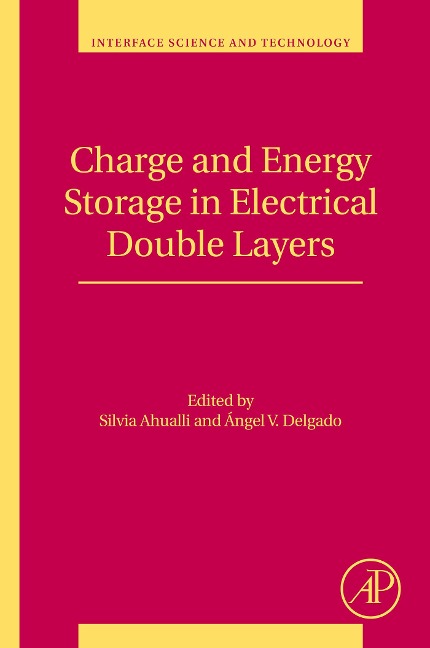
Charge and Energy Storage in Electrical Double Layers presents the basic scientific concepts and implementation of procedures devised to obtain capacitive energy from changes in the potential of electrical double layers when the salinity of solutions is changed. Capacitive deionization- the closely connected reciprocal process-is also considered. The book covers the fundamentals of electrical double layers and ions transport in porous media, the description of promising techniques of energy extraction, and the practical problems involved in each. It is written for scientists in academia and industry, and for graduate students working in supercapacitors, capacitive mixing and deionization.
- Provides a didactic presentation of the fundamentals of interface science involved in charge and energy storage processes
- Presents a pioneering overview of the application of the properties of solid/solution interfaces to desalination and energy extraction
- Edited by leading specialists with vast experience in the theory and experimental characterization of charged interfaces
Section 1. Fundamentals of the Electrical Double Layer 1. Charge and potential distribution in the electrical double layer of porous materials2. The electrical double layer as a capacitor3. Kinetics of ion transport in a porous electrode Section 2. Materials4. Materials selection for capacitive electrodes Section 3. Capacitive Energy Extraction from Double Layer Expansion (CDLE)5. Fundamentals of the method6. Implementation Section 4. Capacitive Energy Extraction by Donnan Potential (CDP)7. Fundamentals of the method8. Cell design and membrane selection Section 5. Capacitive Deionization (CDI)9. Principles and theoretical models of CDI10. Experimental approaches. Use of membranes for improved deionization Section 6. Conclusions11. Future and perspectives of the capacitive techniques