Und dann auf "Zum Home-Bildschirm [+]".

Stöbern
genialokal zum Startbildschirm hinzufügen
Installieren Sie die genialokal App auf Ihrem Startbildschirm für einen schnellen Zugriff und eine komfortable Nutzung.
Installieren Sie die genialokal App auf Ihrem Startbildschirm für einen schnellen Zugriff und eine komfortable Nutzung.
Ihr gewünschter Artikel ist in 0 Buchhandlungen vorrätig - wählen Sie hier eine Buchhandlung in Ihrer Nähe aus:

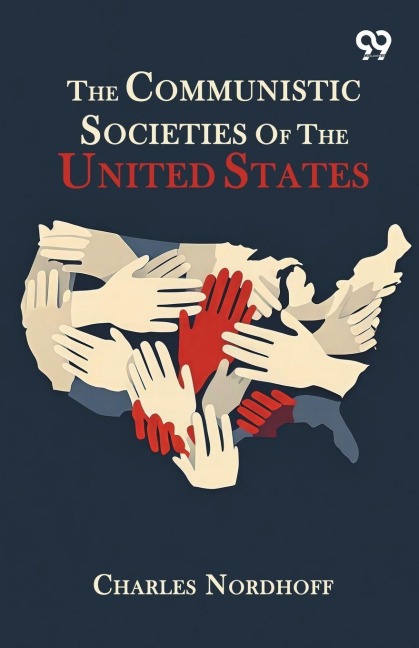
The communistic societies of the United States offers a detailed examination of intentional communities that embraced communal living and shared labor as alternatives to conventional social and economic structures. The book explores their founding principles, organizational patterns, and daily practices, emphasizing how collective effort shaped both social cohesion and individual responsibility. It analyzes the tension between idealism and practicality, highlighting successes and challenges in sustaining cooperative ventures over time. The work also reflects on broader labor issues, considering how these communities provided models for economic independence and self governance, contrasting with traditional labor organizations that often reinforced dependency. Attention is given to spiritual beliefs, social customs, and economic arrangements that guided communal life, illustrating the interplay between philosophy and practice. Through first-hand observation and historical reflection, the book presents an insightful study of social experimentation, offering readers a nuanced perspective on the possibilities and limitations of cooperative living and the pursuit of collective welfare in the context of American society.
Charles Nordhoff was an American journalist and writer known for his descriptive and analytical approach to social and historical subjects. Born on 31 August 1830 in Erwitte, Germany, he later settled in the United States, where he developed a career documenting social experiments, cultural movements, and historical developments. His work often combined first-hand observation with careful reflection, offering readers vivid portrayals of communities, labor practices, and social institutions. He showed particular interest in intentional communities, cooperative ventures, and the ways in which social organization could address economic and moral questions. Nordhoff's writing balanced narrative clarity with analytical insight, making complex social phenomena accessible to a wide audience. Across his career, he contributed to journalism and literature with a focus on exploration, reform, and the human dimension of historical change. Charles Nordhoff died on 14 July 1901 in San Francisco, California, leaving a legacy of socially engaged writing that examined both the practical and philosophical aspects of communal life and societal development.