Und dann auf "Zum Home-Bildschirm [+]".

Stöbern
genialokal zum Startbildschirm hinzufügen
Installieren Sie die genialokal App auf Ihrem Startbildschirm für einen schnellen Zugriff und eine komfortable Nutzung.
Installieren Sie die genialokal App auf Ihrem Startbildschirm für einen schnellen Zugriff und eine komfortable Nutzung.
Ihr gewünschter Artikel ist in 0 Buchhandlungen vorrätig - wählen Sie hier eine Buchhandlung in Ihrer Nähe aus:

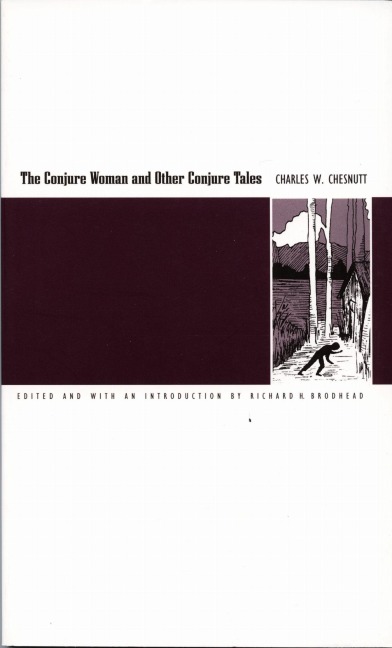
The stories in The Conjure Woman were Charles W. Chesnutt's first great literary success, and since their initial publication in 1899 they have come to be seen as some of the most remarkable works of African American literature from the Emancipation through the Harlem Renaissance. Lesser known, though, is that the The Conjure Woman, as first published by Houghton Mifflin, was not wholly Chesnutt's creation but a work shaped and selected by his editors. This edition reassembles for the first time all of Chesnutt's work in the conjure tale genre, the entire imaginative feat of which the published Conjure Woman forms a part. It allows the reader to see how the original volume was created, how an African American author negotiated with the tastes of the dominant literary culture of the late nineteenth century, and how that culture both promoted and delimited his work. In the tradition of Uncle Remus, the conjure tale listens in on a poor black southerner, speaking strong dialect, as he recounts a local incident to a transplanted northerner for the northerner's enlightenment and edification. But in Chesnutt's hands the tradition is transformed. No longer a reactionary flight of nostalgia for the antebellum South, the stories in this book celebrate and at the same time question the folk culture they so pungently portray, and ultimately convey the pleasures and anxieties of a world in transition. Written in the late nineteenth century, a time of enormous growth and change for a country only recently reunited in peace, these stories act as the uneasy meeting ground for the culture of northern capitalism, professionalism, and Christianity and the underdeveloped southern economy, a kind of colonial Third World whose power is manifest in life charms, magic spells, and ha'nts, all embodied by the ruling figure of the conjure woman. Humorous, heart-breaking, lyrical, and wise, these stories make clear why the fiction of Charles W. Chesnutt has continued to captivate audiences for a century.
Charles W. Chesnutt (1858- 1932) is the author of The Wife of His Youth and Other Stories (1899), The House Behind the Cedars (1900), The Marrow of Tradition (1901), and Colonel's Dream (1905). Richard H. Brodhead, Professor of English at Yale University, is the author of numerous books about nineteenth-century American Literature, including Cultures of Letters: Scenes of Reading and Writing in Nineteenth-Century America.
Introduction 1
Chronology of Composition 23
A Note on the Text 25
Selected Bibliography 27
The Conjure Woman
The Goophered Grapevine 31
Po' Sandy 44
Mars Jeems's Nightmare 55
The Conjurer's Revenge 70
Sis' Becky's Pickaninny 82
The Gray Wolf's Ha'nt 94
Hot-Foot Hannibal 107
Related Tales
Dave's Neckliss 123
A Deep Sleeper 136
Lonesome Ben 146
The Dumb Witness 158
A Victim of Heredity; or, Why the Darkey Loves Chicken 172
Tobe's Tribulations 183
The Marked Tree 194