Und dann auf "Zum Home-Bildschirm [+]".

Stöbern
genialokal zum Startbildschirm hinzufügen
Installieren Sie die genialokal App auf Ihrem Startbildschirm für einen schnellen Zugriff und eine komfortable Nutzung.
Installieren Sie die genialokal App auf Ihrem Startbildschirm für einen schnellen Zugriff und eine komfortable Nutzung.
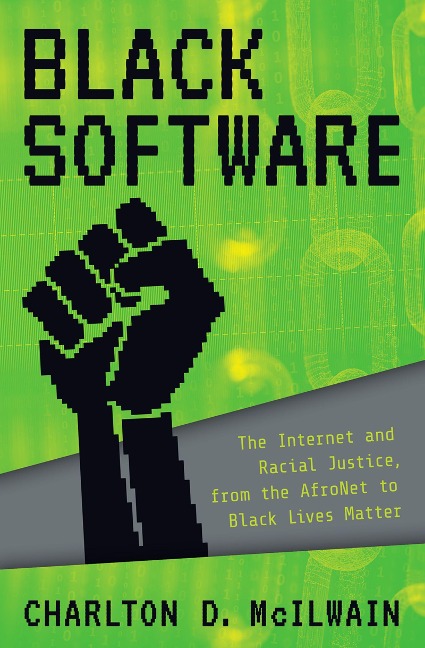
Activists, pundits, politicians, and the press frequently proclaim today's digitally mediated racial justice activism the new civil rights movement. As Charlton D. McIlwain shows in this book, the story of racial justice movement organizing online is much longer and varied than most people know. In fact, it spans nearly five decades and involves a varied group of engineers, entrepreneurs, hobbyists, journalists, and activists. But this is a history that is virtually unknown even in our current age of Google, Facebook, Twitter, and Black Lives Matter. Beginning with the simultaneous rise of civil rights and computer revolutions in the 1960s, McIlwain, for the first time, chronicles the long relationship between African Americans, computing technology, and the Internet. In turn, he argues that the forgotten figures who worked to make black politics central to the Internet's birth and evolution paved the way for today's explosion of racial justice activism. From the 1960s to present, the book examines how computing technology has been used to neutralize the threat that black people pose to the existing racial order, but also how black people seized these new computing tools to build community, wealth, and wage a war for racial justice.Through archival sources and the voices of many of those who lived and made this history, Black Software centralizes African Americans' role in the Internet's creation and evolution, illuminating both the limits and possibilities for using digital technology to push for racial justice in the United States and across the globe.
Charlton D. McIlwain is Vice Provost of Faculty Engagement & Development at New York University, and Professor of Media, Culture, and Communication at NYU's Steinhardt School. He is also the Founder of the Center for Critical Race & Digital Studies, and the co-author of Race Appeal: How Candidates Invoke Race in U.S. Political Campaigns, winner of the 2012 APSA Ralph Bunche Award.
Prologue Chapter One: The Great Equalizer Chapter Two: Different Strokes Chapter Three: The Roxbury Shake Chapter Four: The Vanguard Chapter Five: Black Software Comes to Cambridge Chapter Six: The Electronic Village Needs an Organizer Chapter Seven: Want Ad for a Revolution Chapter Eight: The Battle for (Black) Cyberspace Chapter Nine: 100 Years Black: A Cautionary Tale Chapter 10: Taking IT to the Streets Chapter Eleven: Collision Course Chapter Twelve: The Revolution, Brought to You by IBM Chapter Thirteen: The Committeemen Chapter Fourteen: What Happened at the Homestead Chapter Fifteen: Kansas City Burning Chapter Sixteen: The Man's Best Friend Chapter Seventeen: Digital Technology: Our Past Is Prologue Notes Bibliography Index
Dieses eBook wird im PDF-Format geliefert und ist mit einem Adobe Kopierschutz (DRM) versehen. Sie können dieses eBook mit allen Geräten lesen, die das PDF-Format und den Adobe Kopierschutz (DRM) unterstützen.
Zum Beispiel mit den folgenden Geräten:
• tolino Reader
Laden Sie das eBook direkt über den Reader-Shop auf dem tolino herunter oder übertragen Sie das eBook auf Ihren tolino mit einer kostenlosen Software wie beispielsweise Adobe Digital Editions.
• Sony Reader & andere eBook Reader
Laden Sie das eBook direkt über den Reader-Shop herunter oder übertragen Sie das eBook mit der kostenlosen Software Sony READER FOR PC/Mac oder Adobe Digital Editions auf ein Standard-Lesegeräte mit epub- und Adobe DRM-Unterstützung.
• Tablets & Smartphones
Möchten Sie dieses eBook auf Ihrem Smartphone oder Tablet lesen, finden Sie hier unsere kostenlose Lese-App für iPhone/iPad und Android Smartphone/Tablets.
• PC & Mac
Lesen Sie das eBook direkt nach dem Herunterladen mit einer kostenlosen Lesesoftware, beispielsweise Adobe Digital Editions, Sony READER FOR PC/Mac oder direkt über Ihre eBook-Bibliothek in Ihrem Konto unter „Meine eBooks“ - „online lesen“.
Schalten Sie das eBook mit Ihrer persönlichen Adobe ID auf bis zu sechs Geräten gleichzeitig frei.
Bitte beachten Sie, dass die Kindle-Geräte das Format nicht unterstützen und dieses eBook somit nicht auf Kindle-Geräten lesbar ist.