Und dann auf "Zum Home-Bildschirm [+]".

Stöbern
genialokal zum Startbildschirm hinzufügen
Installieren Sie die genialokal App auf Ihrem Startbildschirm für einen schnellen Zugriff und eine komfortable Nutzung.
Installieren Sie die genialokal App auf Ihrem Startbildschirm für einen schnellen Zugriff und eine komfortable Nutzung.
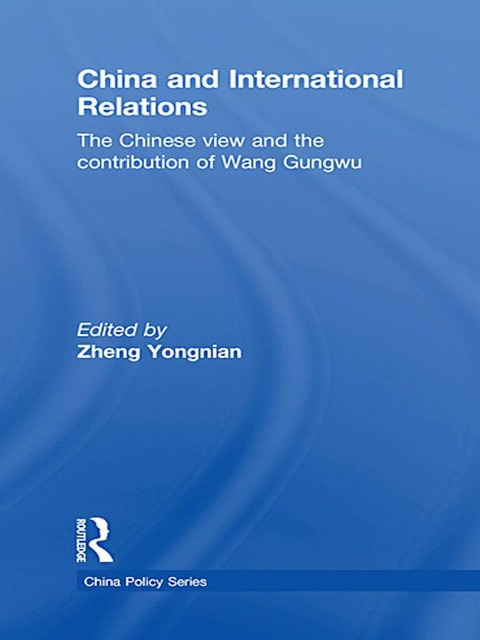
Despite Beijing's repeated assurance that China's rise will be "peaceful", the United States, Japan and the European Union as well as many of China's Asian neighbours feel uneasy about the rise of China. Although China's rise could be seen as inevitable, it remains uncertain as to how a politically and economically powerful China will behave, and how it will conduct its relations with the outside world. One major problem with understanding China's international relations is that western concepts of international relations only partially explain China's approach. China's own flourishing, indigeneous community of international relations scholars have borrowed many concepts from the west, but their application has not been entirely successful, so the work of conceptualizing and theorizing China's approach to international relations remains incomplete. Written by some of the foremost scholars in the field of China studies, this book focuses on the work of Wang Gungwu - one of the most influential scholars writing on international relations - including topics such as empire, nation-state, nationalism, state ideology, and the Chinese view of world order. Besides honouring Wang Gungwu as a great scholar, the book explores how China can be integrated more fully into international relations studies and theories; discusses the extent to which existing IR theory succeeds or fails to explain Chinese IR behaviour, and demonstrates how the study of Chinese experiences can enrich the IR field.
Zheng Yongnian is Professor and Director of the East Asian Institute at the National University of Singapore. His many books include (as author) Technological Empowerment, De facto Federalism, Globalization and State Transformation in China, Discovering Chinese Nationalism in China, and Will China Become Democratic, and (as co-editor) The Chinese Communist Party in Reform, and China and the New International Order.
Part 1: Historicity and Social Foundation of China's Domestic Order and International Relations 1. Historicity and International Relations: A Tribute to Wang Gungwu 2. A Re-Appraisal of Abrahamic Values and Neorealist IR Theory: From a Confucian-Asian Perspective 3. Historians and Chinese World Order: Fairbank, Wang, and the Matter of 'Indeterminate Relevance' 4. The Historical Roots and Character of Secularism in China Part 2: Reinterpreting China's "World Order" 5. Rethinking the "Tribute System": Broadening the Conceptual Horizon of Historical East Asian Politics 6. Traditional Chinese Theory and Practice of Foreign Relations: A Reassessment 7. Traditional China and the Globalization of International Relations Thinking Part 3: Chinese Overseas and China's International Relations 8. Conceptualizing Chinese Migration: Wang Gungwu and His Struggle with Terminology 9. China, Cuba, and the Chinese in Cuba: Emigration, International Relations, and How They Interact 10. Chinese Overseas and a Rising China: The Limits of a Diplomatic "Diaspora Option" Part 4: China in Contemporary World Politics 11. Understanding the Intangible in International Relations: The Cultural Dimension of China's Integration with the International Community 12. Has the Rise of China Made Latin America more Unsafe? 13. Japan's Response to the Fall and Rise of China: The Shift of Foreign Policy Mainstream Thinking Part 4: Historical Continuity and Transformation of China's International Relations 14. The Returned China with Chinese-ness in History and World Politics: A Deeper Understanding with the Intellectual Guide from Wang Gungwu 15. Organizing China's Inter-state Relations: From "Tianxia" (All-Under-Heaven) to Modern International Order 16. Wang Gungwu, the Transnational and Research Imagination
Dieses eBook wird im PDF-Format geliefert und ist mit einem Adobe Kopierschutz (DRM) versehen. Sie können dieses eBook mit allen Geräten lesen, die das PDF-Format und den Adobe Kopierschutz (DRM) unterstützen.
Zum Beispiel mit den folgenden Geräten:
• tolino Reader
Laden Sie das eBook direkt über den Reader-Shop auf dem tolino herunter oder übertragen Sie das eBook auf Ihren tolino mit einer kostenlosen Software wie beispielsweise Adobe Digital Editions.
• Sony Reader & andere eBook Reader
Laden Sie das eBook direkt über den Reader-Shop herunter oder übertragen Sie das eBook mit der kostenlosen Software Sony READER FOR PC/Mac oder Adobe Digital Editions auf ein Standard-Lesegeräte mit epub- und Adobe DRM-Unterstützung.
• Tablets & Smartphones
Möchten Sie dieses eBook auf Ihrem Smartphone oder Tablet lesen, finden Sie hier unsere kostenlose Lese-App für iPhone/iPad und Android Smartphone/Tablets.
• PC & Mac
Lesen Sie das eBook direkt nach dem Herunterladen mit einer kostenlosen Lesesoftware, beispielsweise Adobe Digital Editions, Sony READER FOR PC/Mac oder direkt über Ihre eBook-Bibliothek in Ihrem Konto unter „Meine eBooks“ - „online lesen“.
Schalten Sie das eBook mit Ihrer persönlichen Adobe ID auf bis zu sechs Geräten gleichzeitig frei.
Bitte beachten Sie, dass die Kindle-Geräte das Format nicht unterstützen und dieses eBook somit nicht auf Kindle-Geräten lesbar ist.