Und dann auf "Zum Home-Bildschirm [+]".

Stöbern
genialokal zum Startbildschirm hinzufügen
Installieren Sie die genialokal App auf Ihrem Startbildschirm für einen schnellen Zugriff und eine komfortable Nutzung.
Installieren Sie die genialokal App auf Ihrem Startbildschirm für einen schnellen Zugriff und eine komfortable Nutzung.
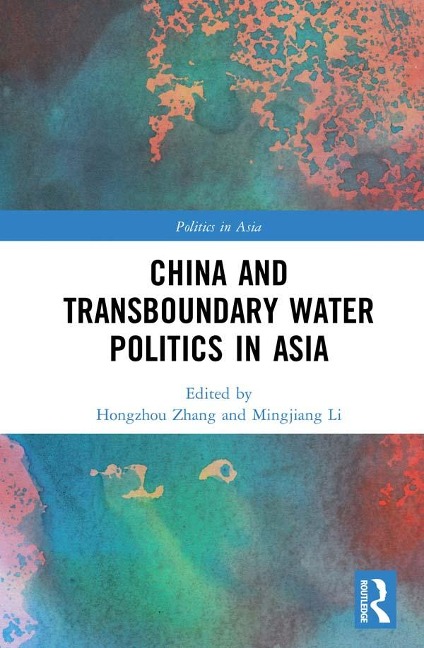
Water-related conflicts have a long history and will continue to be a global and regional problem. Asia, with 1.5 billion of its people living in shared river basins, and with very few transboundary rivers governed by treaties, is especially prone to such conflicts. The key to mitigating transboundary water conflicts and advancing cooperation in Asia is largely in the hands of China, the upstream country for most of Asia's major transboundary rivers. To avert the looming water crisis, apart from spending billions of dollars on domestic water transfer projects such as the South-North Water Diversion Megaproject, as well as on water conservancy and pollution abatement, China has sought to utilize the water resources of the major rivers that run across borders with neighbouring countries. On these transboundary rivers, China has built or plans to build large dams for hydroelectricity and major water diversion facilities, which has triggered anxiety and complaints from downstream countries and criticism from the international society. This book aims to systematically examine the complex reality of water contestations between China and its neighbouring countries. It provides a discussion on transboundary hydropolitics beyond the state-centric geopolitical perspective to dig into various political, institutional, legal, historical, geographical, and demographic factors that affect China's policies and practices towards transboundary water issues. This book also provides a collection of comparative case studies on China's water resources management on the Mekong River with other five riparian states in the Lower Mekong region: the Salween River with Myanmar, the Brahmaputra River with India, the Amur River with Russia and Mongolia, the Illy and Irtysh Rivers with Kazakhstann, and the Yalu and Tumen Rivers with North Korea. Furthermore, this book sheds light on China's future role in global water governance.
Hongzhou Zhang is a Research Fellow in the China Programme at the S. Rajaratnam School of International Studies (RSIS) at Nanyang Technological University, Singapore. Mingjiang Li is an Associate Professor and Coordinator of the China Programme at the S. Rajaratnam School of International Studies (RSIS) at Nanyang Technological University, Singapore.
List of contributors Acknowledgements Part I: Key factors shaping China's transboundary water policies and practices 1.The thirsty China and its transboundary waters (Hongzhou Zhang and Mingjiang Li) 2.Assessing China's domestic hydropolitics (Scott Moore) 3.Transboundary river management in Southeast Asia: The role of Chinese dam-builders (Frauke Urban, Giuseppina Siciliano, and Johan Nordensvard) 4.The evolution of China's water diplomacy in the Lancang-Mekong River Basin: Motivation and policy choices (Yanjun Guo) Part II: Major transboundary rivers 5.Transboundary cooperation on the Amur River Basin in recent decades (Eugene Simonov and Eugene Egidarev) 6.Analysis on China-DPRK joint development in Yalu River and Tumen River: From the perspective of China (Zhifei Li) 7.Linking environmental security to transboundary water governance to manage the Mekong River (R. Edward Grumbine) 8.Conceptualizing Chinese engagement in Myanmar: An analysis of the Mong Ton and Hat Gyi Dam projects (Julian Kirchherr) 9.Building bridges through dialogue for the Brahmaputra River Basin (Vishaka Gulati, Arundhati Deka, Safa Fanaian, Sumit Vij, and Anamika Barua) 10.Sino-Kazakhstan transboundary water cooperation: History, current status and future priorities (Zhanggui Zhou and Ruolin Wang) Part III: China and global water governance 11.China and global water governance: New developments (Hongzhou Zhang and Mingjiang Li) Index
Dieses eBook wird im PDF-Format geliefert und ist mit einem Adobe Kopierschutz (DRM) versehen. Sie können dieses eBook mit allen Geräten lesen, die das PDF-Format und den Adobe Kopierschutz (DRM) unterstützen.
Zum Beispiel mit den folgenden Geräten:
• tolino Reader
Laden Sie das eBook direkt über den Reader-Shop auf dem tolino herunter oder übertragen Sie das eBook auf Ihren tolino mit einer kostenlosen Software wie beispielsweise Adobe Digital Editions.
• Sony Reader & andere eBook Reader
Laden Sie das eBook direkt über den Reader-Shop herunter oder übertragen Sie das eBook mit der kostenlosen Software Sony READER FOR PC/Mac oder Adobe Digital Editions auf ein Standard-Lesegeräte mit epub- und Adobe DRM-Unterstützung.
• Tablets & Smartphones
Möchten Sie dieses eBook auf Ihrem Smartphone oder Tablet lesen, finden Sie hier unsere kostenlose Lese-App für iPhone/iPad und Android Smartphone/Tablets.
• PC & Mac
Lesen Sie das eBook direkt nach dem Herunterladen mit einer kostenlosen Lesesoftware, beispielsweise Adobe Digital Editions, Sony READER FOR PC/Mac oder direkt über Ihre eBook-Bibliothek in Ihrem Konto unter „Meine eBooks“ - „online lesen“.
Schalten Sie das eBook mit Ihrer persönlichen Adobe ID auf bis zu sechs Geräten gleichzeitig frei.
Bitte beachten Sie, dass die Kindle-Geräte das Format nicht unterstützen und dieses eBook somit nicht auf Kindle-Geräten lesbar ist.