
Stöbern
genialokal zum Startbildschirm hinzufügen
Installieren Sie die genialokal App auf Ihrem Startbildschirm für einen schnellen Zugriff und eine komfortable Nutzung.
Installieren Sie die genialokal App auf Ihrem Startbildschirm für einen schnellen Zugriff und eine komfortable Nutzung.
Tippen Sie einfach auf Teilen:
 Und dann auf "Zum Home-Bildschirm [+]".
Bei genialokal.de kaufen Sie online bei Ihrer lokalen, inhabergeführten Buchhandlung!

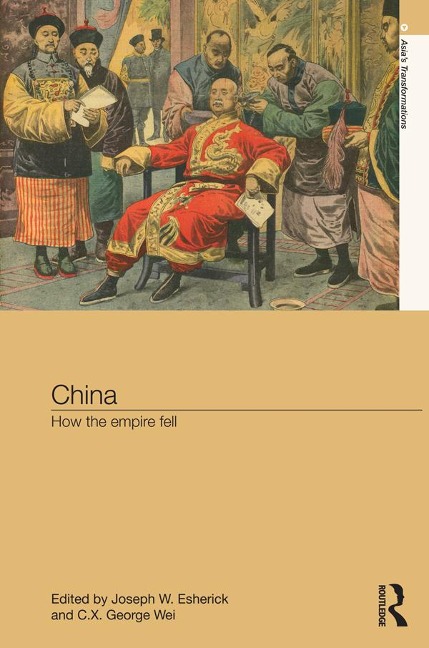

The Qing dynasty was China's last, and it created an empire of unprecedented size and prosperity. However in 1911 the empire collapsed within a few short months, and China embarked on a revolutionary course that lasted through most of the twentieth century. The 1911 Revolution ended two millennia of imperial rule and established the Republic of China, but dissatisfaction with the early republic fuelled further revolutionary movements, each intended to be more thoroughgoing than the last, from the National Revolution of the 1920s, to the Communist Revolution, and finally the Cultural Revolution. On the centenary of the 1911 Revolution, Chinese scholars debated the causes and significance of the empire's collapse, and this book presents twelve of the most important contributions. Rather than focusing on Sun Yat-sen's relatively weak and divided revolutionary movement, as much previous scholarship has, these studies examine the internal dynamics of political and socio-economic change in China. The chapters reveal how reforms in education, army organization, and constitutional rule created new social forces and political movements that undermined dynastic legitimacy within China and on its frontiers. Through detailed analyses, using new archival, memoir, diary, and newspaper sources, the authors cast new light on the sudden collapse of an empire that many thought was at last embarked on a road to reform and national rejuvenation. China: How the Empire Fell will be of huge interest to students and scholars of modern Chinese history as well as those of contemporary China.
Joseph W. Esherick is Emeritus professor of History, University of California, San Diego, USA. C. X. George Wei is Professor and Head of the Department of History at the University of Macau.
Introduction Part I: The Challenges of Reform 1. The Reform Predicament 2. Late Qing Governors and Provincial Assemblies 3. Conflict and Competition: A New Perspective on Late Qing Politics Part II: The Sichuan Railway Crisis: Prelude to Revolution 4. Zaifeng and Qing Railway Policy Part III: Hubei Reforms and the Wuchang Uprising 5. The Policies in Hubei 6. Tang Hualong in the 1911 Revolution Part IV: Qing Officials and the Revolution 7. Provincial Officials in 1911 8. On the Mentality of Manchu and Mongol Elites During the 1911 Revolution Part V: Yuan Shikai 9. Zaifeng's Dismissal of Yuan Shikai and Sino-US-Japanese Diplomacy 10. The Qing's Three Armies after the Wuchang Uprising 11. Yuan Shikai and the February 1912 'Beijing Mutiny' Part VI: The Revolution and the Frontier 12. The 'Political Game' and 'State-Building:' Outer Mongolia during the 1911 Revolution