Und dann auf "Zum Home-Bildschirm [+]".

Stöbern
genialokal zum Startbildschirm hinzufügen
Installieren Sie die genialokal App auf Ihrem Startbildschirm für einen schnellen Zugriff und eine komfortable Nutzung.
Installieren Sie die genialokal App auf Ihrem Startbildschirm für einen schnellen Zugriff und eine komfortable Nutzung.
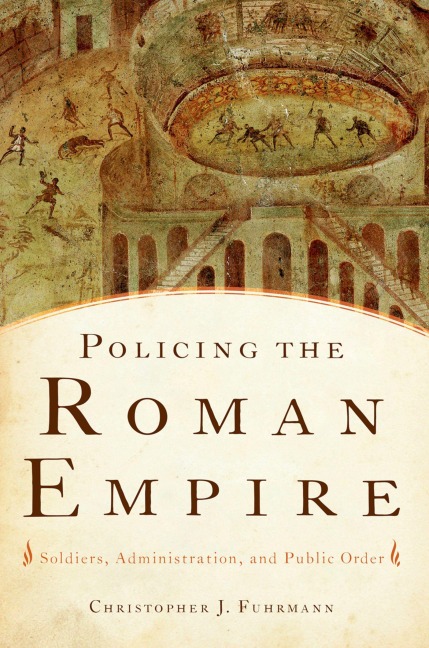
Historians often regard the police as a modern development, and indeed, many pre-modern societies had no such institution. Most recent scholarship has claimed that Roman society relied on kinship networks or community self-regulation as a means of conflict resolution and social control. This model, according to Christopher Fuhrmann, fails to properly account for the imperial-era evidence, which argues in fact for an expansion of state-sponsored policing activities in the first three centuries of the Common Era. Drawing on a wide variety of source material--from art, archaeology, administrative documents, Egyptian papyri, laws, Jewish and Christian religious texts, and ancient narratives--Policing the Roman Empire provides a comprehensive overview of Roman imperial policing practices with chapters devoted to fugitive slave hunting, the pivotal role of Augustus, the expansion of policing under his successors, and communities lacking soldier-police that were forced to rely on self-help or civilian police. Rather than merely cataloguing references to police, this study sets policing in the broader context of Roman attitudes towards power, public order, and administration. Fuhrmann argues that a broad range of groups understood the potential value of police, from the emperors to the peasantry. Years of different police initiatives coalesced into an uneven patchwork of police institutions that were not always coordinated, effective, or upright. But the end result was a new means by which the Roman state--more ambitious than often supposed--could seek to control the lives of its subjects, as in the imperial persecutions of Christians. The first synoptic analysis of Roman policing in over a hundred years, and the first ever in English, Policing the Roman Empire will be of great interest to scholars and students of classics, history, law, and religion.
Christopher J. Fuhrmann is Associate Professor of History at the University of North Texas.
Abbreviations Roman Emperors from Augustus to Julian Maps of the Roman Empire 1. Introduction 2. "Arrest me, for I have run away": Fugitive Slave Hunting in the Roman Empire 3. "Like a thief in the night": Self-help, Magisterial Authority, and Civilian Policing 4. "I brought peace to the provinces": Augustus and The Rhetoric of Imperial Peace 5. "To squelch the discord of the rabble": Military Policing in Rome and Italy under Augustus' Successors 6. "Let there be no violence contrary to my wish": Emperors and Provincial Order 7. "Keep your province pacified and quiet": Provincial Governors, Public Order, and Policing 8. "Military stations throughout all provinces": Detached-Service Soldier-Police 9. Conclusion Appendix: Differentiating stationarii from beneficiarii consulares and Other Detached-Service Soldiers Bibliography Index of Ancient Sources General Index
Dieses eBook wird im PDF-Format geliefert und ist mit einem Adobe Kopierschutz (DRM) versehen. Sie können dieses eBook mit allen Geräten lesen, die das PDF-Format und den Adobe Kopierschutz (DRM) unterstützen.
Zum Beispiel mit den folgenden Geräten:
• tolino Reader
Laden Sie das eBook direkt über den Reader-Shop auf dem tolino herunter oder übertragen Sie das eBook auf Ihren tolino mit einer kostenlosen Software wie beispielsweise Adobe Digital Editions.
• Sony Reader & andere eBook Reader
Laden Sie das eBook direkt über den Reader-Shop herunter oder übertragen Sie das eBook mit der kostenlosen Software Sony READER FOR PC/Mac oder Adobe Digital Editions auf ein Standard-Lesegeräte mit epub- und Adobe DRM-Unterstützung.
• Tablets & Smartphones
Möchten Sie dieses eBook auf Ihrem Smartphone oder Tablet lesen, finden Sie hier unsere kostenlose Lese-App für iPhone/iPad und Android Smartphone/Tablets.
• PC & Mac
Lesen Sie das eBook direkt nach dem Herunterladen mit einer kostenlosen Lesesoftware, beispielsweise Adobe Digital Editions, Sony READER FOR PC/Mac oder direkt über Ihre eBook-Bibliothek in Ihrem Konto unter „Meine eBooks“ - „online lesen“.
Schalten Sie das eBook mit Ihrer persönlichen Adobe ID auf bis zu sechs Geräten gleichzeitig frei.
Bitte beachten Sie, dass die Kindle-Geräte das Format nicht unterstützen und dieses eBook somit nicht auf Kindle-Geräten lesbar ist.