Und dann auf "Zum Home-Bildschirm [+]".

Stöbern
genialokal zum Startbildschirm hinzufügen
Installieren Sie die genialokal App auf Ihrem Startbildschirm für einen schnellen Zugriff und eine komfortable Nutzung.
Installieren Sie die genialokal App auf Ihrem Startbildschirm für einen schnellen Zugriff und eine komfortable Nutzung.
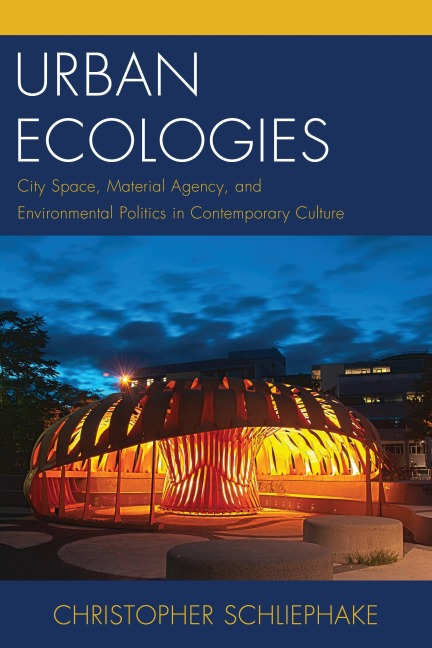
The term "urban ecology" has become a buzzword in various disciplines, including the social and natural sciences as well as urban planning and architecture. The environmental humanities have been slow to adapt to current theoretical debates, often excluding human-built environments from their respective frameworks. This book closes this gap both in theory and in practice, bringing together "urban ecology" with ecocritical and cultural ecological approaches by conceptualizing the city as an integral part of the environment and as a space in which ecological problems manifest concretely. Arguing that culture has to be seen as an active component and integral factor within urban ecologies, it makes use of a metaphorical use of the term, perceiving cities as spatial phenomena that do not only have manifold and complex material interrelations with their respective (natural) environments, but that are intrinsically connected to the ideas, imaginations, and interpretations that make up the cultural symbolic and discursive side of our urban lives and that are stored and constantly renegotiated in their cultural and artistic representations. The city is, within this framework, both seen as an ecosystemically organized space as well as a cultural artifact. Thus, the urban ecology outlined in this study takes its main impetus from an analysis of examples taken from contemporary culture that deal with urban life and the complex interrelations between urban communities and their (natural and built) environments.
Christopher Schliephake is teaching assistant in the History Department at the University of Augsburg.
Table of Contents
Introduction: A Cultural Urban Ecology
Chapter 1: "(Eco-)Cosmopolitanism": The Local, the Global and the Ecology of World Cities
Chapter 2: "Force of Nature": The Ecology of the Inner-City Drug Culture in The Wire
Chapter 3: "The City that Care Forgot": The Complex Ecology of (Post-)Katrina New Orleans
Chapter 4: The More-than-Human City: Material Agents, Cyborgs, and the Invasion of Alien Species
Epilogue
Bibliography
About the Author
Dieses eBook wird im PDF-Format geliefert und ist mit einem Adobe Kopierschutz (DRM) versehen. Sie können dieses eBook mit allen Geräten lesen, die das PDF-Format und den Adobe Kopierschutz (DRM) unterstützen.
Zum Beispiel mit den folgenden Geräten:
• tolino Reader
Laden Sie das eBook direkt über den Reader-Shop auf dem tolino herunter oder übertragen Sie das eBook auf Ihren tolino mit einer kostenlosen Software wie beispielsweise Adobe Digital Editions.
• Sony Reader & andere eBook Reader
Laden Sie das eBook direkt über den Reader-Shop herunter oder übertragen Sie das eBook mit der kostenlosen Software Sony READER FOR PC/Mac oder Adobe Digital Editions auf ein Standard-Lesegeräte mit epub- und Adobe DRM-Unterstützung.
• Tablets & Smartphones
Möchten Sie dieses eBook auf Ihrem Smartphone oder Tablet lesen, finden Sie hier unsere kostenlose Lese-App für iPhone/iPad und Android Smartphone/Tablets.
• PC & Mac
Lesen Sie das eBook direkt nach dem Herunterladen mit einer kostenlosen Lesesoftware, beispielsweise Adobe Digital Editions, Sony READER FOR PC/Mac oder direkt über Ihre eBook-Bibliothek in Ihrem Konto unter „Meine eBooks“ - „online lesen“.
Schalten Sie das eBook mit Ihrer persönlichen Adobe ID auf bis zu sechs Geräten gleichzeitig frei.
Bitte beachten Sie, dass die Kindle-Geräte das Format nicht unterstützen und dieses eBook somit nicht auf Kindle-Geräten lesbar ist.