
Stöbern
genialokal zum Startbildschirm hinzufügen
Installieren Sie die genialokal App auf Ihrem Startbildschirm für einen schnellen Zugriff und eine komfortable Nutzung.
Installieren Sie die genialokal App auf Ihrem Startbildschirm für einen schnellen Zugriff und eine komfortable Nutzung.
Tippen Sie einfach auf Teilen:
 Und dann auf "Zum Home-Bildschirm [+]".
Bei genialokal.de kaufen Sie online bei Ihrer lokalen, inhabergeführten Buchhandlung!
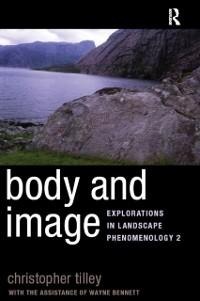
The understanding and interpretation of ancient architecture, landscapes, and art has always been viewed through an iconographic lens-a cognitive process based on traditional practices in art history. But ancient people did not ascribe their visions on canvas, rather on hills, stones, and fields. Thus, Chris Tilley argues, the iconographic approach falls short of understanding how ancient people interacted with their imagery. A kinaesthetic approach, one that uses the full body and all the senses, can better approximate the meaning that these artifacts had for their makers and today's viewers. The body intersects the landscape in a myriad of ways-through the effort to reach the image, the angles that one can use to view, the multiple senses required for interaction. Tilley outlines the choreographic basis of understanding ancient landscapes and art phenomenologically, and demonstrates the power of his thesis through examples of rock art and megalithic architecture in Norway, Ireland, and Sweden. This is a powerful new model from one of the leading contemporary theorists in archaeology.
Christopher Tilley is Professor of Material Culture in the Department of Anthropology, University College London. He has written and edited over twenty books on material culture and archaeology and is a founding editor of the Journal of Material Culture. He has conducted field research throughout much of Europe and in the South Pacific. He is currently co-director of the Stonehenge Riverside Project and director of the East Devon Pebblebeds Project. He is presently completing an ethnography of gardens and gardening in England and Sweden as well as conducting archaeological field research. Some recent books include Metaphor and Material Culture (1999), The Materiality of Stone (2004), Handbook of Material Culture (ed., 2006), and Stone Worlds: Narrative and Reflexivity in Landscape Archaeology (with B. Bender and S. Hamilton, 2007).
Chapter 1 Body and Image; Chapter 2 Vingen; Chapter 3 Stones That Walk; Chapter 4 The Bronzing of the Rocks; Chapter 5 Conclusions;
Dieses eBook wird im PDF-Format geliefert und ist mit einem Adobe Kopierschutz (DRM) versehen. Sie können dieses eBook mit allen Geräten lesen, die das PDF-Format und den Adobe Kopierschutz (DRM) unterstützen.
Zum Beispiel mit den folgenden Geräten:
• tolino Reader
Laden Sie das eBook direkt über den Reader-Shop auf dem tolino herunter oder übertragen Sie das eBook auf Ihren tolino mit einer kostenlosen Software wie beispielsweise Adobe Digital Editions.
• Sony Reader & andere eBook Reader
Laden Sie das eBook direkt über den Reader-Shop herunter oder übertragen Sie das eBook mit der kostenlosen Software Sony READER FOR PC/Mac oder Adobe Digital Editions auf ein Standard-Lesegeräte mit epub- und Adobe DRM-Unterstützung.
• Tablets & Smartphones
Möchten Sie dieses eBook auf Ihrem Smartphone oder Tablet lesen, finden Sie hier unsere kostenlose Lese-App für iPhone/iPad und Android Smartphone/Tablets.
• PC & Mac
Lesen Sie das eBook direkt nach dem Herunterladen mit einer kostenlosen Lesesoftware, beispielsweise Adobe Digital Editions, Sony READER FOR PC/Mac oder direkt über Ihre eBook-Bibliothek in Ihrem Konto unter „Meine eBooks“ - „online lesen“.
Schalten Sie das eBook mit Ihrer persönlichen Adobe ID auf bis zu sechs Geräten gleichzeitig frei.
Bitte beachten Sie, dass die Kindle-Geräte das Format nicht unterstützen und dieses eBook somit nicht auf Kindle-Geräten lesbar ist.