Und dann auf "Zum Home-Bildschirm [+]".

Stöbern
genialokal zum Startbildschirm hinzufügen
Installieren Sie die genialokal App auf Ihrem Startbildschirm für einen schnellen Zugriff und eine komfortable Nutzung.
Installieren Sie die genialokal App auf Ihrem Startbildschirm für einen schnellen Zugriff und eine komfortable Nutzung.
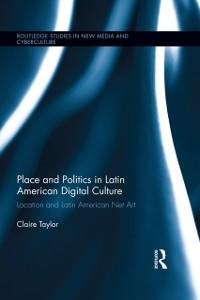
This volume explores one of the central issues that has been debated in internet studies in recent years: locality, and the extent to which cultural production online can be embedded in a specific place. The particular focus of the book is on the practices of net artists in Latin America, and how their work interrogates some of the central place-based concerns of Latin(o) American identity through their on- and offline cultural practice. Six particular works by artists of different countries in Latin America and within Latina/o communities in the US are studied in detail, with one each from Uruguay, Chile, Argentina, Colombia, the US-Mexico border, and the US. Each chapter explores how each artist represents place in their works, and, in particular how traditional place-based affiliations, or notions of territorial identity, end up reproduced, re-affirmed, or even transformed online. At the same time, the book explores how these net.artists make use of new media technologies to express alternative viewpoints about the locations they represent, and use the internet as a space for the recuperation of cultural memory.
Claire Taylor is Professor of Hispanic Studies at the University of Liverpool, UK. Her recent publications include Latin American Identity in Online Cultural Production, co-authored with Thea Pitman (Routledge, 2013), Identity, Nation, Discourse, ed. (2009) and Latin American Cyberliterature and Cyberculture, co-edited with Thea Pitman (2007).
Preface: Negotiating Net Art Communities in Latin America 1. Introduction: Re-articulating Place: The Resistant Use of Technologies and the Tactics of Re-territorialization in Latin(o) American Net Art 2. Memoria Histórica de la Alameda: The Mapping Out of Resistant Memory Battles in Chile 3. Sites of Memory in Women: Memory of Repression in Argentina 4. Re-Mapping Montevideo: Affective Cartographies and Post-Digital Remixes in Brian Mackern's 34s56w.org 5. Questioning Democracy and Re-encoding the Map of Colombia: Martha Patricia Niño's Demo Scape V 0.5 6. Monopolies and Maquiladoras: The Resistant Re-encoding of Gaming in Coco Fusco and Ricardo Domínguez's Turista Fronterizo 7. Resignifying the Border and the Streets in Ricardo Miranda Zúñiga's Vagamundo, A Migrant's Tale 8. Conclusion: Struggles over Place: Latin(o) American Net Art as Resistant Praxis
Dieses eBook wird im PDF-Format geliefert und ist mit einem Adobe Kopierschutz (DRM) versehen. Sie können dieses eBook mit allen Geräten lesen, die das PDF-Format und den Adobe Kopierschutz (DRM) unterstützen.
Zum Beispiel mit den folgenden Geräten:
• tolino Reader
Laden Sie das eBook direkt über den Reader-Shop auf dem tolino herunter oder übertragen Sie das eBook auf Ihren tolino mit einer kostenlosen Software wie beispielsweise Adobe Digital Editions.
• Sony Reader & andere eBook Reader
Laden Sie das eBook direkt über den Reader-Shop herunter oder übertragen Sie das eBook mit der kostenlosen Software Sony READER FOR PC/Mac oder Adobe Digital Editions auf ein Standard-Lesegeräte mit epub- und Adobe DRM-Unterstützung.
• Tablets & Smartphones
Möchten Sie dieses eBook auf Ihrem Smartphone oder Tablet lesen, finden Sie hier unsere kostenlose Lese-App für iPhone/iPad und Android Smartphone/Tablets.
• PC & Mac
Lesen Sie das eBook direkt nach dem Herunterladen mit einer kostenlosen Lesesoftware, beispielsweise Adobe Digital Editions, Sony READER FOR PC/Mac oder direkt über Ihre eBook-Bibliothek in Ihrem Konto unter „Meine eBooks“ - „online lesen“.
Schalten Sie das eBook mit Ihrer persönlichen Adobe ID auf bis zu sechs Geräten gleichzeitig frei.
Bitte beachten Sie, dass die Kindle-Geräte das Format nicht unterstützen und dieses eBook somit nicht auf Kindle-Geräten lesbar ist.