Und dann auf "Zum Home-Bildschirm [+]".

Stöbern
genialokal zum Startbildschirm hinzufügen
Installieren Sie die genialokal App auf Ihrem Startbildschirm für einen schnellen Zugriff und eine komfortable Nutzung.
Installieren Sie die genialokal App auf Ihrem Startbildschirm für einen schnellen Zugriff und eine komfortable Nutzung.
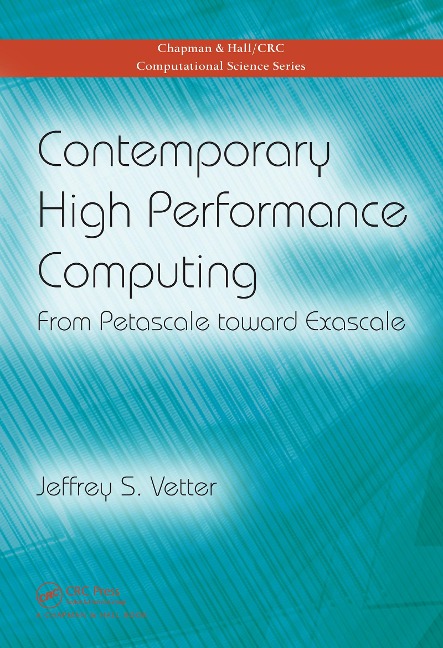
Contemporary High Performance Computing: From Petascale toward Exascale focuses on the ecosystems surrounding the world's leading centers for high performance computing (HPC). It covers many of the important factors involved in each ecosystem: computer architectures, software, applications, facilities, and sponsors. The first part of the book examines significant trends in HPC systems, including computer architectures, applications, performance, and software. It discusses the growth from terascale to petascale computing and the influence of the TOP500 and Green500 lists. The second part of the book provides a comprehensive overview of 18 HPC ecosystems from around the world. Each chapter in this section describes programmatic motivation for HPC and their important applications; a flagship HPC system overview covering computer architecture, system software, programming systems, storage, visualization, and analytics support; and an overview of their data center/facility. The last part of the book addresses the role of clouds and grids in HPC, including chapters on the Magellan, FutureGrid, and LLGrid projects. With contributions from top researchers directly involved in designing, deploying, and using these supercomputing systems, this book captures a global picture of the state of the art in HPC.
Jeffrey S. Vetter holds a joint appointment at Oak Ridge National Laboratory (ORNL) and the Georgia Institute of Technology (Georgia Tech). At ORNL, he is a Distinguished R&D Staff member and the founding Group Leader of the Future Technologies Group in the Computer Science and Mathematics Division. At Georgia Tech, Dr. Vetter is a professor in the Computational Science and Engineering School of the College of Computing, the principal investigator for the NSF Track 2D Experimental Computing Facility (Keeneland), and the director of the NVIDIA CUDA Center of Excellence. He earned a Ph.D. in computer science from Georgia Tech. A Senior Member of the IEEE and a Distinguished Scientist member of the ACM, Dr. Vetter has published over 110 peer-reviewed papers and has been a recipient of the ACM Gordon Bell Prize. His current research explores the role of emerging technologies in high performance computing.
Trends in HPC: Contemporary High Performance Computing. HPC Challenge: Design, History, and Implementation Highlights. The Green500 List: A Look Back to Look Forward. Contemporary HPC: Tera 100. The Mole-8.5 Supercomputing System. Supercomputing in the DoD High Performance Computing Modernization Program. Keeneland: Computational Science using Heterogeneous GPU Computing. Blue Gene/P: JUGENE. Roadrunner: The Dawn of Accelerated Computing. Blue Gene/Q: Sequoia and Mira. "Lomonosov": Supercomputing at Moscow State University. Pleiades: NASA's First Petascale Supercomputer. The Blue Waters Super-System for Super-Science. Kraken: The First Academic Petaflop Computer. Titan: 20-Petaflop Cray XK6 at Oak Ridge National Laboratory. Blacklight: Coherent Shared Memory for Enabling Science. Gordon: A Novel Architecture for Data-Intensive Computing. Monte Rosa: Architectural Features and a Path toward Exascale. Tianhe-1A Supercomputer: System and Application. TSUBAME2.0: The First Petascale Supercomputer in Japan. HA-PACS. Clouds and Grids in HPC: Magellan: A Testbed to Explore Cloud Computing for Science. FutureGrid: A Reconfigurable Testbed for Cloud, HPC, and Grid Computing. LLGrid: Supercomputer for Sensor Processing. Bibliography. Index.
Dieses eBook wird im PDF-Format geliefert und ist mit einem Adobe Kopierschutz (DRM) versehen. Sie können dieses eBook mit allen Geräten lesen, die das PDF-Format und den Adobe Kopierschutz (DRM) unterstützen.
Zum Beispiel mit den folgenden Geräten:
• tolino Reader
Laden Sie das eBook direkt über den Reader-Shop auf dem tolino herunter oder übertragen Sie das eBook auf Ihren tolino mit einer kostenlosen Software wie beispielsweise Adobe Digital Editions.
• Sony Reader & andere eBook Reader
Laden Sie das eBook direkt über den Reader-Shop herunter oder übertragen Sie das eBook mit der kostenlosen Software Sony READER FOR PC/Mac oder Adobe Digital Editions auf ein Standard-Lesegeräte mit epub- und Adobe DRM-Unterstützung.
• Tablets & Smartphones
Möchten Sie dieses eBook auf Ihrem Smartphone oder Tablet lesen, finden Sie hier unsere kostenlose Lese-App für iPhone/iPad und Android Smartphone/Tablets.
• PC & Mac
Lesen Sie das eBook direkt nach dem Herunterladen mit einer kostenlosen Lesesoftware, beispielsweise Adobe Digital Editions, Sony READER FOR PC/Mac oder direkt über Ihre eBook-Bibliothek in Ihrem Konto unter „Meine eBooks“ - „online lesen“.
Schalten Sie das eBook mit Ihrer persönlichen Adobe ID auf bis zu sechs Geräten gleichzeitig frei.
Bitte beachten Sie, dass die Kindle-Geräte das Format nicht unterstützen und dieses eBook somit nicht auf Kindle-Geräten lesbar ist.