
Stöbern
genialokal zum Startbildschirm hinzufügen
Installieren Sie die genialokal App auf Ihrem Startbildschirm für einen schnellen Zugriff und eine komfortable Nutzung.
Installieren Sie die genialokal App auf Ihrem Startbildschirm für einen schnellen Zugriff und eine komfortable Nutzung.
Tippen Sie einfach auf Teilen:
 Und dann auf "Zum Home-Bildschirm [+]".
Bei genialokal.de kaufen Sie online bei Ihrer lokalen, inhabergeführten Buchhandlung!
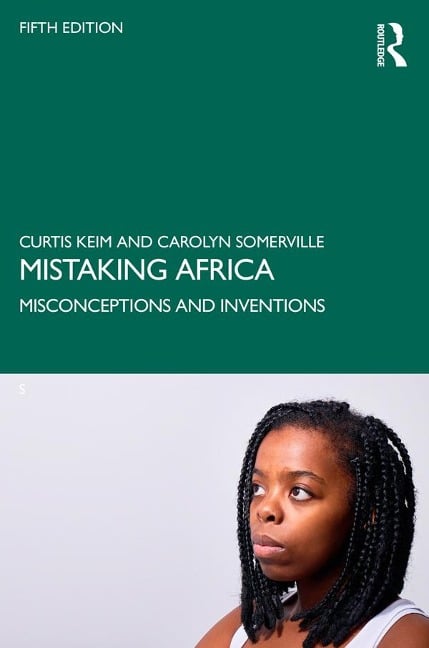
For many in the west, the mention of Africa immediately conjures up images of safaris, ferocious animals, sparsely dressed "tribesmen," and impenetrable jungles. Newspaper headlines rarely touch on Africa, but when they do, they often mention authoritarian rule, corruption, genocide, devastating illnesses, or civil war. Advertising, movies, amusement parks, cartoons, and many other corners of society all convey strong mental images of the continent that together form a collective consciousness. Few think to question these perceptions or how they came to be so deeply lodged in western minds. Mistaking Africa looks at the historical evolution of this mind-set and examines the role that popular media plays in its creation. The authors address the most prevalent myths and preconceptions and demonstrate how these prevent a true understanding of the enormously diverse peoples and cultures of Africa. Updated throughout, the fifth edition considers images of Africa from across the world and provides new analysis of what Africans are doing themselves to rewrite the stories of their continent, particularly through social and digital media. Mistaking Africa is an important book for African studies courses and for anyone interested in unraveling misperceptions about the continent.
Curtis Keim is Professor Emeritus of History at Moravian College. He is a recipient of the College's Lindback Award for Distinguished Teaching and he is coauthor of African Reflections: Art from Northeastern Zaire and coeditor of The Scramble for Art in Central Africa.Carolyn Somerville is Associate Professor of Political Science at Hunter College, CUNY. She is the author of Drought and Aid in the Sahel and coauthor of Women's Realities, Women's Choices.
PART ONE: INTRODUCTION 1 Changing Our Mind About Africa 2 How We Learn PART TWO: EVOLUTIONISM 3 The Origins of "Darkest Africa" 4 "Our Living Ancestors": Evolutionism and Race Across the Centuries 5 Where Is the Real Africa? 6 We Should Help Them PART THREE: FURTHER MISPERCEPTIONS 7 Cannibalism: No Accounting for Taste 8 Africans Live in Tribes, Don't They? 9 Safari: Beyond Our Wildest Dreams 10 Africa in Images PART FOUR: NEW DIRECTIONS: FROM RACE TO CULTURE 11 Changing Views 12 From Imagination to Dialogue Appendix: Learning More Notes Works Cited
Dieses eBook wird im PDF-Format geliefert und ist mit einem Adobe Kopierschutz (DRM) versehen. Sie können dieses eBook mit allen Geräten lesen, die das PDF-Format und den Adobe Kopierschutz (DRM) unterstützen.
Zum Beispiel mit den folgenden Geräten:
• tolino Reader
Laden Sie das eBook direkt über den Reader-Shop auf dem tolino herunter oder übertragen Sie das eBook auf Ihren tolino mit einer kostenlosen Software wie beispielsweise Adobe Digital Editions.
• Sony Reader & andere eBook Reader
Laden Sie das eBook direkt über den Reader-Shop herunter oder übertragen Sie das eBook mit der kostenlosen Software Sony READER FOR PC/Mac oder Adobe Digital Editions auf ein Standard-Lesegeräte mit epub- und Adobe DRM-Unterstützung.
• Tablets & Smartphones
Möchten Sie dieses eBook auf Ihrem Smartphone oder Tablet lesen, finden Sie hier unsere kostenlose Lese-App für iPhone/iPad und Android Smartphone/Tablets.
• PC & Mac
Lesen Sie das eBook direkt nach dem Herunterladen mit einer kostenlosen Lesesoftware, beispielsweise Adobe Digital Editions, Sony READER FOR PC/Mac oder direkt über Ihre eBook-Bibliothek in Ihrem Konto unter „Meine eBooks“ - „online lesen“.
Schalten Sie das eBook mit Ihrer persönlichen Adobe ID auf bis zu sechs Geräten gleichzeitig frei.
Bitte beachten Sie, dass die Kindle-Geräte das Format nicht unterstützen und dieses eBook somit nicht auf Kindle-Geräten lesbar ist.