Und dann auf "Zum Home-Bildschirm [+]".

Stöbern
genialokal zum Startbildschirm hinzufügen
Installieren Sie die genialokal App auf Ihrem Startbildschirm für einen schnellen Zugriff und eine komfortable Nutzung.
Installieren Sie die genialokal App auf Ihrem Startbildschirm für einen schnellen Zugriff und eine komfortable Nutzung.
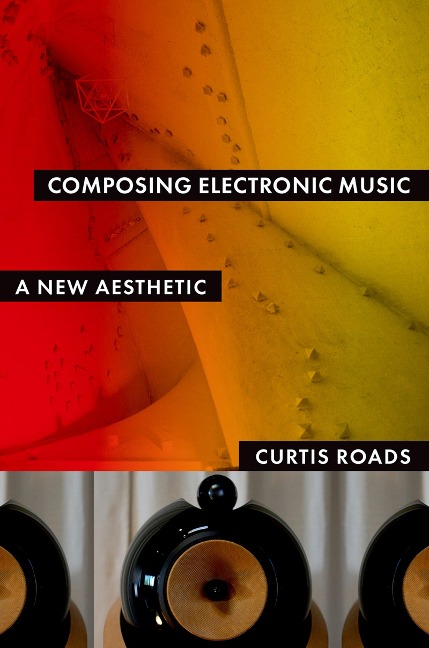
Electronic music evokes new sensations, feelings, and thoughts in both composers and listeners. Opening the door to an unlimited universe of sound, it engages spatialization as an integral aspect of composition and focuses on sound transformation as a core structural strategy. In this new domain, pitch occurs as a flowing and ephemeral substance that can be bent, modulated, or dissolved into noise. Similarly, time occurs not merely as a fixed duration subdivided by ratios, but as a plastic medium that can be generated, modulated, reversed, warped, scrambled, and granulated. Envelope and waveform undulations on all time scales interweave to generate form. The power of algorithmic methods amplify the capabilities of music technology. Taken together, these constitute game-changing possibilities. This convergence of technical and aesthetic trends prompts the need for a new text focused on the opportunities of a sound oriented, multiscale approach to composition of electronic music. Sound oriented means a practice that takes place in the presence of sound. Multiscale means an approach that takes into account the perceptual and physical reality of multiple, interacting time scales-each of which can be composed. After more than a century of research and development, now is an appropriate moment to step back and reevaluate all that has changed under the ground of artistic practice. Composing Electronic Music outlines a new theory of composition based on the toolkit of electronic music techniques. The theory consists of a framework of concepts and a vocabulary of terms describing musical materials, their transformation, and their organization. Central to this discourse is the notion of narrative structure in composition-how sounds are born, interact, transform, and die. It presents a guidebook: a tour of facts, history, commentary, opinions, and pointers to interesting ideas and new possibilities to consider and explore.
Curtis Roads is an award-winning composer and researcher who teaches electronic music composition at the University of California, Santa Barbara. He co-founded the International Computer Music Association and served as an editor/associate editor of Computer Music Journal for 23 years. The author of numerous books, his electronic music set POINT LINE CLOUD won the Award of Distinction at the 2002 Ars Electronica.
00 Preface01 The electronic medium02 Aesthetic foundations03 The nature of sound04 Creating sound materials05 Sound transformation06 Processes of rhythm07 Pitch in electronic music08 Articulating space09 Multiscale organization10 Sonic narrative11 Generative strategies12 The art of mixing13 ReferencesAppendix A List of sound examplesIndex
Dieses eBook wird im PDF-Format geliefert und ist mit einem Adobe Kopierschutz (DRM) versehen. Sie können dieses eBook mit allen Geräten lesen, die das PDF-Format und den Adobe Kopierschutz (DRM) unterstützen.
Zum Beispiel mit den folgenden Geräten:
• tolino Reader
Laden Sie das eBook direkt über den Reader-Shop auf dem tolino herunter oder übertragen Sie das eBook auf Ihren tolino mit einer kostenlosen Software wie beispielsweise Adobe Digital Editions.
• Sony Reader & andere eBook Reader
Laden Sie das eBook direkt über den Reader-Shop herunter oder übertragen Sie das eBook mit der kostenlosen Software Sony READER FOR PC/Mac oder Adobe Digital Editions auf ein Standard-Lesegeräte mit epub- und Adobe DRM-Unterstützung.
• Tablets & Smartphones
Möchten Sie dieses eBook auf Ihrem Smartphone oder Tablet lesen, finden Sie hier unsere kostenlose Lese-App für iPhone/iPad und Android Smartphone/Tablets.
• PC & Mac
Lesen Sie das eBook direkt nach dem Herunterladen mit einer kostenlosen Lesesoftware, beispielsweise Adobe Digital Editions, Sony READER FOR PC/Mac oder direkt über Ihre eBook-Bibliothek in Ihrem Konto unter „Meine eBooks“ - „online lesen“.
Schalten Sie das eBook mit Ihrer persönlichen Adobe ID auf bis zu sechs Geräten gleichzeitig frei.
Bitte beachten Sie, dass die Kindle-Geräte das Format nicht unterstützen und dieses eBook somit nicht auf Kindle-Geräten lesbar ist.