Und dann auf "Zum Home-Bildschirm [+]".

Stöbern
genialokal zum Startbildschirm hinzufügen
Installieren Sie die genialokal App auf Ihrem Startbildschirm für einen schnellen Zugriff und eine komfortable Nutzung.
Installieren Sie die genialokal App auf Ihrem Startbildschirm für einen schnellen Zugriff und eine komfortable Nutzung.
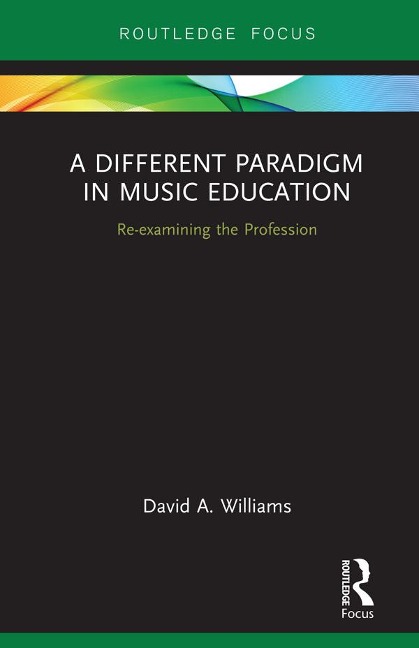
A Different Paradigm in Music Education is a "let's consider some possibilities" book. Instead of a music methods book, it is a look at where the music education profession is and how music teachers might improve what it is we do. It is about change. It is about questioning the current music education paradigm, especially regarding its exclusive role as the only model. The intent is to help pre-service and in-service music educators consider new modes of pedagogical thought that will allow us to broaden our reach in schools and better help students develop as creative musicians across their lifespan. The book includes an overview of several opportunities and course examples that would make music education more relevant and meaningful, especially for students that are not interested in our traditional performance offerings. The author wishes to stimulate discussions, with the goal for the music education profession to grow and mature.
David A. Williams is an Associate Professor of Music Education at the University of South Florida. In addition to a variety of graduate classes, he teaches Foundations of Music Education and Progressive Music Methods to undergraduate music education students. He joined the faculty at USF in the fall of 1998, and he holds a Ph.D. in music education from Northwestern University. His research interests involve the use of learner-centered pedagogies and how these impact teaching and learning in music education.
Preface Introduction Chapter 1 - Philosophic Thoughts and Questions - Change - What is Music? - Why is Music Important? - What is it a musician can do? - What should be the goals of music education? - Why does 'doing music' look so different outside the schools? - What are the challenges ahead for music education? Chapter 2 - History and Traditions - Introduction - Singing Schools - Common Schools - Secondary Schools - Music Conferences and Projects - Young Composers Project - Contemporary Music Project - Yale Seminar on Music Education - The Manhattanville Music Curriculum Program - Tanglewood Symposium - The Goals and Objectives Project - Federal Government and Education - The Present Chapter 3 - Societal Change - Introduction - Musical Culture in the U. S. - Music Technology Changes - School Change - Music Education Elephants - Traditional Ensembles Chapter 4 - Opportunities for Change - Introduction - Class Size - Student Autonomy - Musical/Creative Decisions - Formal Concerts - Instruments - Musical Styles and Ensembles - Traditional Notation - Lifelong Skills - Entry Level - Developing Functionality Chapter 5 - Beyond Band, Choir, and Orchestra - Guitar Class - Tablet Based Performance Class - Music Technology Class - Music Production - Recording Arts - Internet Based Music Class - An Additional Possibility Chapter 6 - Closing Thoughts Index
Dieses eBook wird im PDF-Format geliefert und ist mit einem Adobe Kopierschutz (DRM) versehen. Sie können dieses eBook mit allen Geräten lesen, die das PDF-Format und den Adobe Kopierschutz (DRM) unterstützen.
Zum Beispiel mit den folgenden Geräten:
• tolino Reader
Laden Sie das eBook direkt über den Reader-Shop auf dem tolino herunter oder übertragen Sie das eBook auf Ihren tolino mit einer kostenlosen Software wie beispielsweise Adobe Digital Editions.
• Sony Reader & andere eBook Reader
Laden Sie das eBook direkt über den Reader-Shop herunter oder übertragen Sie das eBook mit der kostenlosen Software Sony READER FOR PC/Mac oder Adobe Digital Editions auf ein Standard-Lesegeräte mit epub- und Adobe DRM-Unterstützung.
• Tablets & Smartphones
Möchten Sie dieses eBook auf Ihrem Smartphone oder Tablet lesen, finden Sie hier unsere kostenlose Lese-App für iPhone/iPad und Android Smartphone/Tablets.
• PC & Mac
Lesen Sie das eBook direkt nach dem Herunterladen mit einer kostenlosen Lesesoftware, beispielsweise Adobe Digital Editions, Sony READER FOR PC/Mac oder direkt über Ihre eBook-Bibliothek in Ihrem Konto unter „Meine eBooks“ - „online lesen“.
Schalten Sie das eBook mit Ihrer persönlichen Adobe ID auf bis zu sechs Geräten gleichzeitig frei.
Bitte beachten Sie, dass die Kindle-Geräte das Format nicht unterstützen und dieses eBook somit nicht auf Kindle-Geräten lesbar ist.