Und dann auf "Zum Home-Bildschirm [+]".

Stöbern
genialokal zum Startbildschirm hinzufügen
Installieren Sie die genialokal App auf Ihrem Startbildschirm für einen schnellen Zugriff und eine komfortable Nutzung.
Installieren Sie die genialokal App auf Ihrem Startbildschirm für einen schnellen Zugriff und eine komfortable Nutzung.
Ihr gewünschter Artikel ist in 0 Buchhandlungen vorrätig - wählen Sie hier eine Buchhandlung in Ihrer Nähe aus:

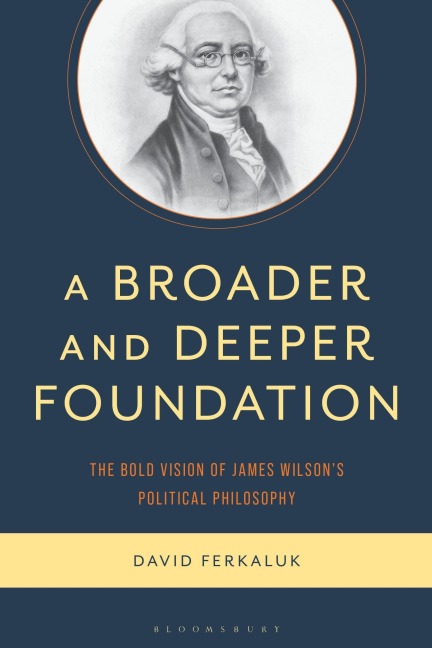
A Broader and Deeper Foundation: The Bold Vision of James Wilson's Political Philosophyrediscovers the forgotten political philosophy of American founding father James Wilson, revealing his bold, alternative vision for American politics. Wilson crafted a political philosophy centered on popular sovereignty and based upon Thomas Reid's common-sense realism and moral philosophy. Wilson understood popular sovereignty as possessing both a moral and a political component. "The people" were not solely political actors, but also moral agents and morally responsible. He insisted that each person possessed a telos or purpose to pursue their own moral excellence, which he dubbed "happiness," achieved through political participation (i.e., suffrage) as an integral means of every person's telos. His re-definition of "happiness," which forms a core part of his political philosophy, imbues the modern phrase with a traditional republican meaning. "Happiness" for Wilson functions as America's broader and deeper foundation, serving as the moral telos of popular sovereignty, the foundation of American democracy. His interpretations of happiness and popular sovereignty united America's founding documents, the Declaration of Independence and the Constitution.
David Ferkaluk is a Lyceum Visiting Scholar in the Snow Institute for the Study of Capitalism at Clemson University.
Preface Introduction Chapter 1 The Reidian Basis of Wilson's Political Culture Chapter 2 Wilsonian Political Culture Part I: The Republican Concept of Happiness Chapter 3 Wilsonian Political Culture Part II: Union of the Declaration and Constitution Chapter 4 Wilson Contra Publius Chapter 5 The Democratic Controversion of Wilson and Jefferson Chapter 6 Wilson's Emergence in Lincoln Chapter 7 James Wilson for Today References