Stöbern
genialokal zum Startbildschirm hinzufügen
Installieren Sie die genialokal App auf Ihrem Startbildschirm für einen schnellen Zugriff und eine komfortable Nutzung.
Installieren Sie die genialokal App auf Ihrem Startbildschirm für einen schnellen Zugriff und eine komfortable Nutzung.
Tippen Sie einfach auf Teilen:
 Und dann auf "Zum Home-Bildschirm [+]".
Ihr gewünschter Artikel ist in 0 Buchhandlungen vorrätig - wählen Sie hier eine Buchhandlung in Ihrer Nähe aus:

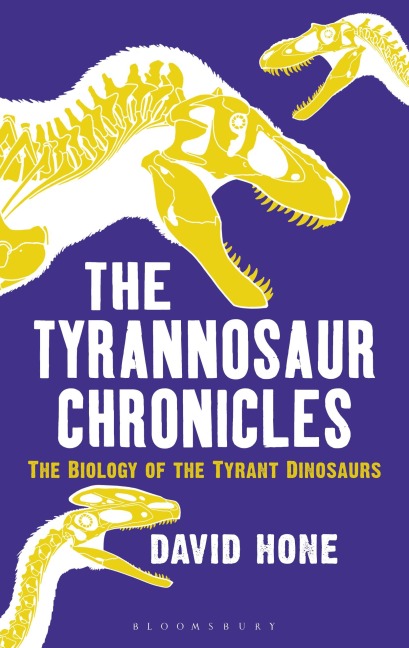
The fascinating story of the king of the dinosaurs as never told before. Tyrannosaurs are the most famous dinosaurs in the world. Popular among children and adults alike, it is the only dinosaur many people can name. The Tyrannosaurus was an impressive beast, it topped ten tons, was more than forty feet (fifteen meters) long, and had the largest head and most powerful bite of any land animal, ever. The Tyrannosaurus and other tyrannosaurs are fascinating animals and perhaps the best-studied of all dinosaur groups. They started small, just a couple of yards long, and over the course of 70 million years evolved into giant, meat-slicing bone crushers. New types of tyrannosaurs were discovered every year between 2010 and 2014, greatly revising what we know about how they lived, bred, fed, and died. The Tyrannosaur Chronicles tracks the rise of these dinosaurs, and presents the latest research into their biology, showing off more than just their impressive statistics--tyrannosaurs had feathers, may have hunted in groups, and fought and even ate one another. Indeed, David Hone tells the evolutionary story of the group through their anatomy, ecology, and behavior, exploring how they came to be the dominant terrestrial predators of the Mesozoic--and more recently, one of the great icons of biology.
David Hone is rapidly becoming the 'face' of dinosaur research. Based at QMW in London, where he is Lecturer in Ecology, he has published more than 50 academic papers on dinosaur biology and behaviour, with a particular interest in the tyrannosaurs, while his fieldwork has included a spell working on the famous feathered dinosaur deposits of China. He writes a regular blog for the Guardian, Lost Worlds , a major source of dino-info for the general public. David includes among his writing credits the BBC's Walking with Dinosaurs. He has appeared on the Discovery Channel, BBC Radio 5Live and RTE, acted as consultant for National Geographic documentaries, and written articles for New Scientist, The Times, The Independent, The Telegraph, The New York Times, and many others.
Preface Note From The Illustrator The Game of The Name A Brief Primer on Tyrannosaur Bony Anatomy PART 1: INTRODUCTION Chapter 1: Introducing the Dinosaurs Chapter 2: What is a Tyrannosaur? Chapter 3: Tyrannosaur Species Chapter 4: Tyrannosaur Relationships Chapter 5: Tyrants in Time and Space PART 2: MORPHOLOGY Chapter 6: Skull Chapter 7: Body Chapter 8: Limbs Chapter 9: Outside Chapter 10: Physiology Chapter 11: Changes PART 3: ECOLOGY Chapter 12: Reproduction and Growth Chapter 13: Prey Chapter 14: Competitors Chapter 15: Obtaining Food Chapter 16: Behaviour and Ecology PART 4: MOVING FORWARDS Chapter 17: Tyrannosaurus Fact and Fiction Chapter 18: The Future Chapter 19: Conclusions References Further Reading Museums and Online Sources Acknowledgements Index