Und dann auf "Zum Home-Bildschirm [+]".

Stöbern
genialokal zum Startbildschirm hinzufügen
Installieren Sie die genialokal App auf Ihrem Startbildschirm für einen schnellen Zugriff und eine komfortable Nutzung.
Installieren Sie die genialokal App auf Ihrem Startbildschirm für einen schnellen Zugriff und eine komfortable Nutzung.
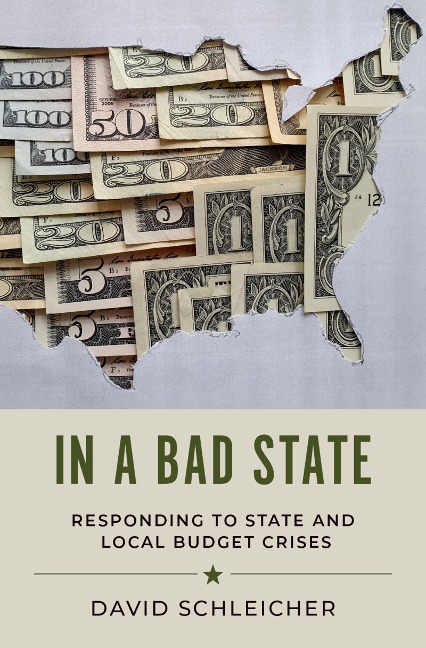
An authoritative review of the long history of federal responses to state and local budget crises, from Alexander Hamilton through the COVID-19 pandemic, that reveals what is at stake when a state or city can't pay its debts and provides policy solutions to an intractable American problem. What should the federal government do if a state like Illinois or a city like Chicago can't pay its debts? From Alexander Hamilton's plan to assume state debts to Congress's efforts to respond to the COVID-19 pandemic, many of the most important political disputes in American history have involved federal government responses to state or local fiscal crises. In a Bad State provides the first comprehensive historical and theoretical analysis of how the federal government has addressed subnational debt crises. Tracing the long history of state and local borrowing, David Schleicher argues that federal officials want to achieve three things when a state or city nears default: prevent macroeconomic distress, encourage lending to states and cities to build infrastructure, and avoid creating incentives for reckless future state budgeting. But whether they demand state austerity, permit state defaults, or provide bailouts-and all have been tried-federal officials can only achieve two of these three goals, at best. Rather than imagining that there is a single easy federal solution, Schleicher suggests some ways the federal government could ameliorate the problem by conditioning federal aid on future state fiscal responsibility, spreading losses across governments and interests, and building resilience against crises into federal spending and tax policy. Authoritative and accessible, In a Bad State offers a guide to understanding the pressing fiscal problems that local, state, and federal officials face, and to the policy options they possess for responding to crises.
David Schleicher is a Professor of Law at Yale Law School. He is an expert in local government law, federalism, land use, state and local finance, and urban development. His work has been published widely in academic journals, including the Yale Law Journal and the University of Chicago Law Review, as well as in popular outlets like The New York Times, The Atlantic, and Slate. He has been called "the most important thinker we have on the subject of local government" and "ingenious" by National Review, one of the "most interesting writers on land use" by Washington Monthly, "interesting" by The Nation, "clever" by The Economist, "neat" by Slate, and "great but old fashioned" by Vox. He is also the co-host of the podcast, "Digging a Hole: The Legal Theory Podcast."
Part I: Why Is It So Hard To Get Out of a Bad State? An Introduction to the Problem of State and Local Fiscal Crisis Introduction: Why It Is So Hard to Get Out of a Bad State Part II: When We've Been in a Bad State: The Theory and History of Federal Responses to State and Local Fiscal Crises Chapter 1: What Has Already Been Said About Federal Responses to State and Local Budget Crises? What Has Been Left Out? Chapter 2: State Debt Crises Through the 1840s Chapter 3: The Dual Debt Crises of the Post-Civil War Period Chapter 4: State and Local Debt Crises in The Twentieth Century Chapter 5: The Great Recession and State and Local Fiscal Crises Chapter 6: COVID-19, the CARES Act, the MLF, and the ARP Part III: Tools for Getting Out of a Bad State Chapter 7: Introduction to the Principles for Responding to State and Local Fiscal Crises Chapter 8: Building Better Bailouts Chapter 9: Building Better Defaults Chapter 10: Building Better Forms of State and Local Austerity Chapter 11: Resilience, or Building a Better Federal System Part IV: The Conclusion, Or Why States Are Often Bad Chapter 12: Why States Are Often Bad Notes Index
Dieses eBook wird im PDF-Format geliefert und ist mit einem Adobe Kopierschutz (DRM) versehen. Sie können dieses eBook mit allen Geräten lesen, die das PDF-Format und den Adobe Kopierschutz (DRM) unterstützen.
Zum Beispiel mit den folgenden Geräten:
• tolino Reader
Laden Sie das eBook direkt über den Reader-Shop auf dem tolino herunter oder übertragen Sie das eBook auf Ihren tolino mit einer kostenlosen Software wie beispielsweise Adobe Digital Editions.
• Sony Reader & andere eBook Reader
Laden Sie das eBook direkt über den Reader-Shop herunter oder übertragen Sie das eBook mit der kostenlosen Software Sony READER FOR PC/Mac oder Adobe Digital Editions auf ein Standard-Lesegeräte mit epub- und Adobe DRM-Unterstützung.
• Tablets & Smartphones
Möchten Sie dieses eBook auf Ihrem Smartphone oder Tablet lesen, finden Sie hier unsere kostenlose Lese-App für iPhone/iPad und Android Smartphone/Tablets.
• PC & Mac
Lesen Sie das eBook direkt nach dem Herunterladen mit einer kostenlosen Lesesoftware, beispielsweise Adobe Digital Editions, Sony READER FOR PC/Mac oder direkt über Ihre eBook-Bibliothek in Ihrem Konto unter „Meine eBooks“ - „online lesen“.
Schalten Sie das eBook mit Ihrer persönlichen Adobe ID auf bis zu sechs Geräten gleichzeitig frei.
Bitte beachten Sie, dass die Kindle-Geräte das Format nicht unterstützen und dieses eBook somit nicht auf Kindle-Geräten lesbar ist.