Und dann auf "Zum Home-Bildschirm [+]".

Stöbern
genialokal zum Startbildschirm hinzufügen
Installieren Sie die genialokal App auf Ihrem Startbildschirm für einen schnellen Zugriff und eine komfortable Nutzung.
Installieren Sie die genialokal App auf Ihrem Startbildschirm für einen schnellen Zugriff und eine komfortable Nutzung.

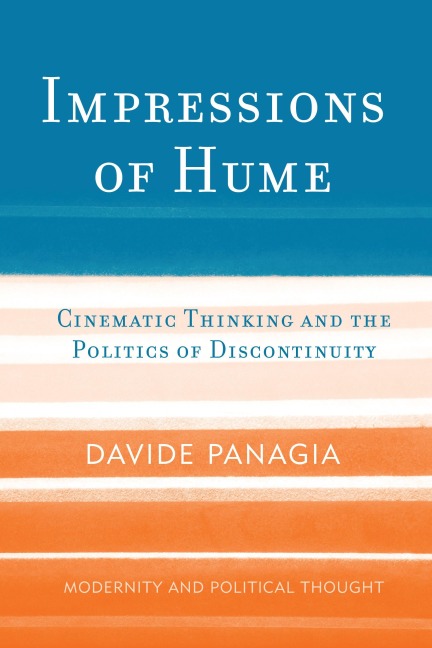
Davide Panagia's Impressions of Hume: Cinematic Thinking and the Politics of Discontinuity is volume fifteen of Modernity and Political Thought, the Rowman & Littlefield series in contemporary political theory. Through close attention to Hume's theories of sensation, Davide Panagia conceptualizes the modern even more radically (though also more literally) than many of the previous authors in this series. While devoting attention to how a historical thinker such as Hume is read and misread, used and abused in the modern intellectual world, Panagia also focuses on developing a theory of Humean perception and by so doing emphasizes the contemporaneity of Hume's thought. In what at first seems to be an anachronistic as well as wildly curious claim about a philosopher of the eighteenth century, Panagia holds that Hume was a cinematic thinker.
Davide Panagia is a political and cultural theorist who holds the Canada Research Chair in Cultural Studies at Trent University. He is the Co-Editor of the cultural and political theory journal, Theory & Event, and is a contributor to The Contemporary Condition.
List of Illustrations
Roll Credits
Editors' Introduction
Introduction: Impressions of Hume
Approaching Hume
On Beholding
1 Film Matters: Cinematic Thinking and the Politics of Discontinuity
The Action-Image
Discontinuity and the Fact of the Series
Actors, Artificial Persons, and Human Somethings
Political Resistance and an Aesthetics of Politics
2 A Treatment of Human Parts
On the Close-Up
Empiricism and Typographic Culture
Hume's Train of Thinking
Of Human Parts
Discomposing One's Character
Conclusion: A Micropolitics of Impressions
3 Hume's Iconomy
An Excess of Images
Fluid Supports
Conclusion
4 Hume's Point of View: Or, the Screen
Single-Point Perspective and the General Point of View
Impartiality, Sympathy, Reputation from a
Cinematic Point of View
The Imagination and Hume's train of thinking
The "im" of Impartiality
The Hold of Sympathy
Reputation, Promising, and Projection
Conclusion: Sympathy's Claim
Conclusion: Hume and Cultural Politics
Bibliography
Index