Und dann auf "Zum Home-Bildschirm [+]".

Stöbern
genialokal zum Startbildschirm hinzufügen
Installieren Sie die genialokal App auf Ihrem Startbildschirm für einen schnellen Zugriff und eine komfortable Nutzung.
Installieren Sie die genialokal App auf Ihrem Startbildschirm für einen schnellen Zugriff und eine komfortable Nutzung.
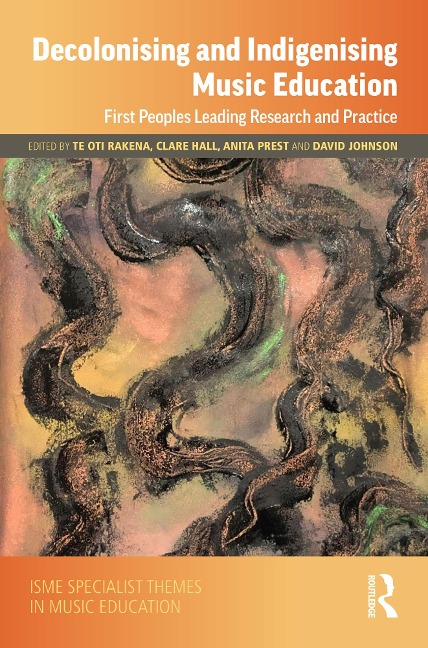
Centring the voices of Indigenous scholars at the intersection of music and education, this co-edited volume contributes to debates about current colonising music education research and practices, and offers alternative decolonising approaches that support music education imbued with Indigenous perspectives. This unique collection is far-ranging, with contributions from Chile, New Zealand, Australia, Canada, Malaysia, India, South Africa, Kenya, and Finland. The authors interrogate and theorise research methodologies, curricula, and practices related to the learning and teaching of music. Providing a meeting place for Indigenous voices and viewpoints from around the globe, this book highlights the imperative that Indigenisation must be Indigenous-led. The book promotes Indigenous scholars' reconceptualisations of how music education is researched and practised, with an emphasis on the application of decolonial ways of being. The authors provocatively demonstrate the value of power-sharing and eroding the gaze of non-Indigenous populations. Pushing far beyond the concepts of Western aesthetics and world music, this vital collection of scholarship presents music in education as a social and political action, and shows how to enact Indigenising and decolonising practices in a wide range of music education contexts.
Te Oti Rakena is an Associate Professor of Music and American-trained New Zealand singer, voice teacher, and researcher with Indigenous Maori tribal affiliations to Ngapuhi, Ngati Ruanui, and Kai Tahu. Clare Hall is a Senior Lecturer in Performing Arts education in Australia researching diversity and inclusion in the sociology of music and music education. Anita Prest is Associate Professor of Music Education in the Department of Curriculum and Instruction. Guided by an advisory group, she conducts community-based participatory research to examine the embedding of local Indigenous knowledge, pedagogies, and worldviews in K-12 music classes in British Columbia. David Johnson is Associate Professor of Music at the Western Norway University for Applied Sciences in Bergen, Norway. He leads the Singing Map of Scandinavia initiative, which seeks to promote and sustain Nordic traditional and Indigenous singing cultures through music education.
Table of Contents Foreword - Introduction: Reflecting on the concepts "Decolonising" and "Indigenising" Author: Te Oti Rakena - Bringing Back the Voices of Our Ancestors: Developing and Indigenizing Sámi Music Education Author: Annukka Hirvasvuopio-Laiti - Indigenous Epistemic Resilience in Music Education: Envisioning Indigenous Perspectives in the Mexican Classroom Author: Hector Vazquez-Cordoba - Te Awa Tupua: Indigenous Music Analysis for Waiata Pedagogies Author: Meri Haami - Heritage on Stage: Music Education Lessons from Folk Musicians in Finland and Nepal Author: Vilma Timonen Author: Riju Tuladhar - Contributions of Music Education to Musical Identities of Malaysian Secondary School Students Author: Ramona Mohd Tahir Author: Michel Hogenes - Indigenising Music Education: The Cross-Cultural Transfer of African Indigenous Concepts and Practices Author: René Human Author: Emily Achieng' Akuno - Approaches to Ethical Engagement between Australian Tertiary Music Institutions and First Nations' Peoples Author: Christopher Sainsbury Author: Jennifer Newsome - Context and Content: Decolonizing Education in the Instrumental Music Classroom Author: Katie Tremblay - Afterword Author: Anita Prest Author: David Johnson Author: Clare Hall List of Figures List of contributors Index
Dieses eBook wird im PDF-Format geliefert und ist mit einem Adobe Kopierschutz (DRM) versehen. Sie können dieses eBook mit allen Geräten lesen, die das PDF-Format und den Adobe Kopierschutz (DRM) unterstützen.
Zum Beispiel mit den folgenden Geräten:
• tolino Reader
Laden Sie das eBook direkt über den Reader-Shop auf dem tolino herunter oder übertragen Sie das eBook auf Ihren tolino mit einer kostenlosen Software wie beispielsweise Adobe Digital Editions.
• Sony Reader & andere eBook Reader
Laden Sie das eBook direkt über den Reader-Shop herunter oder übertragen Sie das eBook mit der kostenlosen Software Sony READER FOR PC/Mac oder Adobe Digital Editions auf ein Standard-Lesegeräte mit epub- und Adobe DRM-Unterstützung.
• Tablets & Smartphones
Möchten Sie dieses eBook auf Ihrem Smartphone oder Tablet lesen, finden Sie hier unsere kostenlose Lese-App für iPhone/iPad und Android Smartphone/Tablets.
• PC & Mac
Lesen Sie das eBook direkt nach dem Herunterladen mit einer kostenlosen Lesesoftware, beispielsweise Adobe Digital Editions, Sony READER FOR PC/Mac oder direkt über Ihre eBook-Bibliothek in Ihrem Konto unter „Meine eBooks“ - „online lesen“.
Schalten Sie das eBook mit Ihrer persönlichen Adobe ID auf bis zu sechs Geräten gleichzeitig frei.
Bitte beachten Sie, dass die Kindle-Geräte das Format nicht unterstützen und dieses eBook somit nicht auf Kindle-Geräten lesbar ist.