Und dann auf "Zum Home-Bildschirm [+]".

Stöbern
genialokal zum Startbildschirm hinzufügen
Installieren Sie die genialokal App auf Ihrem Startbildschirm für einen schnellen Zugriff und eine komfortable Nutzung.
Installieren Sie die genialokal App auf Ihrem Startbildschirm für einen schnellen Zugriff und eine komfortable Nutzung.
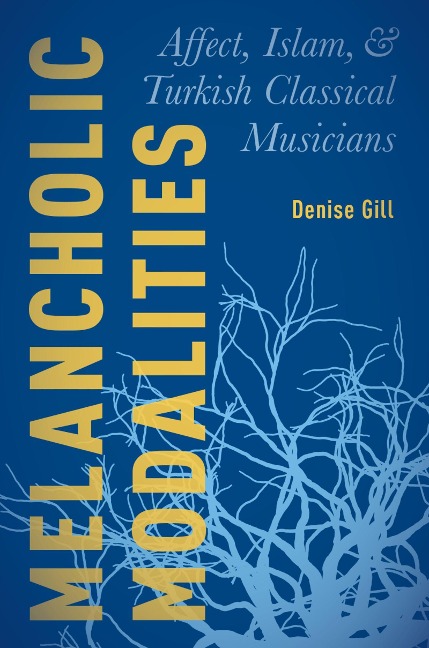
Today, teachers and performers of Turkish classical music intentionally cultivate melancholies, despite these affects being typically dismissed as remnants of the Ottoman Empire. Melancholic Modalities is the first in-depth historical and ethnographic study of the practices socialized by musicians who enthusiastically teach and perform a present-day genre substantially rooted in the musics of the Ottoman court and elite Mevlevi Sufi lodges. Author Denise Gill analyzes how melancholic music-making emerges as pleasurable, spiritually redeeming, and healing for both the listener and performer. Focusing on the diverse practices of musicians who deploy and circulate melancholy in sound, Gill interrogates the constitutive elements of these musicians' modalities in the context of emergent neoliberalism, secularism, political Islamism, Sufi devotionals, and the politics of psychological health in Turkey today. In an essential contribution to the study of ethnomusicology and psychology, Gill develops rhizomatic analyses to allow for musicians' multiple interpretations to be heard. Melancholic Modalities uncovers how emotion and musical meaning are connected, and how melancholy is articulated in the world of Turkish classical musicians. With her innovative concept of "bi-aurality," Gill's book forges new possibilities for the historical and ethnographic analyses of musics and ideologies of listening for music scholars.
Denise Elif Gill is an ethnomusicologist specializing in the musics of Turkey and former Ottoman territories. Her research engages music-making and affective practice, Islam, health, gender/sexuality, sound studies, and post-humanism. Her work has been funded by Fulbright and by the American Council of Learned Societies (ACLS).
Table of Contents
List of Figures List of Examples Acknowledgements Conventions Preface Introduction Melancholic Modalities Rhizome One: "Turkish Classical Music" Rhizome Two: Repertoires of Melancholies Rhizome Three: The Practice of Affect Rhizome Four: The Islamic Roots of Musicians' Melancholic Routes Following the Rhizomes of Melancholic Modalities
Chapter One - The Melancholic State of Turkish Classical Music Reforms as Roots Cultural Policies and the Politics of Naming Ottoman Music and the Turkish Nation-State "Shaping Ears and Hearts": Emergent Media Practices Institutional Changes for Practices of Musical Transmission Neoliberalism, Islamic Movements, and the Privileges of Privatization Death of a Genre
Chapter Two - Separation, the Sound of the Rhizomatic Ney, and Sacred Embodiment Sufism as Separation Hu as Sound Hu as Instrument Technique Hu as Sacred Embodiment Hu as Istanbul From Life to Death and Sound to Silence
Chapter Three - Melancholic Genealogies: Rhizomatic Listening and Bi-Aurality in Practice Learning Melancholy, Learning Love Understanding Mesk Learning from a Master Learning with Notation Becoming Your Lineage Bi-Aurality and the Problem of Assumed Listening Geographies Genealogy, Orientalism, and Orientations Listening Like a Ney Case Studies: Listening Rhizomatically to Me?k Lineages Learning Music as the Practice of Melancholy
Chapter Four -- Boundaries of Embodiment in Sounded Melancholy Rendering Melancholy Musical Embodying Gender, Melancholy, and the Boundaries Between The Body's Boundary: Melancholic Musicking and Tears Sema and Sama' Conclusion: Living with the Boundary
Chapter Five -- Melancholic Musicking, Healing, and Reparation Melancholy as Illness Musical Modes as Music Therapy Melancholy and Health between "East" and "West" Iconic Melancholic Musicians: Neyzen Tevfik Melancholic Musicking: "There is No Medicine" Musicking as Food for the (Melancholic) Soul Suffering as Remedy: What to Take Away from Melancholic Musicking
Conclusion -- Affect in Ethnomusicology and Beyond Bringing the Rhizomes of Turkish Classical Musicians to Bear beyond the Academy
Bibliography Discography
Dieses eBook wird im PDF-Format geliefert und ist mit einem Adobe Kopierschutz (DRM) versehen. Sie können dieses eBook mit allen Geräten lesen, die das PDF-Format und den Adobe Kopierschutz (DRM) unterstützen.
Zum Beispiel mit den folgenden Geräten:
• tolino Reader
Laden Sie das eBook direkt über den Reader-Shop auf dem tolino herunter oder übertragen Sie das eBook auf Ihren tolino mit einer kostenlosen Software wie beispielsweise Adobe Digital Editions.
• Sony Reader & andere eBook Reader
Laden Sie das eBook direkt über den Reader-Shop herunter oder übertragen Sie das eBook mit der kostenlosen Software Sony READER FOR PC/Mac oder Adobe Digital Editions auf ein Standard-Lesegeräte mit epub- und Adobe DRM-Unterstützung.
• Tablets & Smartphones
Möchten Sie dieses eBook auf Ihrem Smartphone oder Tablet lesen, finden Sie hier unsere kostenlose Lese-App für iPhone/iPad und Android Smartphone/Tablets.
• PC & Mac
Lesen Sie das eBook direkt nach dem Herunterladen mit einer kostenlosen Lesesoftware, beispielsweise Adobe Digital Editions, Sony READER FOR PC/Mac oder direkt über Ihre eBook-Bibliothek in Ihrem Konto unter „Meine eBooks“ - „online lesen“.
Schalten Sie das eBook mit Ihrer persönlichen Adobe ID auf bis zu sechs Geräten gleichzeitig frei.
Bitte beachten Sie, dass die Kindle-Geräte das Format nicht unterstützen und dieses eBook somit nicht auf Kindle-Geräten lesbar ist.