Und dann auf "Zum Home-Bildschirm [+]".

Stöbern
genialokal zum Startbildschirm hinzufügen
Installieren Sie die genialokal App auf Ihrem Startbildschirm für einen schnellen Zugriff und eine komfortable Nutzung.
Installieren Sie die genialokal App auf Ihrem Startbildschirm für einen schnellen Zugriff und eine komfortable Nutzung.
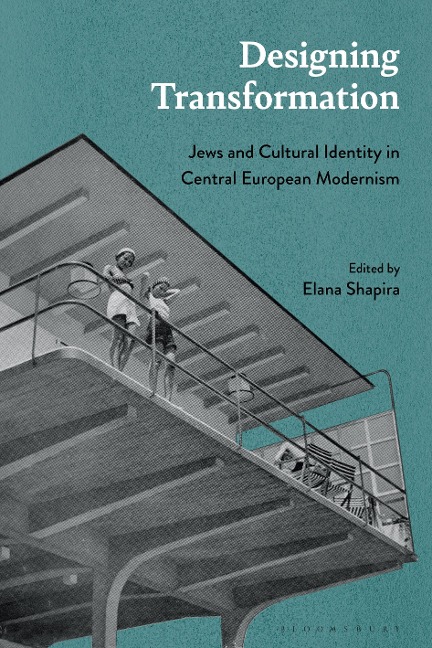
Jewish designers and architects played a key role in shaping the interwar architecture of Central Europe, and in the respective countries where they settled following the Nazi's rise to power. This book explores how Jewish architects and patrons influenced and reformed the design of towns and cities through commercial buildings, urban landscaping and other material culture. It also examines how modern identities evolved in the context of migration, commercial and professional networks, and in relation to the conflict between nationalist ideologies and international aspirations in Central Europe and beyond. Pointing to the production within cultural platforms shared by Jews and Christians, the book's research sheds new light on the importance of integrating Jews into Central European design and aesthetic history. Leading historians, curators, archivists and architects present their critical analyses further to 'design' the past and push forward a transformation in the historical consciousness of Central Europe. By reconsidering the seminal role of Central European émigré and exiled architects and designers in shaping today's global design cultures, this book further strengthens humanistic, progressive and pluralistic cultural trends in Europe today.
Elana Shapira is a cultural and design historian. She is the Project Leader of the Austrian Science Fund research project "Visionary Vienna: Design and Society 1918-1934" and Lecturer in Design History and Theory at the University of Applied Arts Vienna, Austria.
Acknowledgements
List of Figures
Contributors
Introduction: Jews and Cultural Identity in Central European Modernism, Elana Shapira (University of Applied Arts Vienna, Austria)
Part I: Designing Their Homes in Central Europe
1. The 'Bauhaus Shtetl': Opposing Conservatism in New Leopold Town in Budapest, Rudolf Klein (Óbuda University, Hungary)
2. Shaping Modern Bratislava: The Role of Architect Friedrich Weinwurm and his Jewish Clients in Designing the Slovak Capital, Henrieta Moravciková (Slovak University of Technology in Bratislava, Slovakia)
3. Adolf Sommerfeld Co-Producing Modern Architecture and Urban Design in Berlin, Celina Kress (Technical University of Berlin, Germany)
4. Entangled Histories: The Contribution of Jewish Architects to Modernism in Croatia, Jasna Galjer (University of Zagreb, Croatia)
5. An International Style Synagogue in Brno: Otto Eisler's Synagogue Agudas Achim (1936), Zuzana Güllendi-Cimprichová (University of Bamberg, Germany)
6. Identity and Gender as Obstacles? A Comparison of Two Biographies of Jewish Architects from Krakow, Kamila Twardowska (Jagiellonian University in Krakow, Poland)
Part II: Outsiders/Insiders - Cultural Authorship and Strategies of Inclusion
7. Lajos Kozma, 'Judapest,' and Central European Modernism, Juliet Kinchin (Independent Design Historian, Scotland)
8. Refuge and Respite: Oskar Wlach, Max Eisler, and the Culture of the Modern Jewish Interior, Christopher Long (University of Texas at Austin, USA)
9. The Art and Design of Anna Lesznai: Adaptation and Transformation, Rebecca Houze (Northern Illinois University, USA)
10. The Art of Survival: Friedl Dicker-Brandeis and Children's Art at the Theresienstadt Ghetto, Megan Brandow-Faller (City University of New York, Kingsborough, USA)
Part III: Survival Through Design - Projecting Transformative Designs onto the Future
11. Flights of Fancy: Willy de Majo and the Youthful Foundations of a Lifelong Design Practice, Lesley Whitworth (University of Brighton, UK)
12. Sustaining Independence: Marie Frommer's Networks and Architectural Practices in Berlin and in New York, Tanja Poppelreuter (University of Salford, UK)
13. 'Memory's instruments and its very medium': the Archival Practices of Émigré Designers, Sue Breakell (University of Brighton, UK)
14. Facing the Sun: German-Speaking Émigrés and the Roots of Israeli Climatic Building Design, Or Aleksandrowicz (Technion - Israel Institute of Technology, Haifa)
Bibliography
Index
Dieses eBook wird im PDF-Format geliefert und ist mit einem Adobe Kopierschutz (DRM) versehen. Sie können dieses eBook mit allen Geräten lesen, die das PDF-Format und den Adobe Kopierschutz (DRM) unterstützen.
Zum Beispiel mit den folgenden Geräten:
• tolino Reader
Laden Sie das eBook direkt über den Reader-Shop auf dem tolino herunter oder übertragen Sie das eBook auf Ihren tolino mit einer kostenlosen Software wie beispielsweise Adobe Digital Editions.
• Sony Reader & andere eBook Reader
Laden Sie das eBook direkt über den Reader-Shop herunter oder übertragen Sie das eBook mit der kostenlosen Software Sony READER FOR PC/Mac oder Adobe Digital Editions auf ein Standard-Lesegeräte mit epub- und Adobe DRM-Unterstützung.
• Tablets & Smartphones
Möchten Sie dieses eBook auf Ihrem Smartphone oder Tablet lesen, finden Sie hier unsere kostenlose Lese-App für iPhone/iPad und Android Smartphone/Tablets.
• PC & Mac
Lesen Sie das eBook direkt nach dem Herunterladen mit einer kostenlosen Lesesoftware, beispielsweise Adobe Digital Editions, Sony READER FOR PC/Mac oder direkt über Ihre eBook-Bibliothek in Ihrem Konto unter „Meine eBooks“ - „online lesen“.
Schalten Sie das eBook mit Ihrer persönlichen Adobe ID auf bis zu sechs Geräten gleichzeitig frei.
Bitte beachten Sie, dass die Kindle-Geräte das Format nicht unterstützen und dieses eBook somit nicht auf Kindle-Geräten lesbar ist.