Und dann auf "Zum Home-Bildschirm [+]".

Stöbern
genialokal zum Startbildschirm hinzufügen
Installieren Sie die genialokal App auf Ihrem Startbildschirm für einen schnellen Zugriff und eine komfortable Nutzung.
Installieren Sie die genialokal App auf Ihrem Startbildschirm für einen schnellen Zugriff und eine komfortable Nutzung.
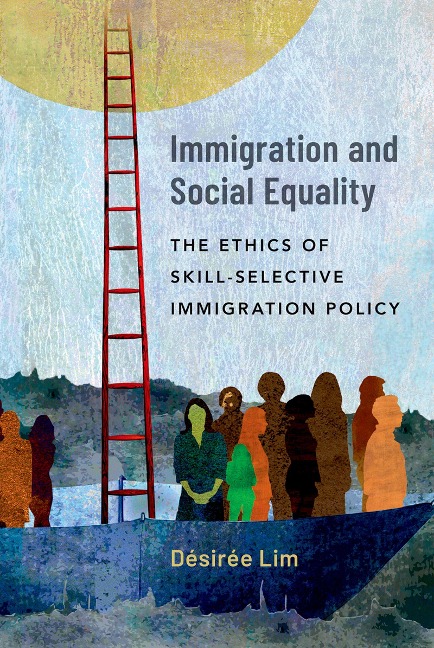
Skill-selective immigration policies, through which states favor the admission of highly-skilled migrants over low-skilled migrants, are a familiar component of the immigration landscape. Wealthy Western states, such as the United States, United Kingdom, Canada, and Australia have explicitly declared their desire to attract the "best and the brightest". On the other hand, attitudes towards low-skilled migrants could not be more different. They have consistently been portrayed as dangerous and undesirable, a drain on social welfare, and economically threatening to citizens. Immigration and Social Equality argues that we ought to re-think this stance. Beginning from the widely-shared principle of equal respect for all persons, it proposes that equal respect requires the recognition of each person's pro tanto right to social equality, regardless of their citizenship status. Even if states have the right to exclude non-citizens, they cannot do so in a way that is demeaning or subordinating to excluded persons. The right to social equality gives us a richer picture of why certain instances of immigrant selection, such as the US's recent ban on citizens from Muslim-majority countries, are unjust. However, it also has troubling implications for skill-selective immigration policies, as they are currently practiced: the book reveals that they ought to be regarded as a form of wrongful discrimination. Drawing on the framework of social equality, Désirée Lim goes on to consider the problem of colonial injustice and how it may be reproduced by skill-selective immigration policies, as well as migratorial disobedience.
Désirée Lim is Assistant Professor of Philosophy at Penn State's Department of Philosophy, and Research Associate at the Rock Ethics Institute. Prior to this, she was a Postdoctoral Fellow at Stanford University's McCoy Center for Ethics in Society. She completed her doctorate at King's College London in 2016. Her primary interests lie in contemporary political philosophy and applied ethics, with a special focus on immigration and global justice, as well as feminist philosophy and the philosophy of race.
Table of Contents:
Introduction PART I: SOCIAL EQUALITY AND THE ETHICS OF IMMIGRATION Chapter 1: Equal Respect and the Right to Exclude Chapter 2: Non-Citizens and the Demands of Social Equality PART II: WRONGFUL DISCRIMINATION AND SKILL-SELECTIVE IMMIGRATION POLICIES Chapter 3: Selecting Immigrants by Skill I: Wrongful Direct Discrimination Chapter 4: Selecting Immigrants by Skill II: Wrongful Indirect Discrimination PART III: IMMIGRATION AND INJUSTICE Chapter 5: Decolonial Justice and Immigration Policy Chapter 6: Migratorial Disobedience and Immigration Justice Conclusion
Dieses eBook wird im PDF-Format geliefert und ist mit einem Adobe Kopierschutz (DRM) versehen. Sie können dieses eBook mit allen Geräten lesen, die das PDF-Format und den Adobe Kopierschutz (DRM) unterstützen.
Zum Beispiel mit den folgenden Geräten:
• tolino Reader
Laden Sie das eBook direkt über den Reader-Shop auf dem tolino herunter oder übertragen Sie das eBook auf Ihren tolino mit einer kostenlosen Software wie beispielsweise Adobe Digital Editions.
• Sony Reader & andere eBook Reader
Laden Sie das eBook direkt über den Reader-Shop herunter oder übertragen Sie das eBook mit der kostenlosen Software Sony READER FOR PC/Mac oder Adobe Digital Editions auf ein Standard-Lesegeräte mit epub- und Adobe DRM-Unterstützung.
• Tablets & Smartphones
Möchten Sie dieses eBook auf Ihrem Smartphone oder Tablet lesen, finden Sie hier unsere kostenlose Lese-App für iPhone/iPad und Android Smartphone/Tablets.
• PC & Mac
Lesen Sie das eBook direkt nach dem Herunterladen mit einer kostenlosen Lesesoftware, beispielsweise Adobe Digital Editions, Sony READER FOR PC/Mac oder direkt über Ihre eBook-Bibliothek in Ihrem Konto unter „Meine eBooks“ - „online lesen“.
Schalten Sie das eBook mit Ihrer persönlichen Adobe ID auf bis zu sechs Geräten gleichzeitig frei.
Bitte beachten Sie, dass die Kindle-Geräte das Format nicht unterstützen und dieses eBook somit nicht auf Kindle-Geräten lesbar ist.