Und dann auf "Zum Home-Bildschirm [+]".

Stöbern
genialokal zum Startbildschirm hinzufügen
Installieren Sie die genialokal App auf Ihrem Startbildschirm für einen schnellen Zugriff und eine komfortable Nutzung.
Installieren Sie die genialokal App auf Ihrem Startbildschirm für einen schnellen Zugriff und eine komfortable Nutzung.
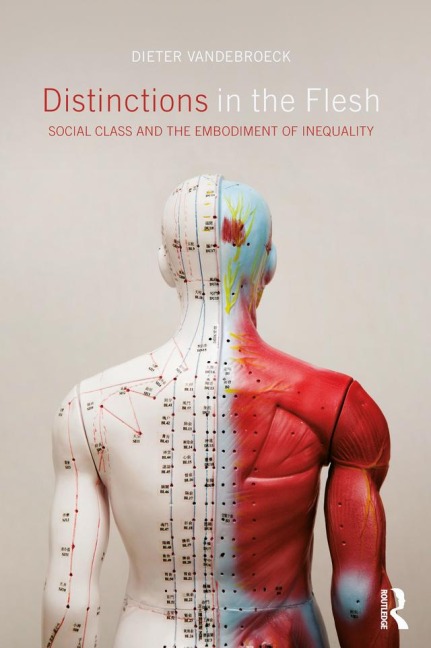
The past decades have witnessed a surge of sociological interest in the body. From the focal point of aesthetic investment, political regulation and moral anxiety, to a means of redefining traditional conceptions of agency and identity, the body has been cast in a wide variety of sociological roles. However, there is one topic that proves conspicuously absent from this burgeoning literature on the body, namely its role in the everyday (re)production of class-boundaries. Distinctions in the Flesh aims to fill that void by showing that the way individuals perceive, use and manage their bodies is fundamentally intertwined with their social position and trajectory. Drawing on a wide array of survey-data - from food-preferences to sporting-practices and from weight-concern to tastes in clothing - this book shows how bodies not only function as key markers of class-differences, but also help to naturalize and legitimize such differences. Along the way, it scrutinizes popular notions like the 'obesity epidemic', questions the role of 'the media' in shaping the way people judge their bodies and sheds doubt on sociological narratives that cast the body as a malleable object that is increasingly open to individual control and reflexive management. This book will be of interest to scholars of class, lifestyle and identity, but also to social epidemiologists, health professionals and anyone interested in the way that social inequalities become, quite literally, inscribed in the body.
Dieter Vandebroeck is an assistant-professor of sociology at the Free University of Brussels (Vrije Universiteit Brussel) and a former visiting fellow at the Centre for Research on Socio-Cultural Change (CRESC) at the University of Manchester.
Introduction: Vulgar Object, Vulgar Method PART I: Social Order, Body Order 1. The Body in Social Space 2. Classifying Bodies, Classified Bodies, Class Bodies 3. The Body in Social Time PART II: Modes of Embodiment 4. The Perceptible Body 5. The Hungry Body 6. The Playful Body PART III: Class Bodies 7. Relaxation in Tension 8. Tension in Relaxation 9. Necessity Incarnate Conclusion: The Visible and the Invisible Methodological Appendices
Dieses eBook wird im PDF-Format geliefert und ist mit einem Adobe Kopierschutz (DRM) versehen. Sie können dieses eBook mit allen Geräten lesen, die das PDF-Format und den Adobe Kopierschutz (DRM) unterstützen.
Zum Beispiel mit den folgenden Geräten:
• tolino Reader
Laden Sie das eBook direkt über den Reader-Shop auf dem tolino herunter oder übertragen Sie das eBook auf Ihren tolino mit einer kostenlosen Software wie beispielsweise Adobe Digital Editions.
• Sony Reader & andere eBook Reader
Laden Sie das eBook direkt über den Reader-Shop herunter oder übertragen Sie das eBook mit der kostenlosen Software Sony READER FOR PC/Mac oder Adobe Digital Editions auf ein Standard-Lesegeräte mit epub- und Adobe DRM-Unterstützung.
• Tablets & Smartphones
Möchten Sie dieses eBook auf Ihrem Smartphone oder Tablet lesen, finden Sie hier unsere kostenlose Lese-App für iPhone/iPad und Android Smartphone/Tablets.
• PC & Mac
Lesen Sie das eBook direkt nach dem Herunterladen mit einer kostenlosen Lesesoftware, beispielsweise Adobe Digital Editions, Sony READER FOR PC/Mac oder direkt über Ihre eBook-Bibliothek in Ihrem Konto unter „Meine eBooks“ - „online lesen“.
Schalten Sie das eBook mit Ihrer persönlichen Adobe ID auf bis zu sechs Geräten gleichzeitig frei.
Bitte beachten Sie, dass die Kindle-Geräte das Format nicht unterstützen und dieses eBook somit nicht auf Kindle-Geräten lesbar ist.