Stöbern
genialokal zum Startbildschirm hinzufügen
Installieren Sie die genialokal App auf Ihrem Startbildschirm für einen schnellen Zugriff und eine komfortable Nutzung.
Installieren Sie die genialokal App auf Ihrem Startbildschirm für einen schnellen Zugriff und eine komfortable Nutzung.
Tippen Sie einfach auf Teilen:
 Und dann auf "Zum Home-Bildschirm [+]".
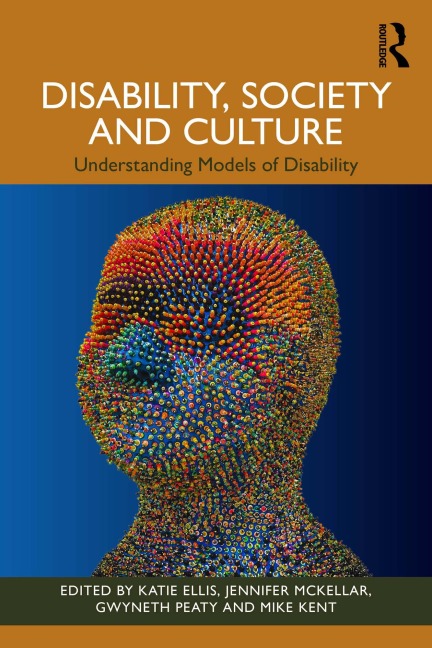
This book provides an accessible introduction to critical disability studies, which helps students question existing notions of disability and interrogate how these have become embedded in our social and cultural understanding of disability. This interdisciplinary text, authored by a team of leading critical disability scholars, defines and explains the core foundational concepts and models referred to in disability studies literature: the medical model, the tragedy model of disability, the social model, the cultural model, the human rights model, the affirmation model and critical disability studies. These seven particular models have been selected due to the centrality of their influence on people with disability, wider society and culture and the academic study of disability. These models provide students with new ways of understanding how disability interfaces with society and offer students from a variety of disciplines an important foundation for any further formal study in this area. This text is also co-designed with students studying models of disability, so the authors fully understand the issues students experience when learning about these models, and this text actively addresses how to overcome them. This book will be an essential resource for undergraduate and postgraduate students studying critical disability studies from various disciplines including media and cultural studies, communication studies, disability studies and sociology.
Katie Ellis is Professor in Internet Studies and Director of the Centre for Culture and Technology at Curtin University. Her research is located at the intersection of media access and representation. She is the author or editor of 19 books on the topic of disability, the media and popular culture including most recently with Mike Kent and Tama Leaver, Gaming Disability (2023) and Disability and Digital Television Cultures (2019) and with Mick Broderick, Trauma and Disability in Mad Max: Beyond the Road Warrior's Fury (2019). Jennifer McKellar is an academic and researcher whose work focuses on inclusivity. Her work supports health and aged care in multicultural communities, as well as the development and expansion of critical disability studies as an academic discipline. She contributed to the Routledge International Handbook of Critical Disability Studies (2025) and was the lead author on the paper 'Governance in Social Research: Advancing Inclusive Approaches for Marginalised Communities' (2025) in the Australian Journal of Social Issues. Gwyneth Peaty is a Learning Designer for the Australian Centre for Student Equity and Success (ACSES) and a research fellow in the Centre for Culture and Technology (CCAT) at Curtin University. Her research focus includes popular culture, technology, disability, horror, and the Gothic. Gwyneth is the reviews editor for the Australasian Journal of Popular Culture. Mike Kent is Professor and Head of School for Media, Creative Arts and Social Enquiry at Curtin University. His research focus is on people with disabilities and their use of, and access to, information and communication technology and the internet. His recent publications include Routledge International Handbook of Critical Disability Studies (2025), edited with Katie Ellis and Kim Cousins, and (2023), edited with Katie Ellis and Tama Leaver.
Acknowledgements Author biographic statements Prologue: 'Everything' - an artist's journey with disability Michael Miocevich Chapter 1: An introduction to learning about models of disability Katie Ellis and Gwyneth Peaty Chapter 2: The medical model of disability Jennifer McKellar Chapter 3: The tragedy model of disability Katie Ellis and Jennifer McKellar Chapter 4: The social model of disability Hersinta and Kelly Moes Chapter 5: The cultural model of disability Kim Cousins, Kai-Ti Kao and Katie Ellis Chapter 6: The human rights model of disability Maria Ionita Chapter 7: Kelly Moes and Chloe T. Rattray Chapter 8: The affirmation model of disability Achala K. Dissanayake, Kelly Moes and Jordan Alice Fyfe Chapter 9: Conclusion Mike Kent, Kelly Moes, Katie Ellis, Jennifer McKellar and Gwyneth Peaty Epilogue: A crip time-space odyssey: A bendy journey thinking about, through and with disability Kelly Moes Glossary Index