Stöbern
genialokal zum Startbildschirm hinzufügen
Installieren Sie die genialokal App auf Ihrem Startbildschirm für einen schnellen Zugriff und eine komfortable Nutzung.
Installieren Sie die genialokal App auf Ihrem Startbildschirm für einen schnellen Zugriff und eine komfortable Nutzung.
Tippen Sie einfach auf Teilen:
 Und dann auf "Zum Home-Bildschirm [+]".

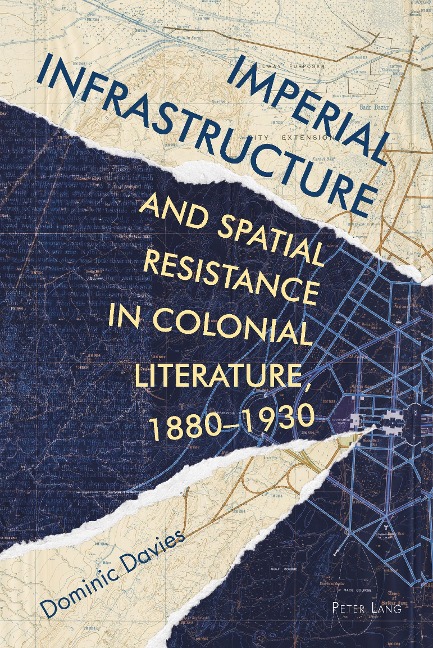
Between 1880 and 1930, the British Empire's vast infrastructural developments facilitated the incorporation of large parts of the globe into not only its imperial rule, but also the capitalist world-system. Throughout this period, colonial literary fiction, in recording this vast expansion, repeatedly cited these imperial infrastructures to make sense of the various colonial landscapes in which they were set. Physical embodiments of empire proliferate in this writing. Railways and trains, telegraph wires and telegrams, roads and bridges, steamships and shipping lines, canals and other forms of irrigation, cantonments, the colonial bungalow, and other kinds of colonial urban infrastructure - all of these infrastructural lines broke up the landscape and gave shape to the literary depiction and production of colonial space. By developing a methodology called «infrastructural reading», the author shows how a focus on the infrastructural networks that circulate through colonial fiction are almost always related to some form of anti-imperial resistance that manifests spatially within their literary, narrative and formal elements. This subversive reading strategy - which is applied in turn to writers as varied as H. Rider Haggard, Olive Schreiner and John Buchan in South Africa, and Flora Annie Steel, E.M. Forster and Edward Thompson in India - demonstrates that these mostly pro-imperial writings can reveal an array of ideological anxieties, limitations and silences as well as more direct objections to and acts of violent defiance against imperial control and capitalist accumulation.
Dominic Davies is a British Academy Postdoctoral Research Fellow in the English Faculty at the University of Oxford, where he also obtained his DPhil in Post/Colonial Literature. He is the author of a range of publications on colonial and postcolonial literature and history and the co-editor of two forthcoming volumes related to infrastructure and resistance in literature. His current research focuses on the way in which comics and graphic novels resist violent urban infrastructures in twenty-first-century cities.
CONTENTS: Infrastructure, Resistance, Literature - Mapping Humanitarianism: Flora Annie Steel and the Contradictions of Colonial Capitalism - Mapping Segregation: Literary Geographies of South Africa - Mapping Frontiers: John Buchan and the Topographies of Imperial Ideology - Mapping Nationalism: Allegories of Uneven Development - Towards an Infrastructural Reading of the Present.