Und dann auf "Zum Home-Bildschirm [+]".

Stöbern
genialokal zum Startbildschirm hinzufügen
Installieren Sie die genialokal App auf Ihrem Startbildschirm für einen schnellen Zugriff und eine komfortable Nutzung.
Installieren Sie die genialokal App auf Ihrem Startbildschirm für einen schnellen Zugriff und eine komfortable Nutzung.
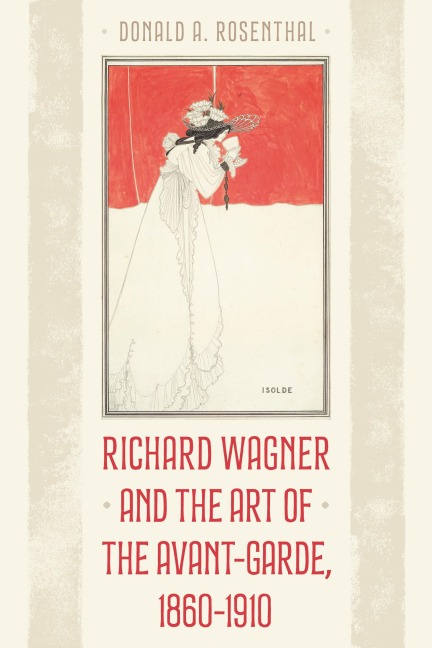
This book explores the responses of leading European avant-garde painters to the operas of Richard Wagner, the most influential composer of the late nineteenth century. The term avant-garde represents a twenty-first century evaluation of certain nineteenth-century artists working in a variety of advanced styles, rather than a phrase the artists applied to themselves.
Chapters are on individual artists or groups, rather than an attempt to survey all of nineteenth-century Wagnerian visual art. They deal with paintings and drawings inspired by Wagner and his operas, not with the composer's larger cultural influence through his writings and personal example. Thus artists such as Vincent Van Gogh and Paul Gauguin, who knew of Wagner's music and writings but did not depict scenes from his operas, are not discussed in detail.
The emphasis is on the diverse effects Wagner had on the works of leading avant-garde artists, varying according to their personalities and stylistic interests. The period beginning in the 1880s, often associated with post-Impressionism, was characterized by a movement away from realist subject matter to more personal or imaginary themes, a general intellectual trend of the fin-de-siècle. Wagner's remote quasi-historical or mythological subjects fit well with this escapist tendency in the art and culture of the time, in part a return to the Romantic sensibility that was dominant in Wagner's youth. Wagner's influence peaked in the period between his death in 1883 and 1900, though a few long-lived artists continued their Wagnerian explorations from this era well into the early twentieth century. There is no "Wagner style" in art, yet Wagner's pervasive influence is immediately evident in these works. Artists whose works are discussed include Eugène Delacroix, Henri Fantin-Latour, Odilon Redon, Max Klinger, James Ensor, Fernand Khnopff, John Singer Sargent and Aubrey Beardsley, among others.
The book features 60 art reproductions, half of them in color.
Donald A. Rosenthal is the author of Orientalism: The Near East in French Painting, 1800 - 1880 and British Watercolors from the West Foundation. His articles have appeared in the Art Bulletin,Burlington Magazine, and Gazette des Beaux-Arts.
Contents
List of Figures and Plates
Introduction
Acknowledgments
Ch.1. Tannhäuser in Paris
Ch 2. An Allegorical Portrait of Richard Wagner with his Muse
Ch. 3. Brünnhilde and Parsifal as Seen by Odilon Redon
Ch. 4. "Wagnerian" Themes in English Pre-Raphaelite Painting
Ch. 5. Aubrey Beardsley's Drawings of Tristan und Isolde
Ch. 6. Art in the Wagner Memorial Album of 1884
Ch. 7. John Singer Sargent, Wagnerite
Ch. 8. Richard Wagner and the Artists of the Belgian Avant-Garde
Part 1 James Ensor
Ch. 9 Richard Wagner and the Artists of the Belgian Avant-Garde
Part 2 The Symbolists: Fernand Khnopff and Jean Delville
Ch. 10. Constantin Meunier's Bronze Valkyrie
Ch. 11. Wagnerian Architecture: The Wagnerhof in Rotterdam
Index
About the Author
Dieses eBook wird im PDF-Format geliefert und ist mit einem Adobe Kopierschutz (DRM) versehen. Sie können dieses eBook mit allen Geräten lesen, die das PDF-Format und den Adobe Kopierschutz (DRM) unterstützen.
Zum Beispiel mit den folgenden Geräten:
• tolino Reader
Laden Sie das eBook direkt über den Reader-Shop auf dem tolino herunter oder übertragen Sie das eBook auf Ihren tolino mit einer kostenlosen Software wie beispielsweise Adobe Digital Editions.
• Sony Reader & andere eBook Reader
Laden Sie das eBook direkt über den Reader-Shop herunter oder übertragen Sie das eBook mit der kostenlosen Software Sony READER FOR PC/Mac oder Adobe Digital Editions auf ein Standard-Lesegeräte mit epub- und Adobe DRM-Unterstützung.
• Tablets & Smartphones
Möchten Sie dieses eBook auf Ihrem Smartphone oder Tablet lesen, finden Sie hier unsere kostenlose Lese-App für iPhone/iPad und Android Smartphone/Tablets.
• PC & Mac
Lesen Sie das eBook direkt nach dem Herunterladen mit einer kostenlosen Lesesoftware, beispielsweise Adobe Digital Editions, Sony READER FOR PC/Mac oder direkt über Ihre eBook-Bibliothek in Ihrem Konto unter „Meine eBooks“ - „online lesen“.
Schalten Sie das eBook mit Ihrer persönlichen Adobe ID auf bis zu sechs Geräten gleichzeitig frei.
Bitte beachten Sie, dass die Kindle-Geräte das Format nicht unterstützen und dieses eBook somit nicht auf Kindle-Geräten lesbar ist.