Und dann auf "Zum Home-Bildschirm [+]".

Stöbern
genialokal zum Startbildschirm hinzufügen
Installieren Sie die genialokal App auf Ihrem Startbildschirm für einen schnellen Zugriff und eine komfortable Nutzung.
Installieren Sie die genialokal App auf Ihrem Startbildschirm für einen schnellen Zugriff und eine komfortable Nutzung.
Ihr gewünschter Artikel ist in 0 Buchhandlungen vorrätig - wählen Sie hier eine Buchhandlung in Ihrer Nähe aus:

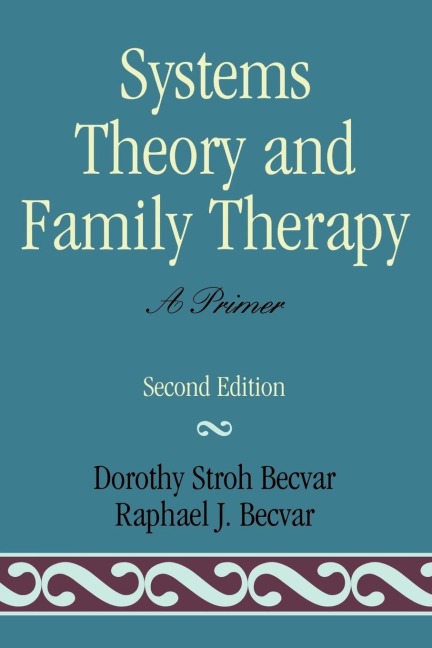
Systems Theory and Family Therapy describes the basic concepts of systems theory and its application in family therapy in a clear, understandable manner with many illustrations drawn from clinical practice. This edition provides a revised and updated version of the original, that simplifies a complex area of study, enabling students to learn the subject more easily without being overwhelmed by the language normally employed in presenting these subjects. The authors discuss the distinctions between modernism and postmodernism as well as first-order and second-order cybernetics. They also include discussions of constructivism and social constructionism, as well as the ramifications of these perspectives for the theory and practice of family therapy.
Dorothy Stroh Becvar, professor emerita in the School of Social Work at St. Louis University, was a licensed marital and family therapist and a licensed clinical social worker. She published extensively and presented workshops and taught courses, both nationally and internationally, on a wide variety of topics. She was also president/CEO of the Haelan Centers(R), a not-for-profit corporation dedicated to promoting growth and wholeness in body, mind, and spirit. Dorothy died on August 31, 2021.
chapter 1 Introduction: How to Use This Book chapter 2 About Theories chapter 3 Systems Theory/Cybernetics: A Paradigm Shift chapter 4 First Order Cybernetics: Definition of Concepts chapter 5 Second Order Cybernetics: Definition of Concepts chapter 6 Family Interpretive Systems/Stories chapter 7 Family Development Through the Life Cycle chapter 8 The Family as a System chapter 9 Critiques and Defense of a System Perspective chapter 10 Implications for Family Therapy chapter 11 In Conclusion chapter 12 References chapter 13 Index