Und dann auf "Zum Home-Bildschirm [+]".

Stöbern
genialokal zum Startbildschirm hinzufügen
Installieren Sie die genialokal App auf Ihrem Startbildschirm für einen schnellen Zugriff und eine komfortable Nutzung.
Installieren Sie die genialokal App auf Ihrem Startbildschirm für einen schnellen Zugriff und eine komfortable Nutzung.
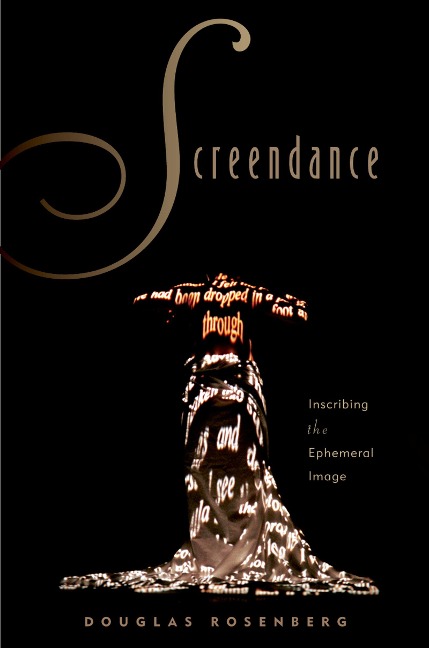
The relationship between the practice of dance and the technologies of representation has excited artists since the advent of film. Dancers, choreographers, and directors are increasingly drawn to screendance, the practice of capturing dance as a moving image mediated by a camera. While the interest in screendance has grown in importance and influence amongst artists, it has until now flown under the academic radar. Emmy-nominated director and auteur Douglas Rosenberg's groundbreaking book considers screendance as both a visual art form as well as an extension of modern and post-modern dance without drawing artificial boundaries between the two. Both a history and a critical framework, Screendance: Inscribing the Ephemeral Image is a new and important look at the subject. As he reconstructs the history and influences of screendance, Rosenberg presents a theoretical guide to navigating the boundaries of an inherently collaborative art form. Drawing on psycho-analytic, literary, materialist, queer, and feminist modes of analysis, Rosenberg explores the relationships between camera and subject, director and dancer, and the ephemeral nature of dance and the fixed nature of film. This interdisciplinary approach allows for a broader discussion of issues of hybridity and mediatized representation as they apply to dance on film. Rosenberg also discusses the audiences and venues of screendance and the tensions between commercial and fine-art cultures that the form has confronted in recent years. The surge of screendance festivals and courses at universities around the world has exposed the friction that exists between art, which is generally curated, and dance, which is generally programmed. Rosenberg explores the cultural implications of both methods of reaching audiences, and ultimately calls for a radical new way of thinking of both dance and film that engages with critical issues rather than simple advocacy.
Douglas Rosenberg is an artist and scholar working at the intersection of performance and media. He is internationally recognized as a pioneer in screendance both as director and as a theorist. He organized the first international symposium on screendance and is a founding editor of the International Journal of Screendance.
AcknowledgementsPrefaceIntroduction: Inscribing HybridityChapter 1: Archives and Architecture Chapter 2: Mediated Bodies: From Photography to Cine-DanceChapter 3: Recorporealization and the Mediated BodyChapter 4: The Advent of Video Culture Chapter 5: The Bride is Dance Chapter 6: Excavating Genres Chapter 7: Curating the PracticeChapter 8: Seeing is Forgetting the Name of the Thing One Sees, or Connoisseurship in ScreendanceChapter 9: Toward a Theory of ScreendanceChapter 10: Negotiating the AcademyIndex
Dieses eBook wird im PDF-Format geliefert und ist mit einem Adobe Kopierschutz (DRM) versehen. Sie können dieses eBook mit allen Geräten lesen, die das PDF-Format und den Adobe Kopierschutz (DRM) unterstützen.
Zum Beispiel mit den folgenden Geräten:
• tolino Reader
Laden Sie das eBook direkt über den Reader-Shop auf dem tolino herunter oder übertragen Sie das eBook auf Ihren tolino mit einer kostenlosen Software wie beispielsweise Adobe Digital Editions.
• Sony Reader & andere eBook Reader
Laden Sie das eBook direkt über den Reader-Shop herunter oder übertragen Sie das eBook mit der kostenlosen Software Sony READER FOR PC/Mac oder Adobe Digital Editions auf ein Standard-Lesegeräte mit epub- und Adobe DRM-Unterstützung.
• Tablets & Smartphones
Möchten Sie dieses eBook auf Ihrem Smartphone oder Tablet lesen, finden Sie hier unsere kostenlose Lese-App für iPhone/iPad und Android Smartphone/Tablets.
• PC & Mac
Lesen Sie das eBook direkt nach dem Herunterladen mit einer kostenlosen Lesesoftware, beispielsweise Adobe Digital Editions, Sony READER FOR PC/Mac oder direkt über Ihre eBook-Bibliothek in Ihrem Konto unter „Meine eBooks“ - „online lesen“.
Schalten Sie das eBook mit Ihrer persönlichen Adobe ID auf bis zu sechs Geräten gleichzeitig frei.
Bitte beachten Sie, dass die Kindle-Geräte das Format nicht unterstützen und dieses eBook somit nicht auf Kindle-Geräten lesbar ist.