Und dann auf "Zum Home-Bildschirm [+]".

Stöbern
genialokal zum Startbildschirm hinzufügen
Installieren Sie die genialokal App auf Ihrem Startbildschirm für einen schnellen Zugriff und eine komfortable Nutzung.
Installieren Sie die genialokal App auf Ihrem Startbildschirm für einen schnellen Zugriff und eine komfortable Nutzung.
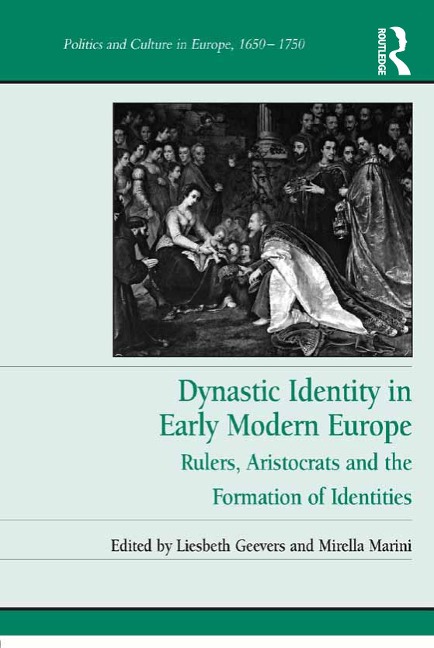
Aristocratic dynasties have long been regarded as fundamental to the development of early modern society and government. Yet recent work by political historians has increasingly questioned the dominant role of ruling families in state formation, underlining instead the continued importance and independence of individuals. In order to take a fresh look at the subject, this volume provides a broad discussion on the formation of dynastic identities in relationship to the lineage's own history, other families within the social elite, and the ruling dynasty. Individual chapters consider the dynastic identity of a wide range of European aristocratic families including the CroÃs, Arenbergs and Nassaus from the Netherlands; the Guises-Lorraine of France; the Sandoval-Lerma in Spain; the Farnese in Italy; together with other lineages from Ireland, Sweden and the Austrian Habsburg monarchy. Tied in with this broad international focus, the volume addressed a variety of related themes, including the expression of ambitions and aspirations through family history; the social and cultural means employed to enhance status; the legal, religious and political attitude toward sovereigns; the role of women in the formation and reproduction of (composite) dynastic identities; and the transition of aristocratic dynasties to royal dynasties. In so doing the collection provides a platform for looking again at dynastic identity in early modern Europe, and reveals how it was a compound of political, religious, social, cultural, historical and individual attitudes.
Dr Liesbeth Geevers is a postdoctoral researcher at the Radboud University Nijmegen (Netherlands). From 2008 to 2011 she was a lecturer of Political History at Utrecht University. She has published on the dynastic identity of William of Orange in the 1560s and the identity of the Nassau dynasty (1541-1616) and is currently studying the position of dynastic juniors in Eurasian empires (1300-1800). Mirella Marini obtained a BA in Law (1996) and an MA in history (2006) at the KU Leuven (Belgium). Her doctoral research on the religious patronage of high noble women is undertaken at the VU University Amsterdam (Netherlands) and the University of Antwerp (Belgium). Marini has published on female diplomacy, funeral culture and the politics of dynastic marriages.
Avant-propos, Duc d' Arenberg; Introduction: aristocracy, dynasty and identity in early modern Europe, 1520-1700, Liesbeth Geevers and Mirella Marini. Part I Identity, Ethnicity and Monarchy: Aristocratic identity formation in 17th-century Ireland, Jane Ohlmeyer; The newcomer's dilemma: Henry IV of France and James I of England, Ronald G. Asch; Dynasty and elites: from early modern Europe to late imperial China, Jeroen Duindam. Part II Identity Formation and Family Relations: The Chièvres legacy, the Croÿ family and litigation in Paris. Dynastic identities between the Low Countries and France (1519-1559), Violet Soen; From Arenberg to Aarschot and back again: female inheritance and the disputed 'merger' of two aristocratic identities, Mirella Marini; Points of transferral: Mademoiselle de Guise's will and the transferability of dynastic identity, Jonathan Spangler. Part III Manufacturing Identity: The fruits of war: the representation of Alessandro Farnese in Paolo Rinaldi's Liber Relationum, Sebastiaan Derks; To give to airy nothing a local habitation and a name: creating two great Swedish noble families, Fabian Persson; The Nassau orphans. the disputed legacy of William of Orange and the construction of the Prince of Orange (1584-1675), Liesbeth Geevers; Conclusion: 'The line of descent of nobles is from the blood of kings': reflections on dynastic identity, Hamish Scott. Bibliography; Index.
Dieses eBook wird im PDF-Format geliefert und ist mit einem Adobe Kopierschutz (DRM) versehen. Sie können dieses eBook mit allen Geräten lesen, die das PDF-Format und den Adobe Kopierschutz (DRM) unterstützen.
Zum Beispiel mit den folgenden Geräten:
• tolino Reader
Laden Sie das eBook direkt über den Reader-Shop auf dem tolino herunter oder übertragen Sie das eBook auf Ihren tolino mit einer kostenlosen Software wie beispielsweise Adobe Digital Editions.
• Sony Reader & andere eBook Reader
Laden Sie das eBook direkt über den Reader-Shop herunter oder übertragen Sie das eBook mit der kostenlosen Software Sony READER FOR PC/Mac oder Adobe Digital Editions auf ein Standard-Lesegeräte mit epub- und Adobe DRM-Unterstützung.
• Tablets & Smartphones
Möchten Sie dieses eBook auf Ihrem Smartphone oder Tablet lesen, finden Sie hier unsere kostenlose Lese-App für iPhone/iPad und Android Smartphone/Tablets.
• PC & Mac
Lesen Sie das eBook direkt nach dem Herunterladen mit einer kostenlosen Lesesoftware, beispielsweise Adobe Digital Editions, Sony READER FOR PC/Mac oder direkt über Ihre eBook-Bibliothek in Ihrem Konto unter „Meine eBooks“ - „online lesen“.
Schalten Sie das eBook mit Ihrer persönlichen Adobe ID auf bis zu sechs Geräten gleichzeitig frei.
Bitte beachten Sie, dass die Kindle-Geräte das Format nicht unterstützen und dieses eBook somit nicht auf Kindle-Geräten lesbar ist.