
Stöbern
genialokal zum Startbildschirm hinzufügen
Installieren Sie die genialokal App auf Ihrem Startbildschirm für einen schnellen Zugriff und eine komfortable Nutzung.
Installieren Sie die genialokal App auf Ihrem Startbildschirm für einen schnellen Zugriff und eine komfortable Nutzung.
Tippen Sie einfach auf Teilen:
 Und dann auf "Zum Home-Bildschirm [+]".
Bei genialokal.de kaufen Sie online bei Ihrer lokalen, inhabergeführten Buchhandlung!
Ihr gewünschter Artikel ist in 0 Buchhandlungen vorrätig - wählen Sie hier eine Buchhandlung in Ihrer Nähe aus:

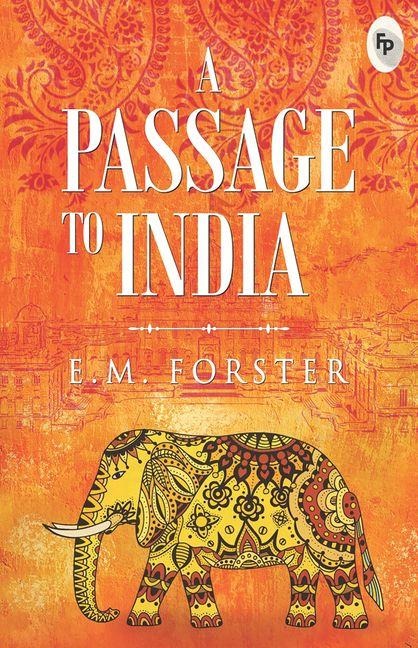
A Passage to India is E.M. Forster's timeless novel set against the backdrop of British colonial rule in India. Through the story of Dr. Aziz, an Indian Muslim physician, and his complex relationships with British visitors--Mrs. Moore, Adela Quested, and Cyril Fielding--the novel explores themes of friendship, cultural misunderstanding, colonial tension, and the deep chasm between East and West. When a seemingly innocent expedition to the Marabar Caves spirals into scandal, it triggers a political and emotional upheaval that questions justice, race, and identity in an empire on the brink of change. A literary masterpiece, A Passage to India is a compelling critique of imperialism and a powerful meditation on human connection across divides. A powerful tale of misunderstanding and empire.- Explore the fragile threads of friendship between colonizer and colonized.- Delve into a landmark novel that questions race, power, and perception.- Experience colonial India through sharp prose and psychological insight.- Discover how a simple encounter reveals the complexity of cross-cultural tensions.- Unravel the layers of spiritual, political, and emotional divides.
"One of the most influential writers in the British canon, Henry Morgan Forster was born on the New Year's Day of 1879. Henry, who was accidentally christened Edward Morgan Forster, was raised by his mother and aunts. After finishing his education, Forster decided to devote his time to writing. In 1910-1913, Forster wrote Maurice, a novel about homosexual love that 'argues for the preservation of a space, physical or psychological, beyond any sort of scrutiny' (The Guardian). It was published posthumously in 1971, nearly sixty years after being written. Forster wrote many short stories, publishing them in collections such as The Celestial Omnibus, and Other Stories (1911), The Eternal Moment, and Other Stories (1928), The Collected Tales of E. M. Forster (1947), The Life to Come, and Other Stories (1972), and Arctic Summer, and Other Fiction (1980). But his fame rests mainly on his novels, such as Where Angels Fear to Tread (1905), The Longest Journey (1907), A Room with a View (1908) earlier titled Lucy, and A Passage to India (1924) that remains his most celebrated work. Forster had a stroke and breathed his last on June 7, 1970. His ashes were scattered in the rose garden of Coventry's crematorium, near Warwick University."