Und dann auf "Zum Home-Bildschirm [+]".

Stöbern
genialokal zum Startbildschirm hinzufügen
Installieren Sie die genialokal App auf Ihrem Startbildschirm für einen schnellen Zugriff und eine komfortable Nutzung.
Installieren Sie die genialokal App auf Ihrem Startbildschirm für einen schnellen Zugriff und eine komfortable Nutzung.
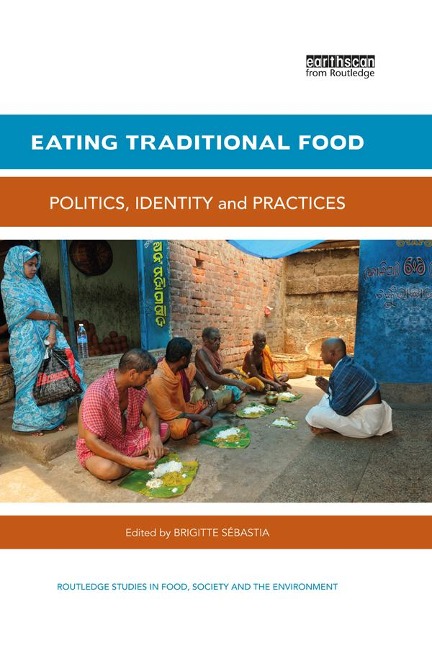
Due to its centrality in human activities, food is a meaningful object that necessarily participates in any cultural, social and ideological construction and its qualification as 'traditional' is a politically laden value. This book demonstrates that traditionality as attributed to foods goes beyond the notions of heritage and authenticity under which it is commonly formulated. Through a series of case studies from a global range of cultural and geographical areas, the book explores a variety of contexts to reveal the complexity behind the attribution of the term 'traditional' to food. In particular, the volume demonstrates that the definitions put forward by programmes such as TRUEFOOD and EuroFIR (and subsequently adopted by organisations including FAO), which have analysed the perception of traditional foods by individuals, do not adequately reflect this complexity. The concept of tradition being deeply ingrained culturally, socially, politically and ideologically, traditional foods resist any single definition. Chapters analyse the processes of valorisation, instrumentalisation and reinvention at stake in the construction and representation of a food as traditional. Overall the book offers fresh perspectives on topics including definition and regulation, nationalism and identity, and health and nutrition, and will be of interest to students and researchers of many disciplines including anthropology, sociology, politics and cultural studies.
Brigitte Sébastia is Researcher in Anthropology at the French Institute of Pondicherry, India.
1. Eating Traditional Food: Politics, Identity and Practices Brigitte Sébastia 2. The Rediscovery of Native 'Super-foods' in Mexico Esther Katz and Elena Lazos 3. Lost in Tradition: An Attempt to Go Beyond Labels, Taking Maltese Food Practices as a Primary Example Elise Billiard 4. The Protection of Traditional Local Foods through Geographical Indications in India Delphine Marie-Vivien 5. Are Buuz and BanS Traditional Mongolian Foods? Strategy of Appropriation and Identity Adjustment in Contemporary Mongolia Sandrine Ruhlmann 6. "Beef is our Secret of Life": Controversial Consumption of Beef in Andhra Pradesh, India Brigitte Sébastia 7. Modernity, Traditionalism, and the Silence Protest: The Palestinian Food Narrative in Israeli Reality Television Liora Gvion 8. The Never-ending Reinvention of 'Traditional Food': Food Practices and Identity (Re)Construction among Bolivian Returnees from Argentina Charles-Édouard de Suremain 9. What Is Healthy Diet? Some Ideas about the Construction of Healthy Food in Germany since the 19th Century Detlef Briesen 10. Are Traditional Foods and Eating Patterns Really Good for Health? A Socio-Anthropological Inquiry into French People with Hypercholesterolaemia Tristan Fournier 11. Eating Ayurvedic Foods: Elaboration of a Repertoire of 'Traditional Foods' in France Nicolas Commune
Dieses eBook wird im PDF-Format geliefert und ist mit einem Adobe Kopierschutz (DRM) versehen. Sie können dieses eBook mit allen Geräten lesen, die das PDF-Format und den Adobe Kopierschutz (DRM) unterstützen.
Zum Beispiel mit den folgenden Geräten:
• tolino Reader
Laden Sie das eBook direkt über den Reader-Shop auf dem tolino herunter oder übertragen Sie das eBook auf Ihren tolino mit einer kostenlosen Software wie beispielsweise Adobe Digital Editions.
• Sony Reader & andere eBook Reader
Laden Sie das eBook direkt über den Reader-Shop herunter oder übertragen Sie das eBook mit der kostenlosen Software Sony READER FOR PC/Mac oder Adobe Digital Editions auf ein Standard-Lesegeräte mit epub- und Adobe DRM-Unterstützung.
• Tablets & Smartphones
Möchten Sie dieses eBook auf Ihrem Smartphone oder Tablet lesen, finden Sie hier unsere kostenlose Lese-App für iPhone/iPad und Android Smartphone/Tablets.
• PC & Mac
Lesen Sie das eBook direkt nach dem Herunterladen mit einer kostenlosen Lesesoftware, beispielsweise Adobe Digital Editions, Sony READER FOR PC/Mac oder direkt über Ihre eBook-Bibliothek in Ihrem Konto unter „Meine eBooks“ - „online lesen“.
Schalten Sie das eBook mit Ihrer persönlichen Adobe ID auf bis zu sechs Geräten gleichzeitig frei.
Bitte beachten Sie, dass die Kindle-Geräte das Format nicht unterstützen und dieses eBook somit nicht auf Kindle-Geräten lesbar ist.