Und dann auf "Zum Home-Bildschirm [+]".

Stöbern
genialokal zum Startbildschirm hinzufügen
Installieren Sie die genialokal App auf Ihrem Startbildschirm für einen schnellen Zugriff und eine komfortable Nutzung.
Installieren Sie die genialokal App auf Ihrem Startbildschirm für einen schnellen Zugriff und eine komfortable Nutzung.
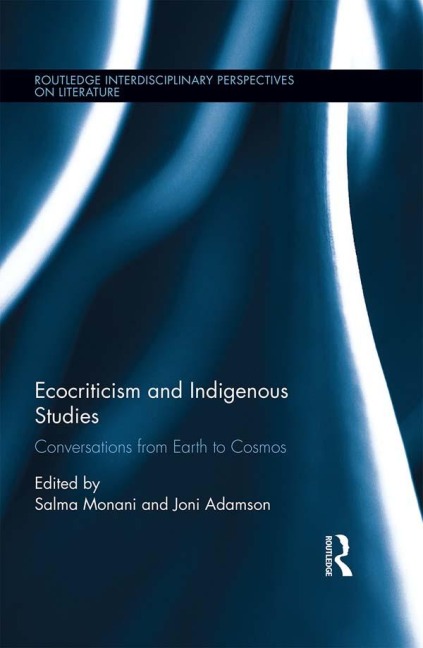
This book addresses the intersections between the interdisciplinary realms of Ecocriticism and Indigenous and Native American Studies, and between academic theory and pragmatic eco-activism conducted by multiethnic and indigenous communities. It illuminates the multi-layered, polyvocal ways in which artistic expressions render ecological connections, drawing on scholars working in collaboration with Indigenous artists from all walks of life, including film, literature, performance, and other forms of multimedia to expand existing conversations. Both local and global in its focus, the volume includes essays from multiethnic and Indigenous communities across the world, visiting topics such as Navajo opera, Sami film production history, south Indian tribal documentary, Maori art installations, Native American and First Nations science-fiction literature and film, Amazonian poetry, and many others. Highlighting trans-Indigenous sensibilities that speak to worldwide crises of environmental politics and action against marginalization, the collection alerts readers to movements of community resilience and resistance, cosmological thinking about inter- and intra-generational multi-species relations, and understandings of indigenous aesthetics and material ecologies. It engages with emerging environmental concepts such as multispecies ethnography, cosmopolitics, and trans-indigeneity, as well as with new areas of ecocritical research such as material ecocriticism, biosemiotics, and media studies. In its breadth and scope, this book promises new directions for ecocritical thought and environmental humanities practice, providing thought-provoking insight into what it means to be human in a locally situated, globally networked, and cosmologically complex world.
Joni Adamson is Professor of English and Environmental Humanities and Senior Sustainability Scholar at the Global Institute of Sustainability at Arizona State University, USA. Salma Monani is Associate Professor in the Environmental Studies department at Gettysburg College, USA.
Foreword by Simon Ortiz Acknowledgements Introduction: Cosmovisions, Ecocriticism and Indigenous Studies Joni Adamson and Salma Monani Part I: Resilience Chapter One: Negotiating the Ontological Gap: Place, Performance, and Media Art Practices in Aotearoa/New Zealand Janine Randerson and Amanda Yates Chapter Two: Science Fiction, Westerns, and the Vital Cosmo-ethics of The 6th World Salma Monani Chapter Three: Long Environmentalism: After the Listening Session Subhankar Banerjee Chaoter Four: Grounded in Spiritual Geography: Restoring Naabaahi in Enemy Slayer, a Navajo Oratorio Laura Tohe Part II: Resistance Chapter Five: Dancing at the End of the World: The Poetics of the Body in Indigenous Protest Janet Fiskio Chapter Six: New Media, Activism, and Indigenous Environmental Governance: Politics and the Minnesota-Wisconsin Wolf Hunt Clint Carroll and Angelica Lawson Chapter Seven: Cyclical Conceptualizations of Time: Ecocritical Perspectives on Sami Film Culture Pietari Kääpä Chapter Eight: Resistance and Hope in Mohawk Cinema: Iroquois Cosmologies and Histories Shelley Niro and Salma Monani Part III: Multi-Species Relations Chapter Nine: A "Network of Networks": Multispecies Stories and Cosmopolitical Activism in Solar Storms and People of the Feather Yalan Chang Chapter Ten: Tinai-Documentation as Ecocultural Ethnography: My Experience with Mudugar Rayson Alex Chapter Eleven: The Tangibility of Maize: Indigenous Literature, Bioart, and Violence in Mexico Abigail Perez Aguilera Chapter Twelve: Why Bears, Yakumama (Mother Water), and other Transformational Beings are (Still) Good to Think Joni Adamson and Juan Carlos Galeano, with Illustrations by Solmi Angarita List of Contributors Index
Dieses eBook wird im PDF-Format geliefert und ist mit einem Adobe Kopierschutz (DRM) versehen. Sie können dieses eBook mit allen Geräten lesen, die das PDF-Format und den Adobe Kopierschutz (DRM) unterstützen.
Zum Beispiel mit den folgenden Geräten:
• tolino Reader
Laden Sie das eBook direkt über den Reader-Shop auf dem tolino herunter oder übertragen Sie das eBook auf Ihren tolino mit einer kostenlosen Software wie beispielsweise Adobe Digital Editions.
• Sony Reader & andere eBook Reader
Laden Sie das eBook direkt über den Reader-Shop herunter oder übertragen Sie das eBook mit der kostenlosen Software Sony READER FOR PC/Mac oder Adobe Digital Editions auf ein Standard-Lesegeräte mit epub- und Adobe DRM-Unterstützung.
• Tablets & Smartphones
Möchten Sie dieses eBook auf Ihrem Smartphone oder Tablet lesen, finden Sie hier unsere kostenlose Lese-App für iPhone/iPad und Android Smartphone/Tablets.
• PC & Mac
Lesen Sie das eBook direkt nach dem Herunterladen mit einer kostenlosen Lesesoftware, beispielsweise Adobe Digital Editions, Sony READER FOR PC/Mac oder direkt über Ihre eBook-Bibliothek in Ihrem Konto unter „Meine eBooks“ - „online lesen“.
Schalten Sie das eBook mit Ihrer persönlichen Adobe ID auf bis zu sechs Geräten gleichzeitig frei.
Bitte beachten Sie, dass die Kindle-Geräte das Format nicht unterstützen und dieses eBook somit nicht auf Kindle-Geräten lesbar ist.