Und dann auf "Zum Home-Bildschirm [+]".

Stöbern
genialokal zum Startbildschirm hinzufügen
Installieren Sie die genialokal App auf Ihrem Startbildschirm für einen schnellen Zugriff und eine komfortable Nutzung.
Installieren Sie die genialokal App auf Ihrem Startbildschirm für einen schnellen Zugriff und eine komfortable Nutzung.

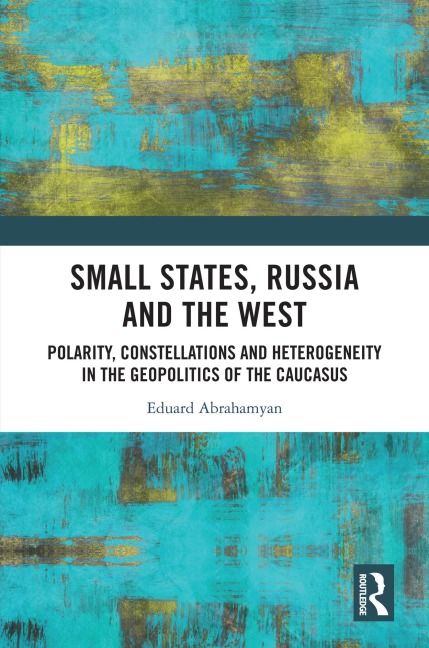
This book offers an in-depth investigation of the contemporary geopolitics of the Caucasus through a multi-level analysis of regional political transformations. It delves into the contrasting foreign policies of small states in the Caucasus in response to the Russian interventions in Georgia in 2008 and Ukraine in 2014 and 2022, which marked Russia's 'return' as an order-forming power, challenging the agenda of Euro-Atlantic integration. The author expands and adapts Constellation Theory to examine emerging non-Western regional orders, using a relational polarity framework to argue that the choices of Armenia, Azerbaijan, and Georgia are not merely products of Russian or Western influence but are shaped by each state's unique geocultural propensities, distinct asymmetric relationships with divergent power poles, and differing perceptions of reality. This book enriches the emerging discourse on the regional complexities of the multipolar world order with multifaceted interpretations of politics and decision-making through its nuanced regional focus and innovative theoretical grounding. It contributes significantly to International Relations theory, geopolitics, small-states and area studies, offering invaluable insights into small-state foreign policy dynamics in the age of rising global multipolarity.
Dr. Eduard Abrahamyan is a Senior Research Fellow at the Institute for Security Analysis (Armenia) and a Postgraduate Teaching Fellow at University College London (UK). He previously served as a Teaching Fellow at the University of Leicester (UK) from 2021 to 2022, where he obtained his PhD in 2023, focusing on the geopolitics of small states between Russia and the West. From 2019 to 2021, Dr. Abrahamyan served as an Aide to the President of the Republic of Armenia on foreign affairs. In 2017, he was a Rumsfeld Fellow and visiting scholar at the Central Asia-Caucasus Institute of the American Foreign Policy Council. He has contributed regularly to prominent think tanks and professional platforms, including the Jamestown Foundation, the American Foreign Policy Research Institute, the Central Asia-Caucasus Institute, The National Interest, and IHS Markit, among others.
List of illustrations Acknowledgements List of abbreviations Endorsements 1. Introduction Part I: Frameworks 2. Analytical Framework: Conceptualising non-Western Small States 3. Theoretical Framework: Constellation Theory Part II: Understanding the Geopolitics of the Caucasus 4. Russia's build-up of its pole position amid the fluctuation of tensions with the West 5. Armenia's Constellations and its Responses to the Strategic Shocks 6. Azerbaijan's Constellations and its Responses to the Strategic Shocks 7. Georgia's Constellations and its Responses to the Strategic Shocks Part III: Explaining the Geopolitics of the Caucasus 8. The Strategic Heterogeneity of the Foreign Policy Choices 9. Conclusion