Und dann auf "Zum Home-Bildschirm [+]".

Stöbern
genialokal zum Startbildschirm hinzufügen
Installieren Sie die genialokal App auf Ihrem Startbildschirm für einen schnellen Zugriff und eine komfortable Nutzung.
Installieren Sie die genialokal App auf Ihrem Startbildschirm für einen schnellen Zugriff und eine komfortable Nutzung.
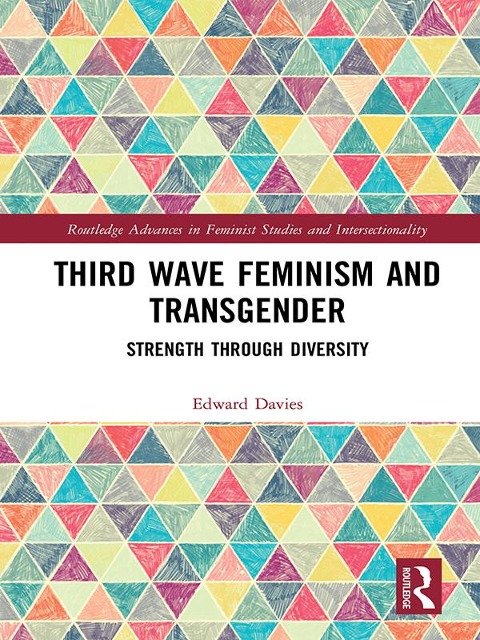
Feminism and transgender, as social factions or collective subjectivities, have historically evaded, vilified or negated each other's philosophy and subjectivities. In particular, separatist feminist theorists have portrayed the two 'sides' as consisting of mutually incompatible aims and subjectivities. These portrayals have worked to the detriment of both feminism and transgender. Third Wave Feminism and Transgender considers what positive outcomes on society in general, and the law as it pertains to gender in particular, may emerge from the identification of and cooperation between third wave feminism and transgender. Challenging the 'internecine exclusion' between and within each faction, Davies shows that queer-inspired philosophical third wave feminism promises to be an inclusive social discourse providing a substantial challenge to mutual exclusion. Indeed, this book explores the span of maternal relations, including womanism, ethics of care and semiotic language and subsequently reveals how gender variant people can highlight the gendered operation of conventional ethics. With a focus on Carol Gilligan and Julia Kristeva as key instigators of a philosophical third wave of feminism, this enlightening monograph will appeal to students and postdoctoral researchers interested in fields such as women's studies, transgender studies and gender law.
Edward Burlton Davies has undertaken research at Lancaster and Manchester Metropolitan Universities. His research interests focus on third wave feminism, womanism, gender variance and reconstruction of gender law.
Dedication * Contents * CHAPTER 1: Introduction - Potential for a Transgender/3rd Wave Feminist Coalition * 1.1 Investigating Connections: Potential for a Coalition * 1.2 Building Connections: How to Form a Coalition * 1.3 Conclusion * CHAPTER 2: Explaining Trans Lives - Silence and Secrecy * Introduction * 2.1 Silence and Secrecy * 2.2 Infantilisation and the 'Refusal to Grow Up' * 2.3 Which Trans Identities are Real? * 2.4 Conclusion * CHAPTER 3: The 3rd Wave - Career Feminism or Quiet Revolution? * Introduction * 3.1 'Personally Political Postmodern Identity' * 3.2 Contradiction * 3.3 Inter-Wave Philosophy and Maternal Relations * 3.4 Womanism: Excluded but Inclusive * 3.5 The 3rd Wave: An Open and Evolving Discourse? * 3.6 Conclusion * CHAPTER 4: Legal Review - The View from Somewhere * Introduction * 4.1 Radical Struggles for Single Functional Issue Legislation * 4.2 Any Gender You Want as Long as it's Heteronormative * 4.3 'Othering' * 4.4 Agency and Communion * 4.5 Postconventional Ethics? * 4.6 Conclusion * CHAPTER 5: 3rd Wave Philosophy - Dialogic Negotiation * Introduction * 5.1 Ethical Framework: Setting up and Maintaining the Transstudy * 5.2 Philosophical Framework: Queer Inspired 3rd Wave Feminism * 5.3 Why Narratives? * 5.4 Semanalysis Deriving from the Semiotic * 5.5 Construction of the Critical Discourse Analysis Framework * 5.6 Creation of the Reconstructing Discourses * 5.7 Conclusion * CHAPTER 6: Identity Essentialism to Subjectivity-In-Process - The Whole Trans Person * Introduction * 6.1 Which Gender Variant Subjectivities are Real? * 6.2 Political Subjectivity? * 6.3 The Whole Trans Person * 6.4 Identity as a Process: Subjectivity * 6.5 Conclusion * CHAPTER 7: Closed and Static Texts to Open and Evolving Narratives - Articulation and Openness * Introduction * 7.1 Voice * 7.2 Passing * 7.3 Choice * 7.4 'A Movement of Their Own'? * 7.5 Conclusion * CHAPTER 8: Exclusion to Inclusion - Postdifference for 'Others' * Introduction * 8.1 Social Cleansing * 8.2 Immigrants and Refugees * 8.3 Maternal Relations * 8.4 Finding Ourselves - Epiphanies * 8.5 Conclusion * CHAPTER 9: Recommendations - Ghosts in the Machine * Introduction * 9.1 Maternal Relations * 9.2 Genre and Genealogy * 9.3 Postdifference * 9.4 Practical Applications of the Recommendations * Bibliography * Appendix * List of Transstudy Topics * Table of Cases * Table of Legislation *
Dieses eBook wird im PDF-Format geliefert und ist mit einem Adobe Kopierschutz (DRM) versehen. Sie können dieses eBook mit allen Geräten lesen, die das PDF-Format und den Adobe Kopierschutz (DRM) unterstützen.
Zum Beispiel mit den folgenden Geräten:
• tolino Reader
Laden Sie das eBook direkt über den Reader-Shop auf dem tolino herunter oder übertragen Sie das eBook auf Ihren tolino mit einer kostenlosen Software wie beispielsweise Adobe Digital Editions.
• Sony Reader & andere eBook Reader
Laden Sie das eBook direkt über den Reader-Shop herunter oder übertragen Sie das eBook mit der kostenlosen Software Sony READER FOR PC/Mac oder Adobe Digital Editions auf ein Standard-Lesegeräte mit epub- und Adobe DRM-Unterstützung.
• Tablets & Smartphones
Möchten Sie dieses eBook auf Ihrem Smartphone oder Tablet lesen, finden Sie hier unsere kostenlose Lese-App für iPhone/iPad und Android Smartphone/Tablets.
• PC & Mac
Lesen Sie das eBook direkt nach dem Herunterladen mit einer kostenlosen Lesesoftware, beispielsweise Adobe Digital Editions, Sony READER FOR PC/Mac oder direkt über Ihre eBook-Bibliothek in Ihrem Konto unter „Meine eBooks“ - „online lesen“.
Schalten Sie das eBook mit Ihrer persönlichen Adobe ID auf bis zu sechs Geräten gleichzeitig frei.
Bitte beachten Sie, dass die Kindle-Geräte das Format nicht unterstützen und dieses eBook somit nicht auf Kindle-Geräten lesbar ist.