Und dann auf "Zum Home-Bildschirm [+]".

Stöbern
genialokal zum Startbildschirm hinzufügen
Installieren Sie die genialokal App auf Ihrem Startbildschirm für einen schnellen Zugriff und eine komfortable Nutzung.
Installieren Sie die genialokal App auf Ihrem Startbildschirm für einen schnellen Zugriff und eine komfortable Nutzung.
Ihr gewünschter Artikel ist in 0 Buchhandlungen vorrätig - wählen Sie hier eine Buchhandlung in Ihrer Nähe aus:

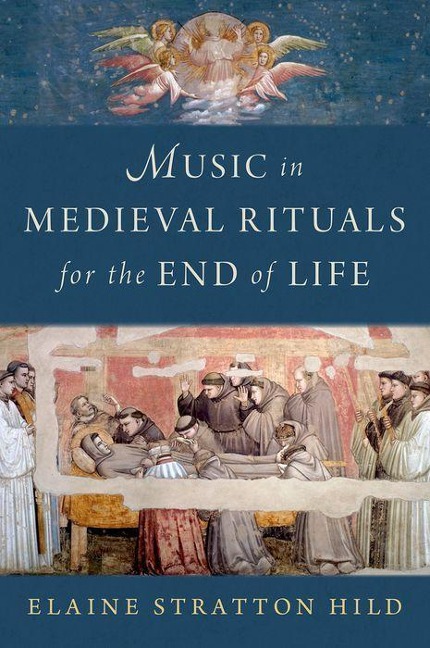
Medieval documents reveal that for centuries of European history, singing for a person at the moment of death was considered to be the ideal accompaniment to a life's ending. Through investigations of four manuscripts as case studies, author Elaine Stratton Hild examines and recovers the music sung for the dying during the Middle Ages and considers the functions of the music--a lost art of comforting the dying and the grieving.
Elaine Stratton Hild serves as an editor with Corpus monodicum, a long-term research project housed at the Universität Würzburg (Germany). Her responsibilities include publishing volumes of previously unedited plainchant transcribed from medieval manuscripts. Hild's work with medieval plainchant has been supported by the DAAD (Deutscher Akademischer Austauschdienst), the University of Notre Dame Institute for Advanced Study, and the Fulbright Foundation. Her edition of proper tropes, Tropen zu den Antiphonen der Messe aus Quellen französischer Herkunft, was published in 2017.
Acknowledgements
Editorial symbols used in music transcriptions
Introduction: Contemporary approaches to medieval rituals for the dying
1 Religious elites: Rome, "Old Roman" tradition
Manuscript source: Vatican, Biblioteca Apostolica Vaticana, Arch. Cap. S. Pietro F 11 pt. A (SP F 11)
2 Political and religious leaders: Sens, Cathedral of Saint Stephen
Manuscript source: Paris, Bibliothèque nationale de France, lat. 934 (Paris 934)
3 With the laity: Orsières, Switzerland
Manuscript source: Bourg-Saint-Pierre, Hospice du Grand-Saint-Bernard, ms. 3 (ancien 10091) (GSB 3)
4 Among women: Abbey of Saint Mary the Virgin and Saint Francis without Aldgate (England)
Manuscript source: Reigate (Surrey), Parish Church of St Mary Magdalene, Cranston Library, Ms. 2322 (Cranston 2322)
5 Analysis: Variation and continuity within the liturgical tradition
Final considerations: Why sing?
Appendix: Contents of individual rituals
Bibliography
Index: Manuscripts cited (with abbreviations)
Index: Chants and other items from all rituals
Index: General