Und dann auf "Zum Home-Bildschirm [+]".

Stöbern
genialokal zum Startbildschirm hinzufügen
Installieren Sie die genialokal App auf Ihrem Startbildschirm für einen schnellen Zugriff und eine komfortable Nutzung.
Installieren Sie die genialokal App auf Ihrem Startbildschirm für einen schnellen Zugriff und eine komfortable Nutzung.
Ihr gewünschter Artikel ist in 0 Buchhandlungen vorrätig - wählen Sie hier eine Buchhandlung in Ihrer Nähe aus:

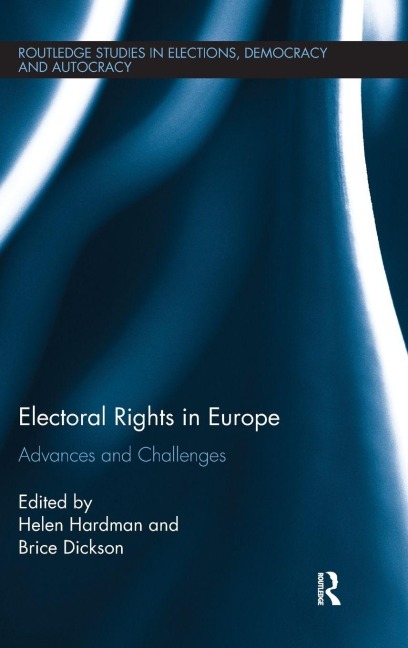

From the perspective of a number of different social science disciplines, this book explores the ways in which the election of politicians can be made more fair and credible by adopting a human rights approach to elections. It discusses existing international standards for the conduct of elections and presents case studies relating to jurisdictions within Europe, especially those emerging from conflict or from an authoritarian past, which demonstrate how problems occur and can be addressed.
Helen Hardman is Lecturer in Transformation and European Integration, CEES, School of Social and Political Sciences, University of Glasgow, UK Brice Dickson is Professor of International and Comparative Law at Queen's University Belfast, UK.
1. Introduction Part I: Hard and Soft Law Human Rights Standards relating to Elections 2. The Contribution of the Parliamentary Assembly of the Council of Europe to Soft Law in Electoral Matters 3. Between Soft and Hard Law Standards: The Contribution of the Venice Commission in the Electoral Field 4. The Level of the Protection of the Right to Free Elections in the Practice of the European Court of Human Rights Part II: National and Regional Case Studies 5. Voting Rights of Minorities and the Role of Ethnicity in Elections in the Post-Yugoslav Space 6. Prisoner Voting Saga: Reasons for Challenges 7. Electoral Rights in Russia: Mapping the Situation at the European Court of Human Rights Part III: Comparative Perspectives 8. When Elections are Free but not Effective: Party Systems and Corruption 9. The Impact of Elections and Voter De-alignment on Human Rights 10. Electoral Finances, Human Rights and Fairness 11 Conclusions