Und dann auf "Zum Home-Bildschirm [+]".

Stöbern
genialokal zum Startbildschirm hinzufügen
Installieren Sie die genialokal App auf Ihrem Startbildschirm für einen schnellen Zugriff und eine komfortable Nutzung.
Installieren Sie die genialokal App auf Ihrem Startbildschirm für einen schnellen Zugriff und eine komfortable Nutzung.
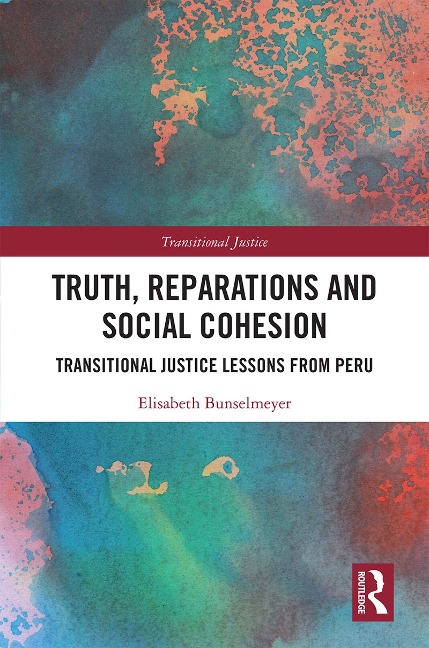
This book addresses the effectiveness of transitional justice mechanisms for repairing social cohesion. Truth commissions and reparation programs are implemented worldwide to enhance social cohesion, peace and democracy in post-conflict settings. Most claims about transitional justice measures are, however, normatively and not empirically based.The book questions whether attention from a truth and reconciliation commission can truly change the lives of the violence-affected people and whether monetary compensations or communal projects in form of milk cows can ever truly "repair" the harm suffered. The within-country comparative case study analyzes the effects of the commission and reparation program in Peru. It studies the post-conflict situation and the development of social cohesion in communities affected by the internal armed conflict. Using detailed empirical data this analysis reveals why the "reparation" of social cohesion in Peru was an impossible task. Contributing to a broader understanding of the impact of nationally applied transitional justice instruments in local settings, the book further offers a new framework for analyzing social cohesion as one of the aims of transitional justice processes. Offering a detailed account of transitional justice processes and social cohesion on the micro level, as well as an important analysis of their relationship, this innovative monograph will be invaluable for transitional justice scholars and students, as well as for international political and societal actors who are involved in transitional justice measures.
Dr. Elisabeth Bunselmeyer is based at the GIGA German Institute of Global and Area Studies and University of Hamburg. She holds a PhD in Political Science from University of Marburg and was honoured the Christiane-Rajewsky-Award 2018 by the German Association for Peace and Conflict Studies. Her areas of work and research are the social development in post-conflict settings and the impact of transitional justice processes in Latin America
Table of Contents Tables and figures Acknowledgments Abbreviations - Introduction Transitional Justice and why it matters Repairing Social Cohesion Research Focus and Framework Transitional Justice and Social Cohesion Findings and Contribution The Plan of the Book - Transitional Justice and Social Cohesion: A new Framework 2.1 Social Cohesion Indicator 2.2 Social Cohesion and Armed Conflict 2.3 The Impact of Transitional Justice on Social Coehsion - The Challenge of Measuring Social Impact: The Quasi-Experimental Research Design 3.1 The Analytical Framework: Stages of Transitional Justice Impact 3.2 The Quasi-Experimental Research Design 3.3 Cases 3.4 Data - Villages, Truth, Reparations and Social Cohesion PART I Four Post-Conflict Communities 4.1 Lucanamarca: Transitional Justice Overload in the Andes 4.2 Chuschi: Hardly any Notice of Transitional Justice 4.3 Santa Rosa: Reparations the "lost" Region of the Jungle 4.4. Kimbiri: Transitional Justice and its Non-Importance 4.5. Discussion - Villages, Truth, Reparations and Social Cohesion PART II Comparison of Ten Post-Conflict Communities 5.1. Six further Post-Conflict Communities San Antonio de Julo Carmen de Alanya Quispillacta San Juan de Uchuyri Nuevo Progreso Querobamba 5.2. The Implementation of Transitional Justice 5.3. The Awareness and Perception of Transitional Justice 5.4. The Impact on Social Cohesion - Individuals, Truth, Reparations and Social Cohesion 6.1 Receivers, Non-Receivers and Observers in the Focus 6.2 Victims and Non-Victims in the Focus 6.3 Men and Women in the Focus 6.4 Authorities and Non-Authorities in the Focus 6.5 Getting to Know the "Contented" Villagers 6.6 Getting to Know the "Socially-Minded" Villagers - Conclusion Assessing the Impact of Transitional Justice on Social Cohesion in Peru The Ambiguity of Truth and Reparations in Peru The Challenge to Assess Social Impact The (Im)possible Task of Repair in Post-Conflict Societies Outlook Annexes
Dieses eBook wird im PDF-Format geliefert und ist mit einem Adobe Kopierschutz (DRM) versehen. Sie können dieses eBook mit allen Geräten lesen, die das PDF-Format und den Adobe Kopierschutz (DRM) unterstützen.
Zum Beispiel mit den folgenden Geräten:
• tolino Reader
Laden Sie das eBook direkt über den Reader-Shop auf dem tolino herunter oder übertragen Sie das eBook auf Ihren tolino mit einer kostenlosen Software wie beispielsweise Adobe Digital Editions.
• Sony Reader & andere eBook Reader
Laden Sie das eBook direkt über den Reader-Shop herunter oder übertragen Sie das eBook mit der kostenlosen Software Sony READER FOR PC/Mac oder Adobe Digital Editions auf ein Standard-Lesegeräte mit epub- und Adobe DRM-Unterstützung.
• Tablets & Smartphones
Möchten Sie dieses eBook auf Ihrem Smartphone oder Tablet lesen, finden Sie hier unsere kostenlose Lese-App für iPhone/iPad und Android Smartphone/Tablets.
• PC & Mac
Lesen Sie das eBook direkt nach dem Herunterladen mit einer kostenlosen Lesesoftware, beispielsweise Adobe Digital Editions, Sony READER FOR PC/Mac oder direkt über Ihre eBook-Bibliothek in Ihrem Konto unter „Meine eBooks“ - „online lesen“.
Schalten Sie das eBook mit Ihrer persönlichen Adobe ID auf bis zu sechs Geräten gleichzeitig frei.
Bitte beachten Sie, dass die Kindle-Geräte das Format nicht unterstützen und dieses eBook somit nicht auf Kindle-Geräten lesbar ist.