Und dann auf "Zum Home-Bildschirm [+]".

Stöbern
genialokal zum Startbildschirm hinzufügen
Installieren Sie die genialokal App auf Ihrem Startbildschirm für einen schnellen Zugriff und eine komfortable Nutzung.
Installieren Sie die genialokal App auf Ihrem Startbildschirm für einen schnellen Zugriff und eine komfortable Nutzung.
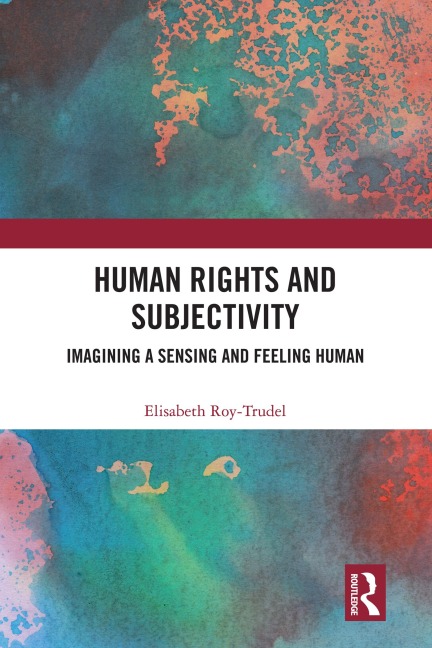
This book draws on a range of theoretical frameworks to challenge the limited conception of subjectivity upon which human rights are based. The book focuses on some of the ways in which dominant discourses are in tension with human rights' fundamental claim to universality by ignoring multiple ways of being. Different theoretical and methodological approaches are used to analyse this creation of exclusions. These include Hannah Arendt's figure of the refugee, posthumanist critiques and non-Western critical theories such as Black, Indigenous and decolonial approaches. Often these approaches are used in isolation, but together they reveal how the dominant concept of subjectivity has always needed an 'Other' and that the 'human' at the heart of human rights is not a universal concept. The book also pursues an analysis of visual discourses in the field of international human rights, with a focus on the ways in which exclusions are represented and entrenched through the visual. It argues that international human rights are based on a vision-centred sensorium and certain processes of reasoning that exclude emotions. Finally, the book considers how international human rights could embrace other forms of thinking and being in the world and recognize different sensory experiences. This original perspective on the limits of human rights will appeal to legal theorists, socio-legal scholars, and others working in politics, sociology, anthropology and cultural studies with an interest in contemporary approaches to social justice and critical approaches.
Elisabeth Roy-Trudel is a member of the Centre for Sensory Studies at Concordia University, Montreal, Canada.
Introduction Part I: A challenge to the 'human' of human rights 1. Actualizing the figure of the refugee to challenge a system based on the citizen-subject 2. Human, right? Analysing the subject of human rights through posthumanist approaches 3. Contesting the dominant ontology and epistemology through critical theories from the margins Part II: Towards more sensuous and inclusive international human rights 4. Exposing the imagined subject of human rights through a visual discourse analysis 5. Sensing the subject of international human rights Concluding thoughts and feelings
Dieses eBook wird im PDF-Format geliefert und ist mit einem Adobe Kopierschutz (DRM) versehen. Sie können dieses eBook mit allen Geräten lesen, die das PDF-Format und den Adobe Kopierschutz (DRM) unterstützen.
Zum Beispiel mit den folgenden Geräten:
• tolino Reader
Laden Sie das eBook direkt über den Reader-Shop auf dem tolino herunter oder übertragen Sie das eBook auf Ihren tolino mit einer kostenlosen Software wie beispielsweise Adobe Digital Editions.
• Sony Reader & andere eBook Reader
Laden Sie das eBook direkt über den Reader-Shop herunter oder übertragen Sie das eBook mit der kostenlosen Software Sony READER FOR PC/Mac oder Adobe Digital Editions auf ein Standard-Lesegeräte mit epub- und Adobe DRM-Unterstützung.
• Tablets & Smartphones
Möchten Sie dieses eBook auf Ihrem Smartphone oder Tablet lesen, finden Sie hier unsere kostenlose Lese-App für iPhone/iPad und Android Smartphone/Tablets.
• PC & Mac
Lesen Sie das eBook direkt nach dem Herunterladen mit einer kostenlosen Lesesoftware, beispielsweise Adobe Digital Editions, Sony READER FOR PC/Mac oder direkt über Ihre eBook-Bibliothek in Ihrem Konto unter „Meine eBooks“ - „online lesen“.
Schalten Sie das eBook mit Ihrer persönlichen Adobe ID auf bis zu sechs Geräten gleichzeitig frei.
Bitte beachten Sie, dass die Kindle-Geräte das Format nicht unterstützen und dieses eBook somit nicht auf Kindle-Geräten lesbar ist.