Und dann auf "Zum Home-Bildschirm [+]".

Stöbern
genialokal zum Startbildschirm hinzufügen
Installieren Sie die genialokal App auf Ihrem Startbildschirm für einen schnellen Zugriff und eine komfortable Nutzung.
Installieren Sie die genialokal App auf Ihrem Startbildschirm für einen schnellen Zugriff und eine komfortable Nutzung.
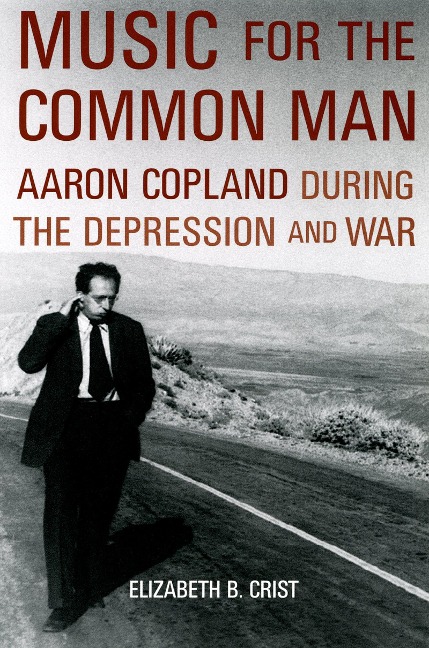
In the 1930s, Aaron Copland began to write in an accessible style he described as "imposed simplicity." Works like El Salón México, Billy the Kid, Lincoln Portrait, and Appalachian Spring feature a tuneful idiom that brought the composer unprecedented popular success and came to define an American sound. Yet the cultural substance of that sound--the social and political perspective that might be heard within these familiar pieces--has until now been largely overlooked. While it has long been acknowledged that Copland subscribed to leftwing ideals, Music for the Common Man is the first sustained attempt to understand some of Copland's best-known music in the context of leftwing social, political, and cultural currents of the Great Depression and Second World War. Musicologist Elizabeth Crist argues that Copland's politics never merely accorded with mainstream New Deal liberalism, wartime patriotism, and Communist Party aesthetic policy, but advanced a progressive vision of American society and culture. Copland's music can be heard to accord with the political tenets of progressivism in the 1930s and '40s, including a fundamental sensitivity toward those less fortunate, support of multiethnic pluralism, belief in social democracy, and faith that America's past could be put in service of a better future. Crist explores how his works wrestle with the political complexities and cultural contradictions of the era by investing symbols of America--the West, folk song, patriotism, or the people--with progressive social ideals. Much as been written on the relationship between politics and art in the 1930s and '40s, but very little on concert music of the era. Music for the Common Man offers fresh insights on familiar pieces and the political context in which they emerged.
Elizabeth B. Crist is Assistant Professor of Musicology at The University of Texas at Austin. Her writings on Copland have appeared in American Music, The Musical Quarterly, and Journal of Musicology. She won an ASCAP Deems Taylor award for her article "Aaron Copland and the Popular Front," published earlier this year in the Journal of the American Musicological Society. She is co-editor (with Wayne Shirley) of The Selected Correspondence of Aaron Copland.
Dieses eBook wird im PDF-Format geliefert und ist mit einem Adobe Kopierschutz (DRM) versehen. Sie können dieses eBook mit allen Geräten lesen, die das PDF-Format und den Adobe Kopierschutz (DRM) unterstützen.
Zum Beispiel mit den folgenden Geräten:
• tolino Reader
Laden Sie das eBook direkt über den Reader-Shop auf dem tolino herunter oder übertragen Sie das eBook auf Ihren tolino mit einer kostenlosen Software wie beispielsweise Adobe Digital Editions.
• Sony Reader & andere eBook Reader
Laden Sie das eBook direkt über den Reader-Shop herunter oder übertragen Sie das eBook mit der kostenlosen Software Sony READER FOR PC/Mac oder Adobe Digital Editions auf ein Standard-Lesegeräte mit epub- und Adobe DRM-Unterstützung.
• Tablets & Smartphones
Möchten Sie dieses eBook auf Ihrem Smartphone oder Tablet lesen, finden Sie hier unsere kostenlose Lese-App für iPhone/iPad und Android Smartphone/Tablets.
• PC & Mac
Lesen Sie das eBook direkt nach dem Herunterladen mit einer kostenlosen Lesesoftware, beispielsweise Adobe Digital Editions, Sony READER FOR PC/Mac oder direkt über Ihre eBook-Bibliothek in Ihrem Konto unter „Meine eBooks“ - „online lesen“.
Schalten Sie das eBook mit Ihrer persönlichen Adobe ID auf bis zu sechs Geräten gleichzeitig frei.
Bitte beachten Sie, dass die Kindle-Geräte das Format nicht unterstützen und dieses eBook somit nicht auf Kindle-Geräten lesbar ist.