Und dann auf "Zum Home-Bildschirm [+]".

Stöbern
genialokal zum Startbildschirm hinzufügen
Installieren Sie die genialokal App auf Ihrem Startbildschirm für einen schnellen Zugriff und eine komfortable Nutzung.
Installieren Sie die genialokal App auf Ihrem Startbildschirm für einen schnellen Zugriff und eine komfortable Nutzung.
Ihr gewünschter Artikel ist in 0 Buchhandlungen vorrätig - wählen Sie hier eine Buchhandlung in Ihrer Nähe aus:

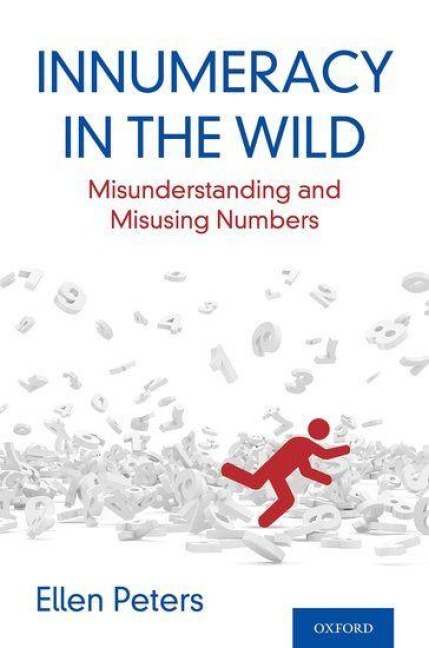
Our grasp of numbers and uncertainty is one of humankind's most distinctive and important traits. It is pivotal to our exceptional ability to control the world around us as we make short-term choices and forecast far into the future. But very smart people can struggle with numbers in ways that pose negative consequences for their decision making. Numeric ability equips individuals with vital tools that allow them to take charge of various aspects of their life. The more numerate enjoy superior health, wealth, and employment outcomes, while the innumerate remain more vulnerable.
This book presents the logic, rules, and habits that highly numerate people use in decision making. Innumeracy in the Wild also introduces two additional ways of knowing numbers that complement and compensate for lower numeric ability and explores how numeric abilities develop and where mistakes are made. It offers a state-of-the-art review of the now sizeable body of psychological and applied findings that demonstrate the critical importance of numeracy in our world. With more than two decades of experience in the decision sciences, Ellen Peters demonstrates how intervention can foster adult numeric capacity, propel people to use numeric facts in decision making, and empower those with lower numeracy to reason better.
Ellen Peters is Philip H. Knight Chair, Director of the Center for Science Communication Research, and Professor of Journalism and Communication as well as Psychology at the University of Oregon. She studies the basic building blocks of human judgment and decision making and is particularly interested in how people think and feel their way through decisions in our increasingly complex world.
- Section I. Introduction
- Chapter 1. The Types and Extent of Innumeracy
- Section II. The Objectively Innumerate
- Chapter 2. Innumeracy, Incomprehension, and Inconsistency
- Chapter 3. Reliance on Heuristics and Concrete, Easy-to-evaluate Attributes
- Chapter 4. Feelings and Frames
- Section III. The Habits of the Highly Numerate
- Chapter 5. Thinking Harder with Numbers
- Chapter 6. The Highly Numerate Understand the Feel of Numbers
- Chapter 7. Numeric Sensitivity and Consistent Use of Numbers
- Chapter 8. Numerically Imperfect Reasoning among the Highly Numerate
- Section IV. Objective numeracy, life outcomes, and what we don't know
- Chapter 9. Numeracy's Secret Connection With Life Outcomes
- Chapter 10. Issues and Opportunities in Objective Numeracy Research
- Section V. The Emergence of Number Understanding
- Chapter 11. The Approximate Number System (ANS) and Discriminating Magnitudes
- Chapter 12. Genetics and Formal Education
- Section VI. Two Additional Ways of Knowing Numbers
- Chapter 13. Discriminating Numbers Allows for Better Decisions
- Chapter 14. Subjective Numeracy and Knowing What You Know
- Section VII. Numbers are Just Numbers - The Impotence of Data Versus the Power of Information
- Chapter 15. Evidence-based Information Presentation Matters
- Chapter 16. Provide Numbers But Reduce Cognitive Effort
- Chapter 17. Provide Evaluative Meaning And Direct Attention
- Section VIII. Becoming More Numerate
- Chapter 18. Training Numeracy
- Chapter 19. Reflections on Numeracy and the Power of Reasoning Numerically
- Appendix