Und dann auf "Zum Home-Bildschirm [+]".

Stöbern
genialokal zum Startbildschirm hinzufügen
Installieren Sie die genialokal App auf Ihrem Startbildschirm für einen schnellen Zugriff und eine komfortable Nutzung.
Installieren Sie die genialokal App auf Ihrem Startbildschirm für einen schnellen Zugriff und eine komfortable Nutzung.
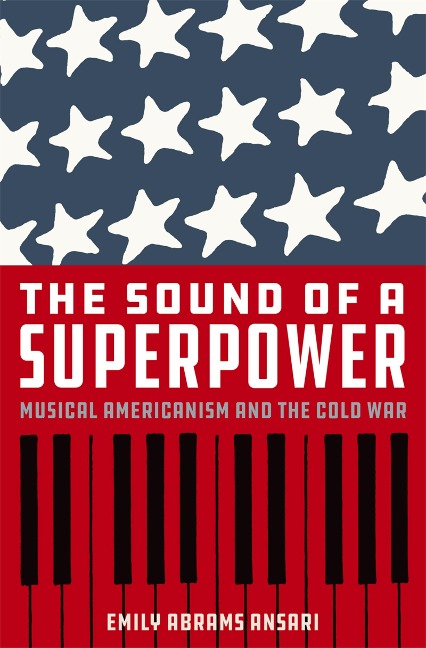
Classical composers seeking to create an American sound enjoyed unprecedented success during the 1930s and 1940s. Aaron Copland, Roy Harris, Howard Hanson and others brought national and international attention to American composers for the first time in history. In the years after World War II, however, something changed. The prestige of musical Americanism waned rapidly as anti-Communists made accusations against leading Americanist composers. Meanwhile a method of harmonic organization that some considered more Cold War-appropriate--serialism--began to rise in status. For many composers and historians, the Cold War had effectively "killed off" musical Americanism. In The Sound of a Superpower: Musical Americanism and the Cold War, Emily Abrams Ansari offers a fuller, more nuanced picture of the effect of the Cold War on Americanist composers. The ideological conflict brought both challenges and opportunities. Some Americanist composers struggled greatly in this new artistic and political environment. Those with leftist politics sensed a growing gap between the United States that their music imagined and the aggressive global superpower that their nation seemed to be becoming. But these same composers would find unique opportunities to ensure the survival of musical Americanism thanks to the federal government, which wanted to use American music as a Cold War propaganda tool. By serving as advisors to cultural diplomacy programs and touring as artistic ambassadors, the Americanists could bring their now government-backed music to new global audiences. Some with more right-wing politics, meanwhile, would actually flourish in the new ideological environment, by aligning their music with Cold War conceptions of American identity. The Americanists' efforts to safeguard the reputation of their style would have significant consequences. Ultimately, Ansari shows, they effected a rebranding of musical Americanism, with consequences that remain with us today.
Emily Abrams Ansari is Associate Professor of Music History at Western University in Canada. Her research examines relationships between music and politics across the Americas during the Cold War period. She has received a number of awards for her scholarship, including the ASCAP Foundation's Deems Taylor/Virgil Thomson Award, the Kurt Weill Prize, and the Petro-Canada Young Innovator Award.
Abbreviations Acknowledgements Introduction 1. The American Exceptionalists: Howard Hanson and William Schuman 2. The "Apolitical" Opportunist: Virgil Thomson 3. The Disillusioned Nationalist: Roy Harris 4. The Principled Brand Strategist: Aaron Copland 5. The Frustrated Activist: Leonard Bernstein Conclusion Notes Works Cited
Dieses eBook wird im PDF-Format geliefert und ist mit einem Adobe Kopierschutz (DRM) versehen. Sie können dieses eBook mit allen Geräten lesen, die das PDF-Format und den Adobe Kopierschutz (DRM) unterstützen.
Zum Beispiel mit den folgenden Geräten:
• tolino Reader
Laden Sie das eBook direkt über den Reader-Shop auf dem tolino herunter oder übertragen Sie das eBook auf Ihren tolino mit einer kostenlosen Software wie beispielsweise Adobe Digital Editions.
• Sony Reader & andere eBook Reader
Laden Sie das eBook direkt über den Reader-Shop herunter oder übertragen Sie das eBook mit der kostenlosen Software Sony READER FOR PC/Mac oder Adobe Digital Editions auf ein Standard-Lesegeräte mit epub- und Adobe DRM-Unterstützung.
• Tablets & Smartphones
Möchten Sie dieses eBook auf Ihrem Smartphone oder Tablet lesen, finden Sie hier unsere kostenlose Lese-App für iPhone/iPad und Android Smartphone/Tablets.
• PC & Mac
Lesen Sie das eBook direkt nach dem Herunterladen mit einer kostenlosen Lesesoftware, beispielsweise Adobe Digital Editions, Sony READER FOR PC/Mac oder direkt über Ihre eBook-Bibliothek in Ihrem Konto unter „Meine eBooks“ - „online lesen“.
Schalten Sie das eBook mit Ihrer persönlichen Adobe ID auf bis zu sechs Geräten gleichzeitig frei.
Bitte beachten Sie, dass die Kindle-Geräte das Format nicht unterstützen und dieses eBook somit nicht auf Kindle-Geräten lesbar ist.